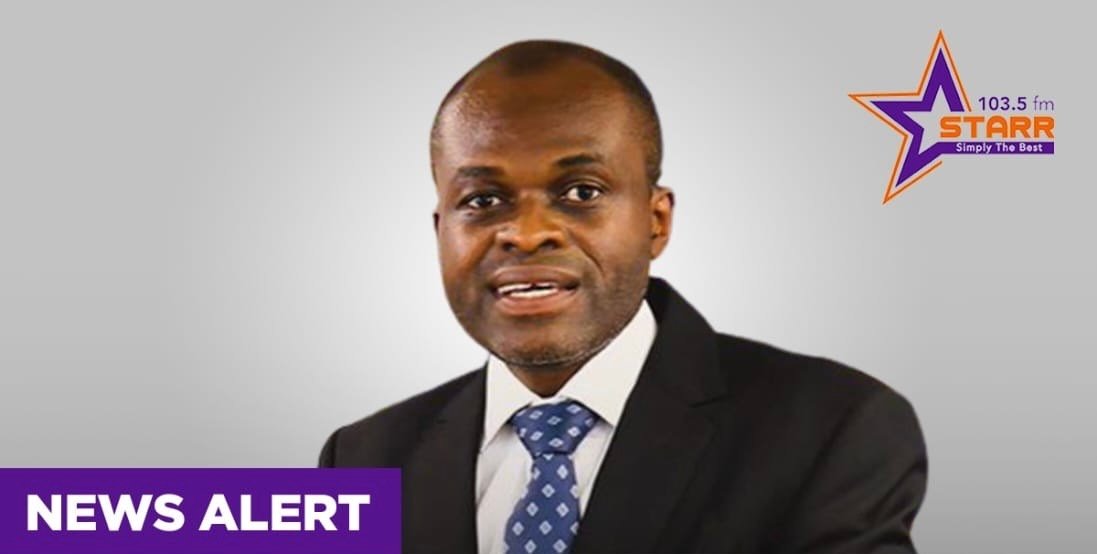
Private Legal Practitioner Martin Kpebu says the proposed dialogue on political insults must produce clear standards and boundaries to guide political communication in Ghana.
Speaking to Isaac Addae on Morning Starr on Starr FM, Mr Kpebu said the issue of political insults is difficult to regulate because some expressions that were previously considered acceptable may now be regarded as offensive by others.
He said a national dialogue would provide an opportunity for stakeholders to discuss these differences and reach a common understanding of what should constitute unacceptable political speech.
“The better approach, because, the menace is very widespread. As I’ve said, because it’s slippery. You may say X and think it’s not an insult because it’s been said over decades. It’s been there for long. But at a certain point, you go and say that and then somebody’s offended,” he said.
Mr Kpebu therefore welcomed the idea of national dialogue, saying it could help stakeholders establish clear parameters around political communication.
“So, I agree that let’s do the dialogue because in the dialogue, then we’ll be able to set some parameters, we’ll be able to set some boundaries,” he said.
According to him, the changing nature of society means that expressions which were once freely used may no longer be viewed in the same way.
“There are certain statements that those days we could say for free, but now, because people are different, some people find it offensive,” he said.
He said stakeholders must use the dialogue to discuss these concerns extensively and work towards a consensus on acceptable standards.
“At the dialogue, we agree through the plenty talk, we’ll come to a consensus. Then we’ll be able to set some standards,” he said.
Mr Kpebu stressed that addressing political insults should not be treated as a one-off exercise, arguing that the proposed dialogue should form part of a sustained process.
“It’s not a one-day thing. The dialogue, from the way I understand it, it’s not just going to be like three days dialogue and that’s it. It’s going to be a series of dialogues,” he said.
He suggested that subsequent discussions could continue through other platforms, including radio, to sustain public education and engagement on the issue.
Mr Kpebu said the ultimate objective should therefore be to create greater awareness of the boundaries around political speech and gradually reduce the culture of insults in Ghanaian politics.
He added that the dialogue could also provide an opportunity to examine whether existing laws and enforcement mechanisms are adequate to deal with political insults.
According to him, stakeholders could use the discussions to consider alternative approaches to punishment, including whether financial penalties could be used in some cases instead of remanding suspects in custody.
He said such discussions would be important because the manner in which suspects are arrested and detained can itself create further controversy.
“Often it’s the arrest, putting the person in custody. Like now, the way Salomey is in custody for two weeks now, that’s what creates the problems. We start punishing the person even before the case is dealt with in court.”
Mr Kpebu maintained that a sustained process of dialogue, public education and possible legal reforms could help establish clearer standards for political communication while reducing disputes over what constitutes an insult.
Source: Starrfm.com.gh/Pamela Quayson