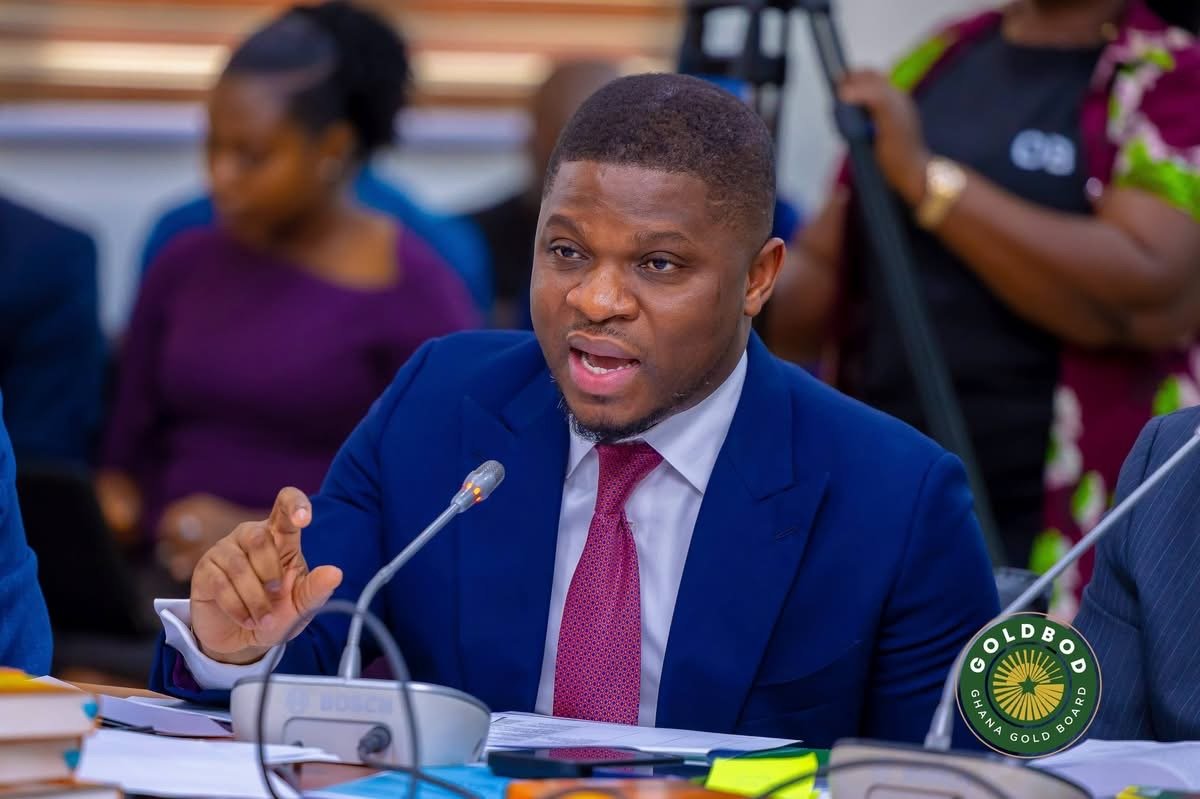
The Chief Executive Officer of the Ghana Gold Board (GoldBod), Sammy Gyamfi, says the board is on course to meet or exceed its 2025 gold purchase and export targets while substantially surpassing its foreign exchange generation performance for the year.
Speaking before Parliament’s Public Accounts Committee (PAC) on Tuesday, October 13, 2026, Mr Gyamfi said the board was making progress in fulfilling its statutory mandate of generating foreign exchange, supporting gold reserve accumulation and regulating Ghana’s gold trade sector.
“In delivering on a statutory mandate of generating foreign exchange for our country, supporting gold reserve accumulation, and undertaking and regulating the gold trade sector of Ghana, this year, we are on track to at least meeting and possibly exceeding our 2025 gold purchase and export outcomes,” he said.
He added that GoldBod was also on course to substantially exceed its 2025 foreign exchange generation performance, which he put at $10.8 billion.
Mr Gyamfi said the board was changing the country’s gold value-addition landscape by ensuring that a significant proportion of gold purchased for export was refined locally before leaving the country.
“About 80 to 90 per cent of the gold we purchase and export is refined here locally,” he told the committee.
According to him, the development marks a departure from previous practices and is helping Ghana retain more economic benefits from its gold resources.
He explained that local refining was creating employment opportunities for Ghanaians, particularly young people, as refineries operated around the clock.
“That means jobs for the unemployed youth because these refineries are operating 24-7, employing Ghanaians,” he said.
The GoldBod CEO added that local refining was helping retain refining fees within the Ghanaian economy instead of allowing the revenue to accrue to overseas destinations.
He further disclosed that silver, a by-product of gold refining, was also being retained locally.
“The by-product of gold refining, silver, is also being retained,” Mr Gyamfi said.
He explained that the silver was not only being sold to generate foreign exchange but was also being used to support the country’s fabrication industry.
READ: GoldBod has created over 1,300 jobs across public and private sectors – CEO
The GoldBod chief maintained that the board’s activities were contributing to greater local value addition and ensuring that more of the economic benefits associated with Ghana’s gold trade remained in the country.
The Ghana Gold Board was established to oversee and regulate Ghana’s gold trading activities, with responsibilities that include supporting foreign exchange generation and gold reserve accumulation. Its activities also seek to strengthen oversight of the gold trade and promote greater domestic value addition through local refining and related industries