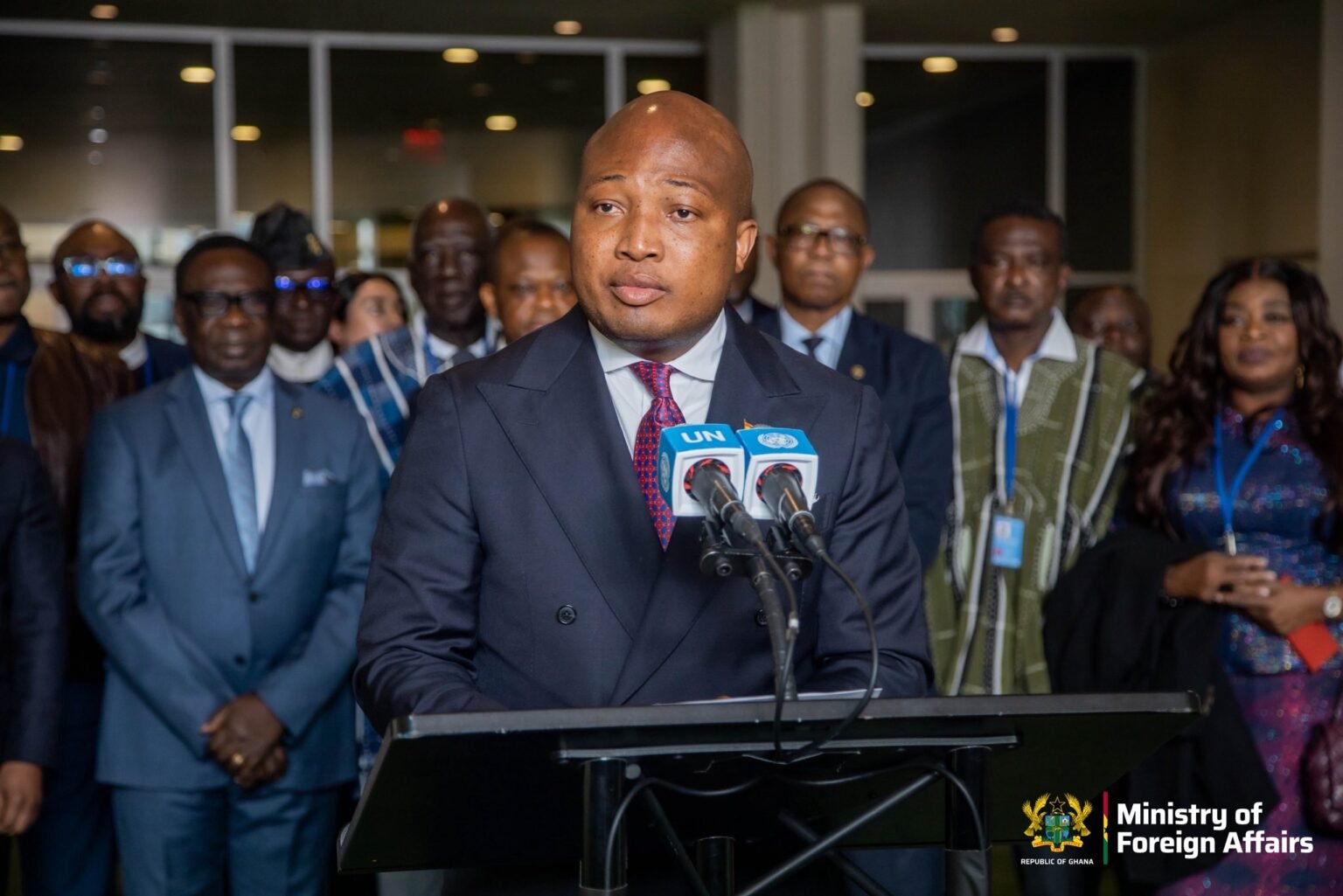
Ghana’s Foreign Minister, Samuel Okudzeto Ablakwa, has described the United Nations General Assembly’s adoption of President John Dramani Mahama’s resolution on the transatlantic slave trade as a landmark affirmation of justice, truth, and global accountability.
The resolution, which declares the transatlantic slave trade and the racialised chattel enslavement of Africans as the “gravest crime against humanity,” also calls for reparatory justice, signaling a global commitment to restoring dignity to victims and their descendants.
Speaking at a press conference following the vote, Ablakwa emphasized the moral and historical significance of the resolution.
“By adopting this landmark resolution declaring the trafficking of enslaved Africans and the racialised chattel enslavement of Africans as the gravest crime against humanity… With the adoption of this resolution, resolution A-80-L48, we have not simply passed a text, we have affirmed a truth, we have chosen remembrance over silence, dignity over erasure, and shared humanity over division,” he said.
The motion received overwhelming support, with 123 UN member states voting in favor, 52 abstentions, and only three against.
“This is an emphatic victory for justice, and our ancestors, Africans, and all people of African descent are today honoured that our humanity and our dignity have been restored,” Ablakwa added.
He highlighted the months of extensive consultations, dialogue, and consensus-building that preceded the resolution, noting that the process engaged nations, continental bodies, experts, and scholars to ensure the text reflected truth, moral conscience, and shared responsibility.
“The adoption of this text is not an arrival at a destination, but rather a major step in our ongoing journey and collective conversation for reparatory justice,” he said.
Ablakwa also stressed the importance of education and historical awareness, emphasizing that the resolution ensures the atrocities of the slave trade are neither forgotten nor denied.
“It is about creating space for truth, for education, and for a more honest global conversation that allows us to move forward together with greater understanding. History, as we know, is rarely simple. It is layered, it is complex, and at times uncomfortable,” he noted.
He further explained that the resolution provides a framework for continued global engagement on reparatory justice, encompassing measures for healing, restoration, and international cooperation.
“We cannot change history, but we can change how we remember it. And in doing so, we can change what we carry forward. Today, the world has chosen to remember with purpose, justice, and equity. Let that purpose guide us toward a future that is more just, more inclusive, and more profoundly human,” Ablakwa said.
Ablakwa praised President Mahama for his vision, leadership, and effectiveness at the United Nations, affirming that Ghana, Africa, and people of African descent worldwide will remain eternally grateful.
Source: Starrfm.com.gh