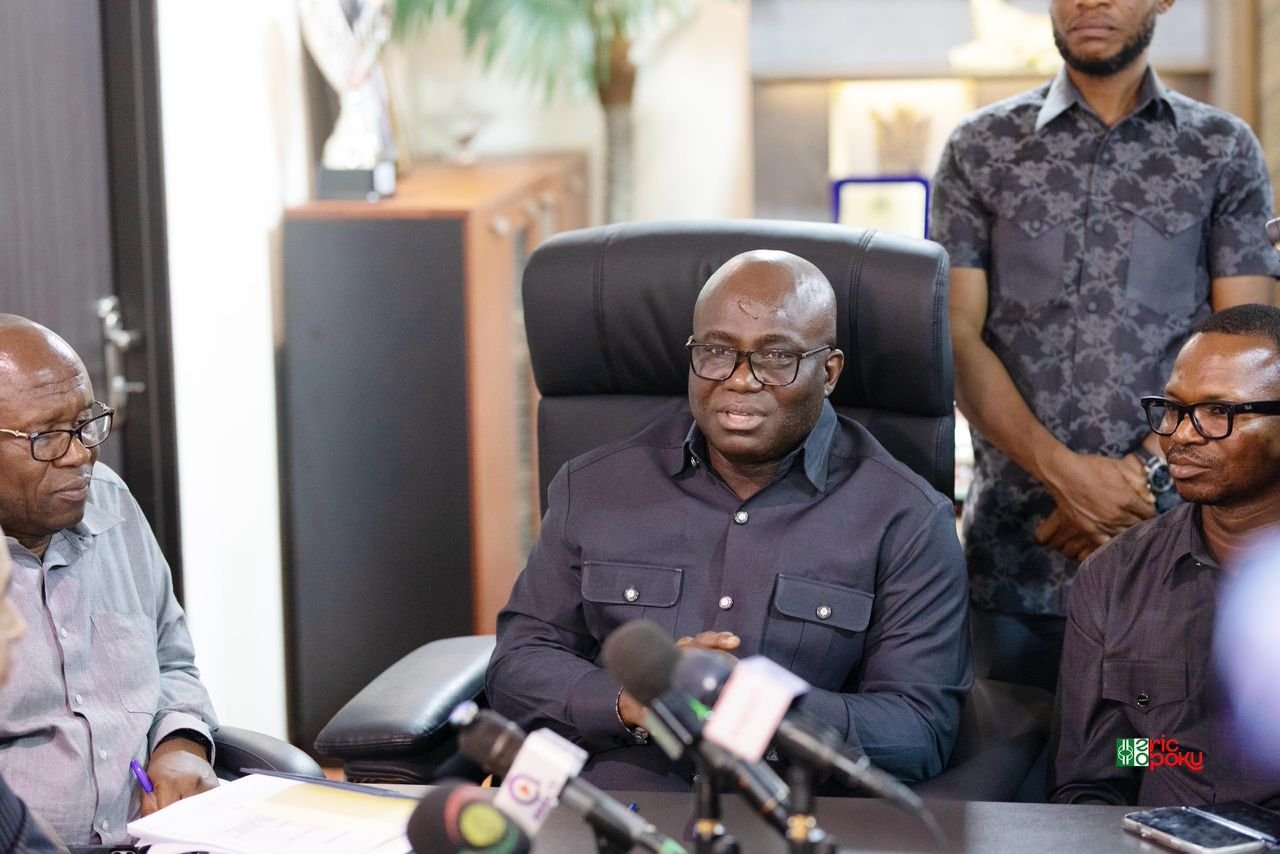
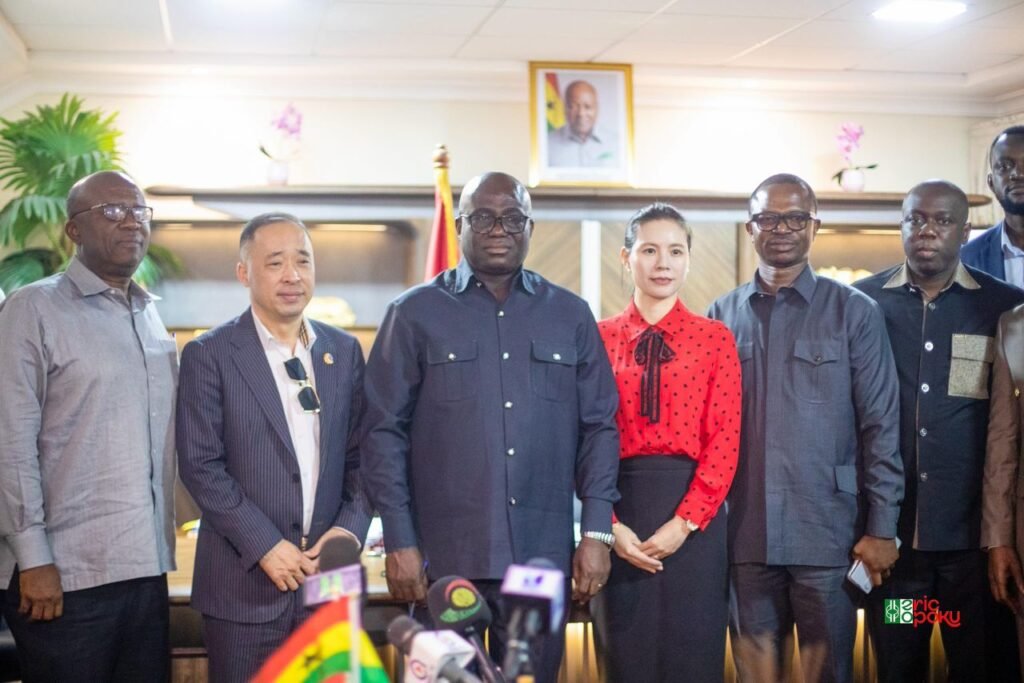
The Minister for Food and Agriculture, Eric Opoku, has announced a major partnership between the Ministry of Food and Agriculture (MoFA) and Sentuo Group Limited to accelerate Ghana’s agro-industrial transformation.
The partnership will focus on two key areas: the development of large-scale agro-processing infrastructure and the establishment of a national fertilizer manufacturing plant supported by an integrated agricultural input system.
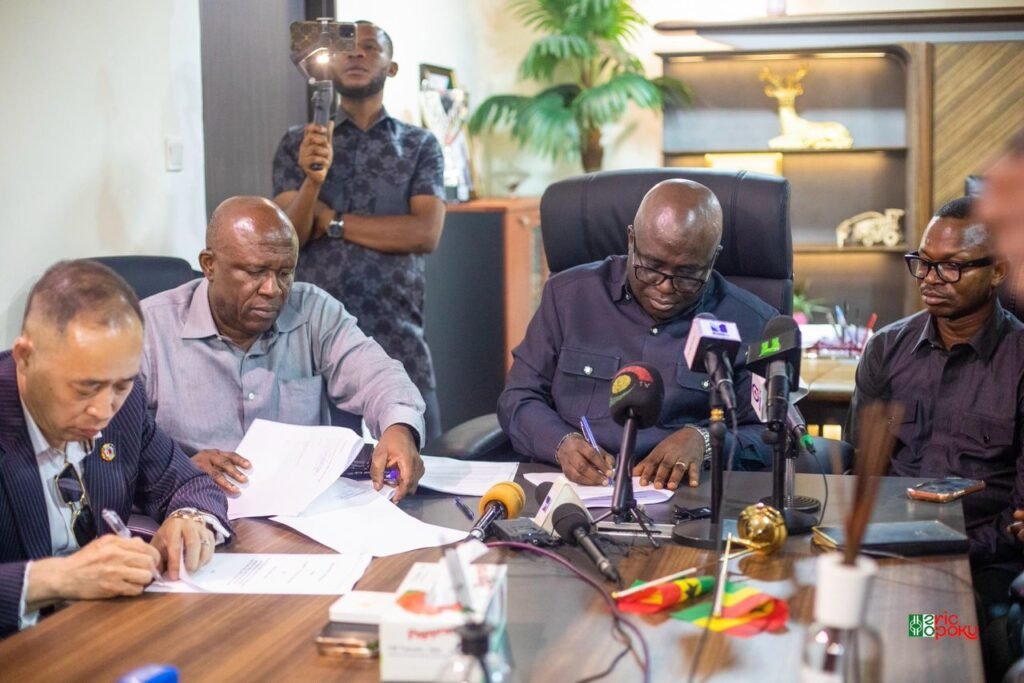
Speaking at the signing ceremony in Accra on Monday, April 13, 2026, the Minister described the agreement as a “bold and deliberate step” toward repositioning Ghana’s agriculture under the leadership of President John Dramani Mahama.
Mr. Opoku said the initiative will target key crops including cashew, maize, rice, soybean, and oil palm, with the aim of shifting Ghana from a raw commodity-based economy to a value-driven agricultural sector.
He stressed that fertilizer production is critical, noting that Ghana’s long-standing dependence on imports has exposed farmers to global price shocks and supply chain disruptions.
“With this agreement, we are taking a decisive step toward fertilizer independence,” he said, adding that the project will enable local production of a wide range of fertilizers, including NPK, urea-based, blended, organic, and specialty types.
The Minister revealed that government has already committed significant support to the sector in the 2026 budget, including the distribution of 272,000 metric tonnes of fertilizer nationwide and GH¢2.7 billion for cocoa fertilizer support to more than 661,000 farmers.
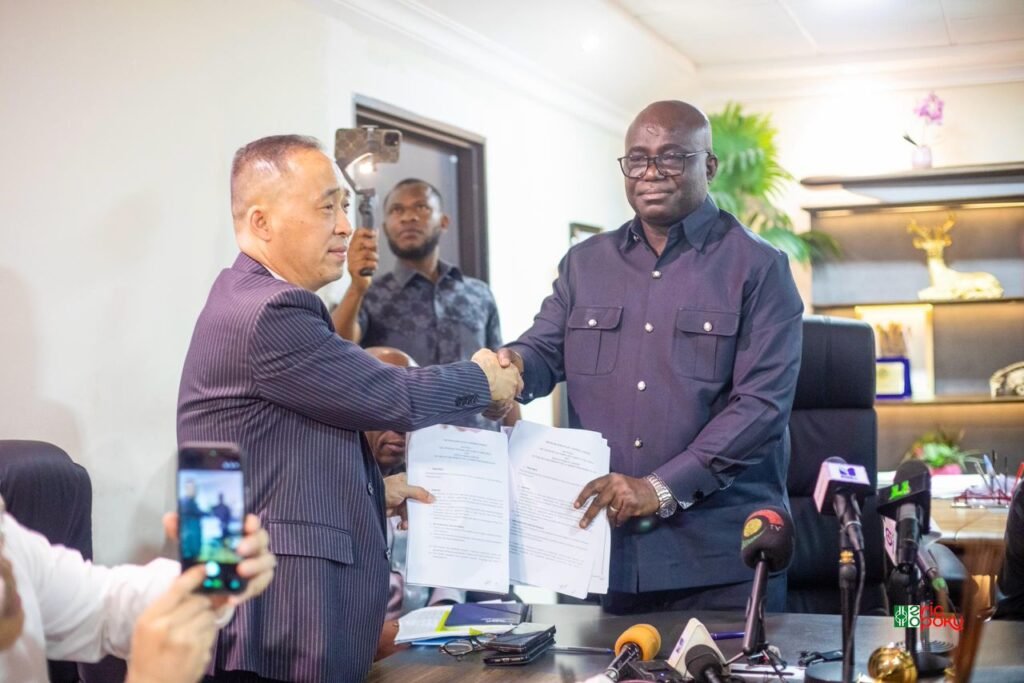
He commended the company’s leadership, particularly its representative, Ningquan Xu, for committing to finance, design, construct, and operate the proposed facilities under a Public-Private Partnership arrangement.
Mr. Opoku assured that the Memorandum of Understanding is a non-binding framework, with all subsequent phases subject to feasibility studies, regulatory approvals, and strict government oversight.
Beyond fertilizer production, the agreement is expected to expand agro-processing capacity, improve storage and packaging, and boost export-oriented production. The Minister said the initiative will help reduce post-harvest losses, create jobs, stabilize input costs, strengthen food security, and enhance economic resilience.
He added that the project aligns with key national programs, including the Feed Ghana Program and the 24-Hour Economy policy.
“Today’s signing is not just an agreement—it is a signal that Ghana is ready for serious, long-term industrial investment,” he said.
Mr. Opoku reaffirmed government’s commitment to building a modern, resilient agricultural sector capable of delivering sustainable benefits for future generations.