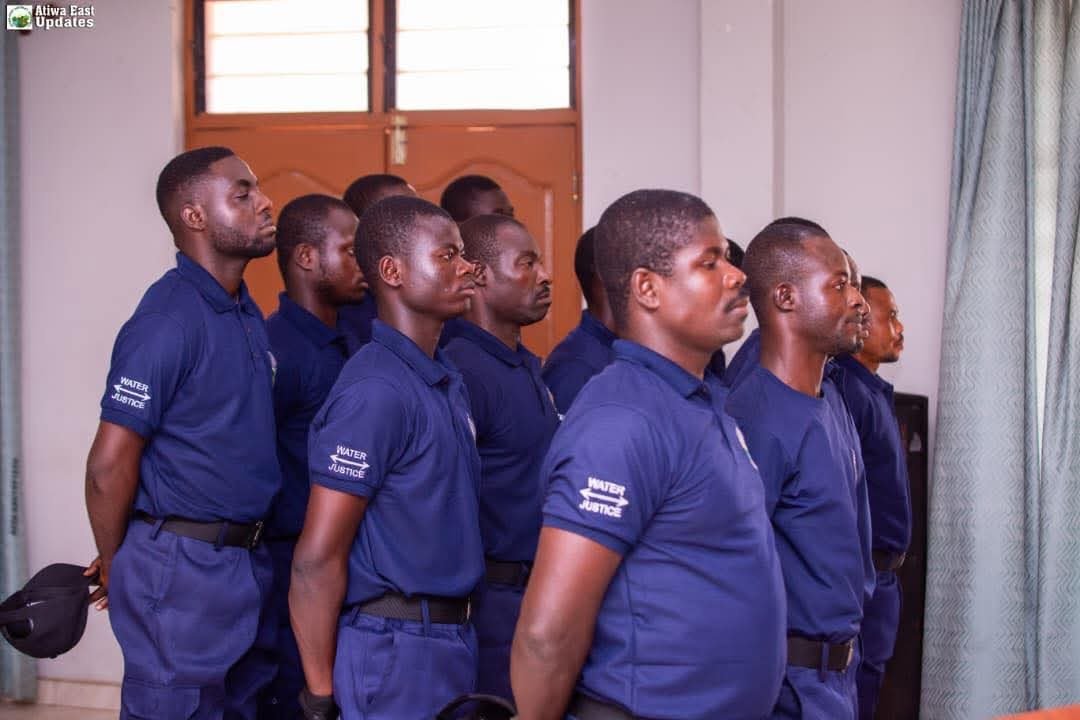
The District Chief Executive (DCE) for Atiwa East, Ernest Owusu Ntim, says the deployment of Blue Water Guards in the district by the Ministry of Lands and Natural Resources, describing it as a major boost to efforts to restore and protect the Birim River.
According to the DCE, the deployment will strengthen existing community-led interventions being implemented by the Atiwa East District Assembly to return the river to its natural state and curb illegal mining activities.
As part of these efforts, the Assembly has rolled out a Community-Based Approach Model aimed at addressing irresponsible mining practices, protecting river bodies, and ensuring strict land reclamation across the district.
Under the model, community leaders enter into Memoranda of Understanding (MoUs) with licensed small-scale miners. The agreements commit miners to safeguarding local rivers, reclaiming degraded lands, and enhancing corporate social responsibility within their host communities.
The initiative places communities at the centre of the fight against illegal and irresponsible mining, leveraging local leadership and ownership to promote compliance, accountability, and environmental sustainability while protecting livelihoods.
Community leaders and licensed miners have commended the model, describing it as an inclusive and effective approach that fosters cooperation and environmental protection.
Additionally, gas welders, working alongside a local task force, are deployed to clamp down on illegal mining along the Birim River by dismantling mining equipment and converting them into scrap.
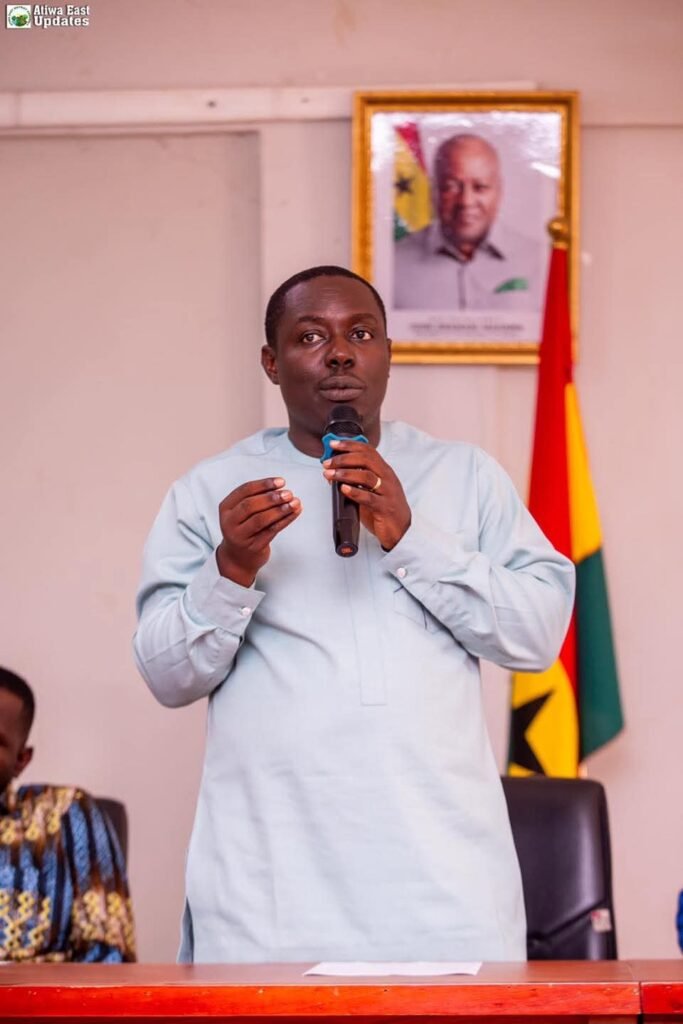
Speaking at a brief stakeholder engagement to officially introduce and deploy the Blue Water Guards, Hon. Ernest Owusu Ntim emphasised that mining remains one of the “beating hearts” of Ghana’s economy.
While acknowledging that mining has come to stay, the DCE expressed concern over the severe degradation of the Birim River, one of the Eastern Region’s major water bodies, largely due to unauthorized mining activities.
He said the river’s deteriorating condition demands new and decisive strategies to protect Ghana’s water resources.

The event was attended by a broad range of stakeholders, including traditional leaders and queen mothers, representatives from the Ministry of Lands and Natural Resources, all security agencies including the National Intelligence Bureau (NIB), Assembly Members, officials from the EPA, Forestry Commission, and Minerals Commission, traders’ associations, small-scale miners, religious bodies, drivers’ unions, executives of both the NDC and NPP, Unit Committee members, and the media.
Source: Starrfm.com.gh