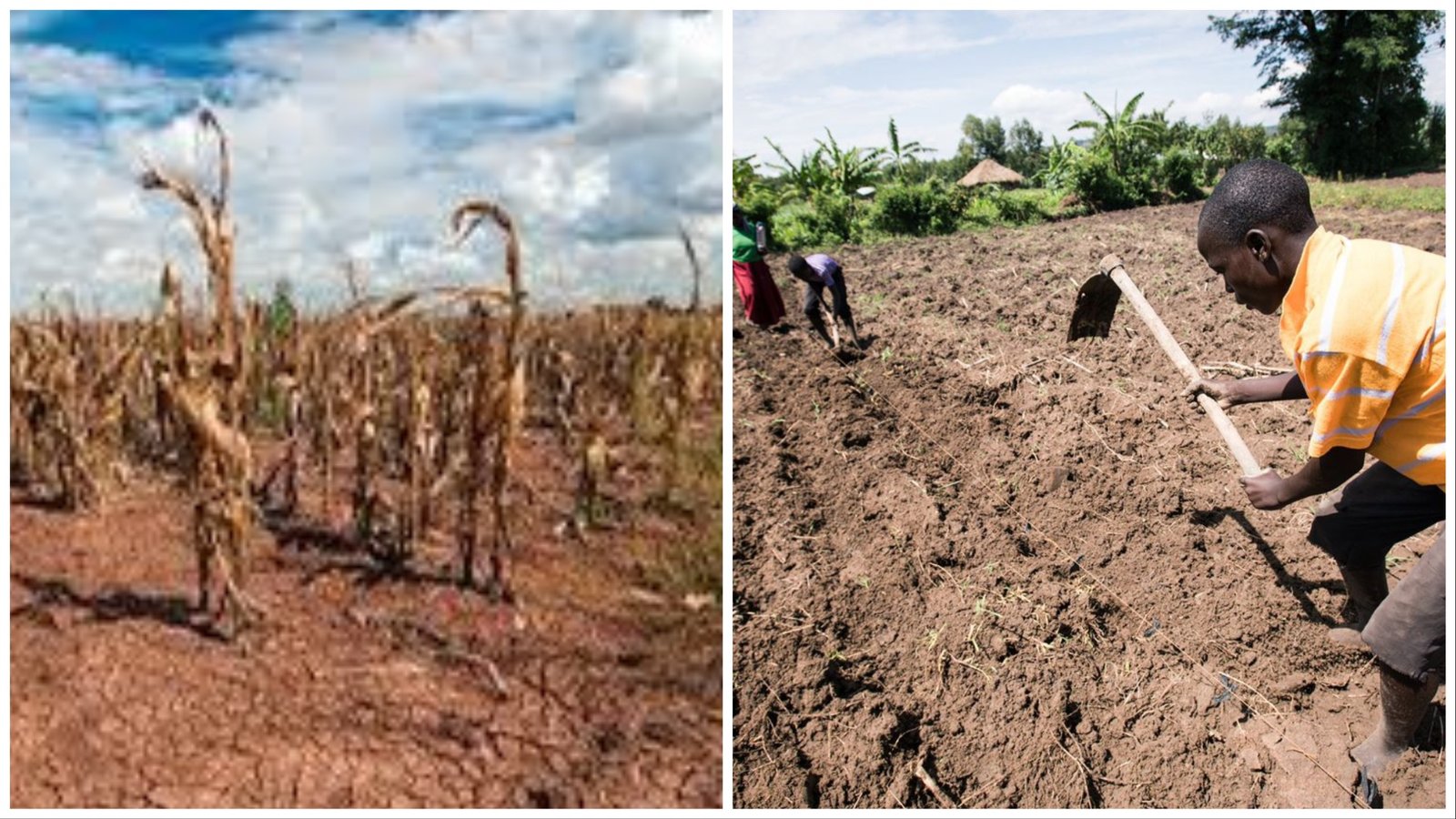
The availability of arable land and seeds is no longer a guarantee for a bumper harvest. Climate change is now an important variable in food security that cannot be overemphasized. Low-income nations like Ghana, which contribute the least to climate change, are the most vulnerable to its effects. The causes and consequences of climate change are numerous, and they sometimes emerge with some amusing irony.
Peasant farming has a good impact on the landscape, biodiversity, climate, emancipation, cultural heritage, employment, and income, as well as on food security, general economic development, and productivity.
The development of agriculture in Ghana is now facing a significant challenge because of climate change, which is having an impact on peasant farmers’ income. Food security and rural livelihoods are now under additional stress due to the continent’s weather systems, which are becoming more irregular and unpredictable.
Agricultural development in Ghana tends to be more difficult as a result of climate change. In many cases, weather patterns are changing for the worse, which makes crop and livestock production more unpredictable. As temperatures are predicted to rise further and rainfall patterns are anticipated to shift even more than they already have, extreme events are becoming more frequent or more severe.
Most farmer organizations fear the current situation will adversely affect livelihoods and quality of life in the country. Head of Programs and Advocacy at Peasant Farmers Association of Ghana, Charles Nyaaba, says peasant farmers have been hard hit by the effects of climate change “Climate change has affected peasant farmers more than any other stakeholders, especially peasant farmers in the northern part of Ghana. In recent times, we have observed that the rain that we used to see 10 years ago for about 5–6 months within a season has now changed and we are receiving rain for a 3–4 month period within a season. So, if you have a crop that will take 4 months to mature, it means that crop will not be able to grow. Apart from the duration, the consistency has also changed. Like when we are in the rainy season, in one week you get one rainfall, these days during the rainy season you can get one rain, and it takes about two weeks for the rain to come again. So, in most cases, farmers plant, the crop germinates, and then we will be waiting for water to be able to grow. The rain never comes, and those crops will die off. The change in climate has also brought about pests and diseases that affect the farmers’ profits.”
This poses a threat as agriculture is critical to Ghana’s growth and development. Climate change could destabilize local markets, curb economic growth, and heighten risk for agricultural investors.
He emphasized that climate change conditions are partly responsible for the recent hike in food prices and foodstuffs like tomatoes.
Ghana has recently witnessed a scarcity of food crops, especially tomatoes, for the past few months. He admittedly stated that the prices of foodstuffs would continue to escalate if the necessary measures were not put in place on time.
“Climate change has impacted the high cost of production itself, the high cost of fertilizers, seeds, mechanization services, and agrochemicals. Due to this, many farmers produce without applying fertilizers, and others do not produce at all. Others have to scale down their production, and the rest have to switch to producing other crops that do not require fertilizer. Farmers now tend to turn from growing rice and maize to other industrial crops like cashew, which are just for export purposes. So, if they do not produce the maize and rice that are sold in our markets for people to buy, then in a simple demand and supply theory, anytime demand is higher than supply, prices will go up, and that is exactly what is happening,” he stated.
There is, however, the big question of how Ghanaian peasant farmers can mitigate the impact of climate change on their farm proceeds to their benefit.
Contrary to farmers in developing nations, who typically have easier access to crop insurance and can more easily adjust what they plant, irrigate their fields, and apply crop protection chemicals and fertilizers, African farmers are typically more susceptible to higher temperatures, fluctuations in rainfall, and variable yields.
Peasant farmer, Isaac Pabia has also said climate change is making his life and that of several other farmers difficult.
“Rainfall pattern has become erratic, even with temperatures you can’t predict anything of the weather in terms of climate change. When you don’t expect the rains that is when the rains will come. When you expect the rains to be able to start your farming you may not get the rain and that may lead to late planting. When you plant late and you are not lucky for the rains to carry you through the planting season and the rains stop at the time the crops are getting ready it means you are going to lose everything. The impact climate change is having on farmers is very severe, especially in the Northern Region where we have only one planting season. It means that when you miss that planting season then you have missed it forever,” he bemoaned.
Furthermore, he revealed that Ghana risk experiencing serious famine if drastic measures are not taken.
“The cost of food is something most households cannot afford any more in the country. Our food security index is dwindling. Now if you do a crop budget for the coming season you will realize that inputs are high. If input becomes high do not expect the farmer to go and produce at that high cost and come and sell the proceeds at a cheaper rate. It will never happen. The consumer should be ready to pay for whatever cost of production we are incurring now. So, if the cost of production is high then definitely it is a danger zone.
It will take substantial investment to modernize Ghana’s agriculture in the face of climate change. Irrigation investments can boost the possibility that farmers can sustain harvests even in poor weather. In order to assist farmers in selling their produce at reasonable prices, better highways can connect marketplaces. Farmers would have access to novel seed kinds that are suitable for changing conditions if seed production systems performed better. Improved crop storage facilities would stop food waste and spoilage.
Dr. Nyaaba requested government support by improving the ‘one village, one dam’ agenda.
“The government can improve this situation by creating dams along the river areas where the water flows to aid farmers in storing more rainwater that would be used for irrigation purposes during the dry season.” The dams that were established by the government have not been used. Recently, it was revealed that almost 80% of the dams have dried up, and in the other 20%, the water level is so low that even animals are competing to get them to drink. What we can do is go back, look at the challenges with the old dams, and restructure them as well as build new ones for villages that need them,” he added.
An emphasis on adaptation measures to handle the risks posed by climate change in agriculture is necessary to maximize output, enhance revenue, and fulfill the food demands of a fast-expanding population.
This report was completed as part of the Centre for Journalism Innovation and Development‘s 2023 Climate Change Fellowship with funding support from the Centre for Investigative Journalism’s Climate Change in News Media project.
The Writer: Bernice Mensah
Online Reporter, Starrfm.com.gh
Source: Ghana/Starrfm.com.gh