Ghana has stepped up efforts to diversify its agricultural economy with a renewed focus on expanding coconut production and positioning the country to take advantage of the projected $30 billion global coconut market.
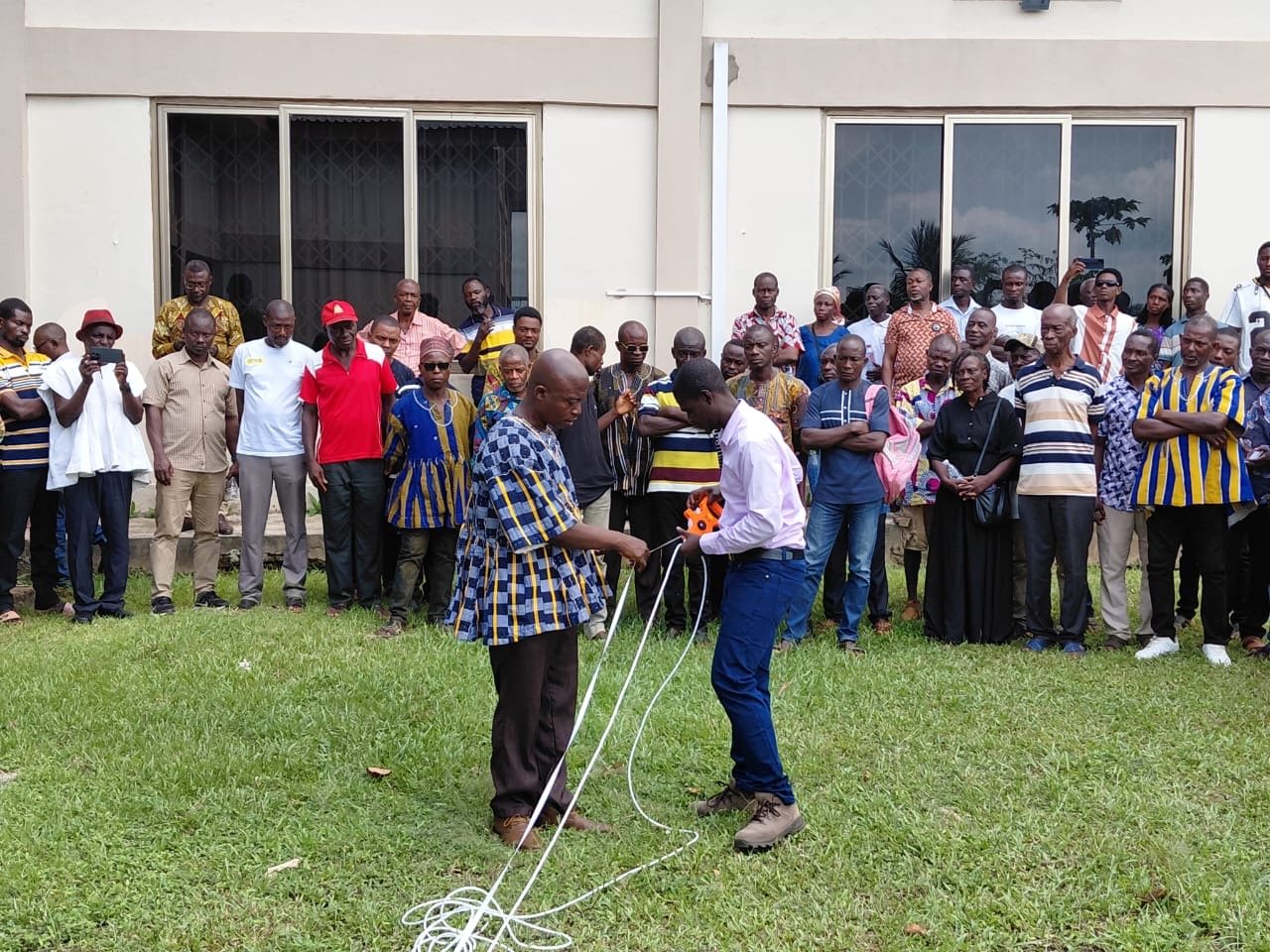
The Director of Presidential Initiatives in Agriculture and Agribusiness, Dr. Peter Boamah Otorkunor, disclosed this during the Coconut Development Initiative Training Programme for hundreds of registered Coconut farmers, held in Koforidua, Eastern Region.
According to him, the initiative, which began last year, is aimed at modernising the coconut sub-sector and transforming it into a major driver of national development.
He explained that the programme goes beyond the distribution of seedlings and focuses on equipping farmers with modern skills in nursery establishment, plantation management, pest and disease control, harvesting, post-harvest management and value addition.
“As we have been indicating, it is important to build the capacity of the farmers. Some may have experience, but even those with experience need continuous training and refresher courses to apply modern technologies in cultivation,” he said.
Dr. Otorkunor noted that coconut cultivation, which was previously concentrated in about three regions, has now expanded to 11 regions following research and deliberate interventions.
The Eastern Region is the third stop in the nationwide training exercise, with the team expected to move to the Volta Region in the coming days.
He revealed that about three million coconut seedlings have been distributed since last year, creating an estimated 22,000 hectares of new plantations.
Ghana currently cultivates about 90,000 hectares of coconut, producing approximately 500,000 metric tonnes annually.
The government’s medium-term target, he said, is to double the total cultivated area to boost production and increase Ghana’s competitiveness on the global market.
Ghana is currently ranked number one in Africa in coconut production and 12th globally.
Dr. Otorkunor indicated that the global coconut market is valued between $25 billion and $30 billion, stressing that Ghana must strategically position itself to capture a significant share.
He emphasised the need for value addition, noting that coconut water alone is valued at about $8 billion globally, coconut meat about $7 billion, and the husk approximately $5.8 billion.
“If we are going to lead, we must not only produce coconuts and sell them on the streets. We must produce for industry, process for export and add value to maximise returns,” he stated.
Currently, the coconut sector employs about 1.8 million people directly and indirectly. With expansion and value chain development, more jobs are expected to be created.
The Eastern Regional Minister, Rita Akosua Adjei Awatey, commended the initiative and expressed optimism that the training would introduce new and improved methods of cultivation to farmers.
She explained that although coconut has been cultivated in Ghana for many years, limited innovation had led to a decline in growth over time.
“With this initiative, our farmers will learn new methods of planting and managing coconut. Beyond the water and fruit, even the husk can be used for charcoal and other products. This will increase productivity and income,” she said.
The initiative is being supported by the Ghana Exim Bank and the Coconut Federation of Ghana as part of broader efforts to strengthen agribusiness and reduce poverty through sustainable agricultural development.
Source: Starrfm.com.gh