The Governor of the Bank of Ghana (BoG), Dr. Johnson P. Asiama, has stressed the need for Ghanaian small and medium-sized enterprises (SMEs) to move beyond survival mode and position themselves for global competitiveness by integrating into regional and international value chains.
He made this while delivering the keynote address at a workshop on “Supporting SMEs to Sustainable Global Value Chains” in Accra, organized by the Ghana Association of Banks (GAB) in collaboration with Afreximbank, the African Development Bank (AfDB), and the Trade and Development Bank (TDB).
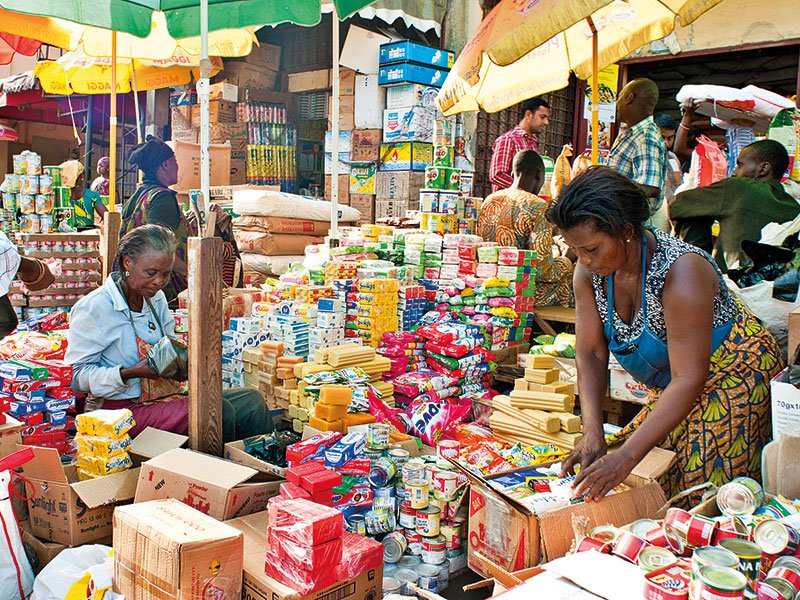
Dr. Asiama said SMEs are central to Ghana’s economic transformation, job creation, and innovation, but continue to face systemic barriers to growth.
“SMEs are not peripheral actors; they are the engines of jobs, innovation, and inclusive growth. To fully play this role, they must integrate into regional and global value chains where standards are higher, but the rewards are greater,” he said.
He observed that across the world, SMEs account for about 90 percent of businesses and contribute significantly to employment and GDP.
However, their participation in international trade remains limited due to challenges such as inadequate access to finance, difficulty in meeting export standards, logistics bottlenecks, and currency volatility.
Dr. Asiama emphasized that banks must play a central role in addressing these challenges by adopting innovative financing models such as supply-chain finance, cash-flow lending, and risk-sharing mechanisms, while also supporting SMEs with advisory services to meet global standards.
“Finance remains the oxygen of enterprise. Our banks must move beyond collateral-based lending and adopt new models that unlock SME potential, especially in sectors like agro-processing, manufacturing, and digital services,” he urged.
On the role of the Bank of Ghana, Dr. Asiama highlighted reforms aimed at strengthening the financial sector, promoting digital finance, and stabilizing the foreign exchange market.
He noted that recent forex market reforms were designed to create a fairer, more predictable environment for SMEs to access foreign exchange for trade and investment.
“Foreign exchange stability is not a luxury – it is a prerequisite for investment and competitiveness. Our reforms are anchored in transparency, predictability, and support for genuine trade,” he added.
The Governor further pointed out that sustainability is becoming a decisive factor in global trade, with buyers increasingly demanding evidence of ethical sourcing, traceability, and low-carbon practices.
He said the central bank is encouraging green and transition finance to help SMEs remain competitive in international markets.
The two-day workshop, held at the Mövenpick Ambassador Hotel in Accra from September 11–12, brought together policymakers, development partners, banks, and private sector leaders to chart strategies for scaling Ghanaian SMEs into regional and global production systems.
Dr. Asiama concluded by urging SMEs to embrace formalization, digitization, and compliance with international standards.
“If we succeed in enabling Ghanaian SMEs to step into global value chains, we will not only transform enterprises but also transform lives, create decent jobs, and build lasting prosperity,” he said.
Source: Starrfm.com.gh