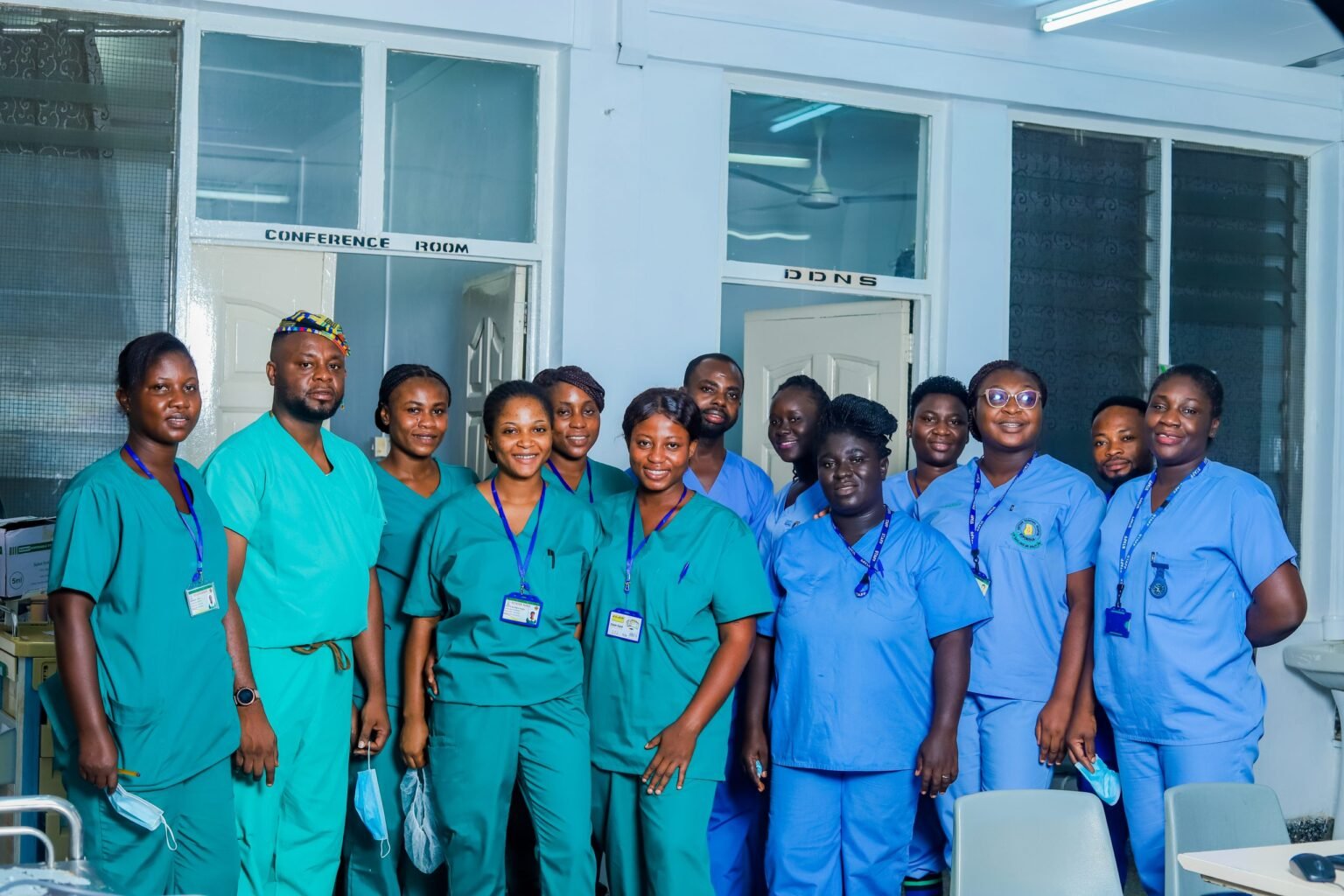
The Eastern Regional Health Directorate has outlined temporary measures to mitigate the impact of the ongoing industrial action by the Ghana Registered Nurses Midwives Association (GRNMA).
In an exclusive interview with GHOne TV and Starr FM on Thursday, June 12, the Eastern Regional Health Director, Dr. Damien Punguyire, said arrangements have been made for public hospitals with limited staff capacity due to the strike to refer critical cases to private, and Christian Health Association of Ghana (CHAG) hospitals.
The Doctor handling the case will then go with the patient to that hospital and with assistance from their nurses and midwives provide the necessary interventions.
“Remember also that we have CHAG facilities, a good number of them in this region and also private facilities. So what we have done is the Doctors who are available and they are not on strike is that , if the capacity in terms of the staffing strength is weak in any particular hospital should refer (cases) to private hospital and CHAG Hospitals to follow up”. Dr.Damien Punguyire told the Eastern Regional correspondent, Obed Kojo Ansah.
He disclosed that the Eastern Regional Hospital is currently coordinating with St. Joseph Hospital to jointly manage some of these critical cases.
“The Eastern Regional Hospital currently works with St. Joseph Hospital so that when they work with case that needs deeper intervention but the few nurses available would not be able to help, the Doctor should go along with the patient to St. Joseph Hospital.They will support them to handle the case. I mean we are doing this to prevent needless lost of lives. It could be a private hospital but may be the Doctors there may not be enough so you go with the patient to the Private hospital to support them care for the patient. So these are the measures we are doing hoping that the strike will be declared over then they will come back”
According to Dr. Punguyire, this system is aimed at preventing avoidable deaths, particularly in neonatal and maternal health situations, which are considered highly vulnerable during the strike.
He also said the Red Cross Society has reached out to also provide some interventions at the hospitals.
Dr. Punguyire added that although public hospitals across the region remain operational, they are functioning at reduced capacity because of the absence of nurses and midwives.
READ: Nursing unions hail progress on conditions of service, call for end to GRNMA strike
He urged the public to stay calm as it works with relevant stakeholders to manage the situation and minimize the impact on public healthcare services while hoping government resolves the impass as soon as possible.
“As a health service, we have not throw our hands in despair. We have made available staff to continue to run the health services. So far our checks indicate that all the hospitals are at least attending to people not to the optimum level but no facility has been closed down.
The Few who are not on strike are supporting together with the lower level cadres”. He stated.
The Regional Health Director was quick to point out that there is no official data suggesting an increase in deaths linked to the industrial action as of now.
“Usually we take our records monthly. There are some of the conditions like health emergency that we take daily then marternal mortality we take it every week. So I am not in the position to say people are dying more or not”.He explained.
READ: Parliament’s Health Committee hopeful after stakeholder meeting on GRNMA strike
The Ghana Registered Nurses Midwives Association (GRNMA) on June 2 declared industrial action with partial withdrawal of services over government’s failure to implement their 2024 Collective Agreement — which includes a 13th-month salary, fuel and medical allowances, rural incentives, uniform provision, and licence renewal support.
On June 9, the association withdrew all services at various public health facilities creating deeper crises.
Source: Ghana/Starrfm.com.gh/Obed Kojo Ansah