


My week visiting the courts in Accra, Ghana, was an intense experience. On my first day, July 10, 2025, our Uber pulled up to the gates of the Supreme Court where rev security was visibly tight. I could tell this wasn’t going to be just another assignment. I was under the guidance of EIB Network’s Murtala Inusah, a renowned court reporter who had been named the nation’s premier court reporter the previous year, although I wasn’t aware of this at the time.
As we made our way across the Courts, I noticed that Murtala Inusah was a prominent figure in the Court Community. During our short walk, he stopped to talk to friends, more than 10 times, exchanging pleasantries and gathering information about the day’s most relevant cases. I mostly hovered quietly while he socialized, unsure of my role.
However, as the days went on, I became more comfortable meeting his friends and even made some valuable connections. I quickly learned that life moves fast in the courts, there was always somewhere to go or someone to talk to.
The fast-paced environment, combined with the pressure of finishing a story in time for the afternoon news, left me little downtime to understand the court system.
Luckily, experience proved to be the best teacher, and through sitting through cases and explanations from Murtala, I gained a functional understanding. One of the first things I noticed was the strict etiquette in the courts. Professional dress and quiet observation were required at all times.
During our first visit to the Supreme Court, one of Murtala’s friends was denied access to the Courtroom for wearing a sleeveless shirt. Murtala also alerted me to keep my phone on silent, emphasizing that if it rang during proceedings, a guard would likely confiscate it.
The courtroom atmosphere was intense and intimidating, especially in my first few days. The quiet delivery of the lawyers and judges was a stark contrast to what I was used to in the United States, where court proceedings can be loud and dramatic.
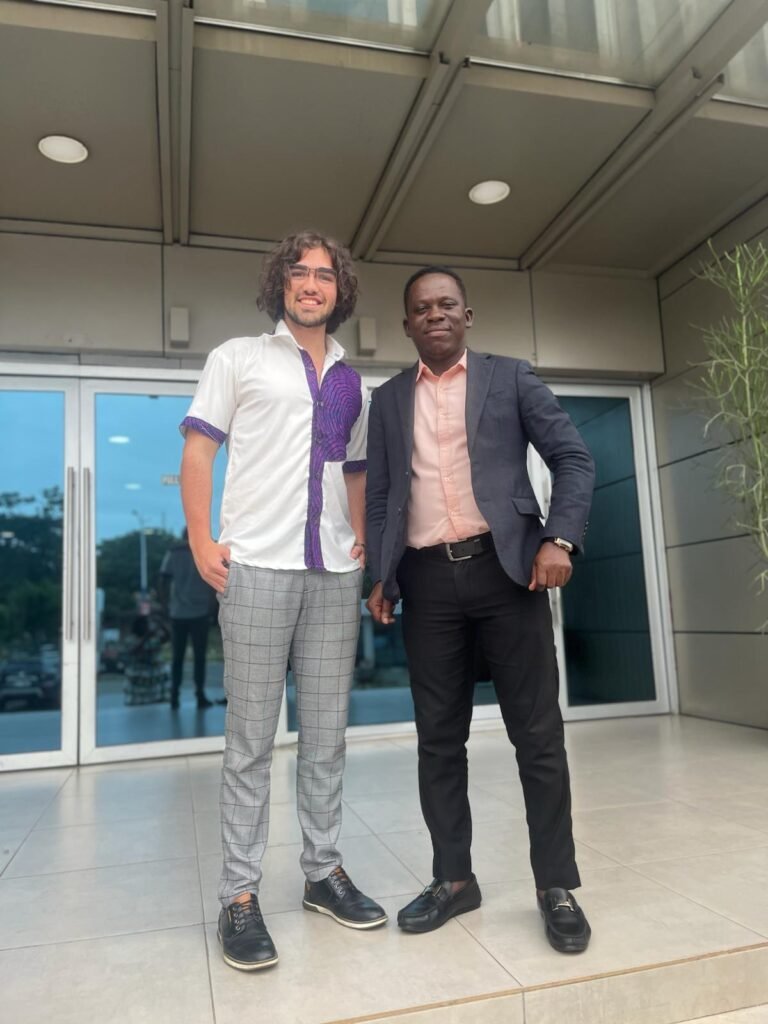
Despite the challenges, I managed to capture the essential details of the cases. I noticed that the cases themselves moved slowly, with lawyers often taking long pauses between statements and repeating themselves to allow note-takers to transcribe the proceedings accurately. While I struggled to keep up, Murtala used this time to research and write his stories.
One of the most memorable cases we attended was the sentencing of a man who had shot his wife in front of his four-year-old son. The accused had pleaded guilty to manslaughter, hoping to negotiate his charge down from murder.
The prosecution argued for a sentence of at least 30 years, given the significant mental harm caused to the child, while the defense argued for leniency, citing the guilty plea and the accused’s remorse. The defendant was ultimately sentenced to 20 years of imprisonment with hard labor.
After the case, we interviewed the victim’s family, who surprisingly seemed to be in good spirits despite the intense proceedings.
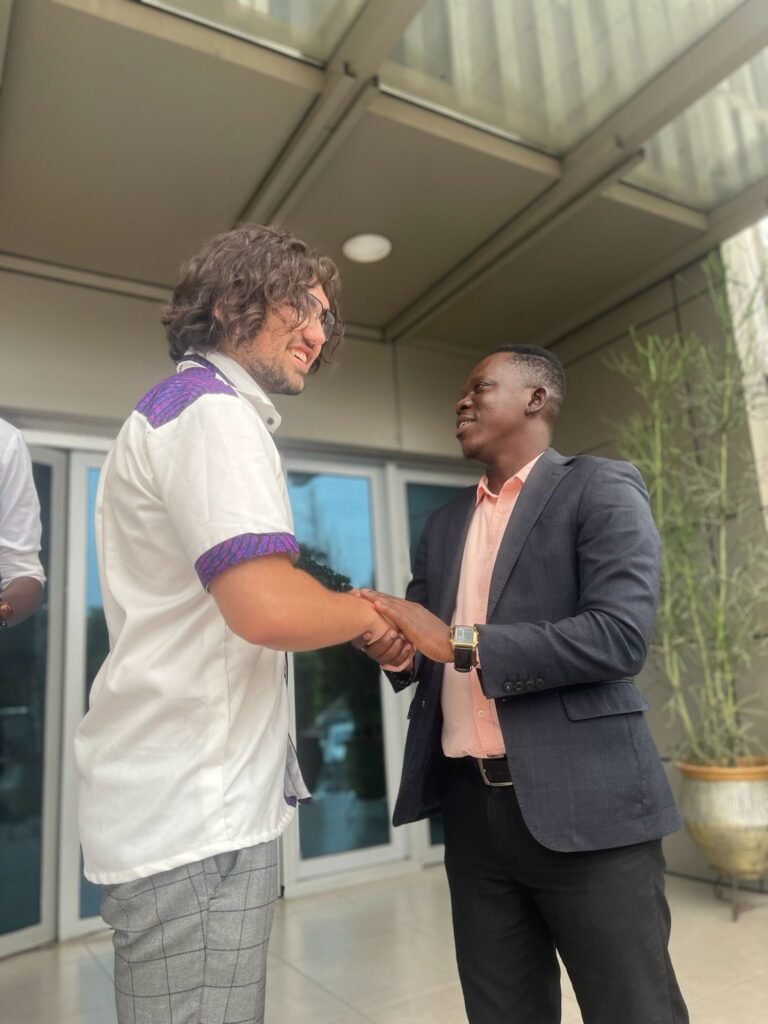
We secured a short clip and a promise of a live interview for the evening news. Over the course of the week, I gained valuable experience, witnessing some of the country’s most relevant cases and learning about the Ghanaian court system. However, what I appreciated most was the insight into a side of Ghana I would have never seen otherwise.
Hearing cases ranging from petty disputes to manslaughter convictions taught me a lot about Ghanaian values and the factors used to argue for increased or decreased sentencing.
In the times I spent in Court with Murtala Inusah, we roamed around in all the Courts from Circuit Courts, High Courts, Court of Appeal and Supreme Court.
About the Writer
Everett Cento, is a recent graduate from the University of Oregon in the United States. He came to Ghana through a program at his school, seeking to expand his global perspective and see what journalism was like in a different country. He interned with GHOne TV.


