


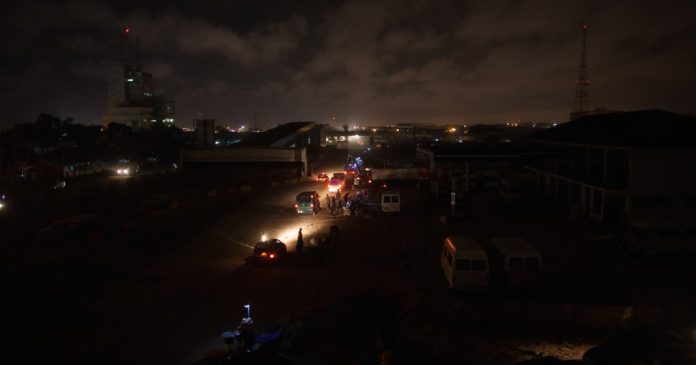
Reliable power supply remains a key driver of economic growth and is globally correlated with higher per capita income. According to the World Bank, electricity is one of the top constraints to business activities, identified by 22% of managers globally as the most significant obstacle to operations (World Bank, 2015). Ghana’s experience is no exception; the unreliable power supply during the 2013–2016 period, dubbed ‘dumsor,’ led to a contraction of the economy from USD 63.7 billion in 2013 to USD 56.85 billion in 2016 (Statista, 2024). Despite a subsequent economic recovery to USD 76.4 billion by 2023 (Ministry of Finance, 2024), these gains remain fragile without sustainable energy policies and robust political accountability.
It is important to note that Ghana’s energy problems are more financial than technical. With an installed generation capacity of 5,492 MW exceeding the system’s peak demand of 3,848 MW as of 2024 (Energy Commission, 2024), the sector’s persistent difficulties stem from financial inefficiencies. By the end of 2024, Ghana’s energy sector faced liabilities amounting to USD 2.5 billion—a situation that necessitated the formation of a 12-member team by President Mahama to avert another ‘dumsor’ crisis (Baisie, 2025). These financial issues have been politicized by successive governments, who use them to discredit their predecessors but fail to offer definitive solutions.
For instance, the outgoing NPP government inherited the same energy sector debt in 2016 (SONA 2024) but managed to stabilize the power supply under very difficult conditions. Current political actors must be reminded that political rhetoric does not keep the lights on; proactive measures and strategic financial management do. The heavy reliance on expensive thermal generation, constituting 68.9% of installed capacity, underscores the need for innovative financing models, cost recovery mechanisms, and a focus on cheaper yet reliable power sources that transcend political cycles (Energy Commission, 2024).
Recommendations for Sustainable Energy Governance
Ghanaians deserve transparency and accountability in energy governance. To this end, we call on the John Mahama administration to adopt the following measures:
- Establish Transparent Energy Accounting: Publish comprehensive and verifiable reports on energy sector debt, expenditures, and revenue streams to build public trust.
- Implement Cost-Reflective Tariffs: Introduce a balanced tariff system that ensures affordability for vulnerable customers while allowing utilities to recover operating costs. Political actors must resist manipulating tariffs for electoral gain.
- Decouple Distribution and Retail Functions: Separate the retail and distribution functions of the Electricity Company of Ghana (ECG) and the Northern Electricity Distribution Company (NEDCo) to enable them to focus on efficient power distribution and loss reduction.
- Privatize the Retail Sector: Privatize the retail segment of the power supply chain on a concessionary basis. Involving private companies under performance-based contracts can significantly reduce commercial losses in power sales.
- Reform the Cash Waterfall Mechanism (CWM): Implement the CWM at the point of purchase to ensure timely and equitable revenue disbursement. The current practice of pooling funds into an account before apportioning them via committee decisions must end.
- Invest in Renewable Energy: Develop a renewable energy transition plan focusing on solar, wind, and hydro, reducing reliance on high-cost thermal generation. Bureaucratic hurdles to private sector investment in renewable energy must be eliminated.
- Depoliticize Energy Management: Empower independent regulatory bodies, such as the Public Utilities Regulatory Commission and the Energy Commission, to oversee the energy sector free from political interference, ensuring consistent and effective management.
- Foster Political Consensus: Organize a non-partisan energy summit to create a long-term roadmap for energy sustainability. Successive administrations must adhere to this framework to prevent policy reversals that disrupt progress.
Conclusion
The future of Ghana’s energy cannot remain hostage to partisan politics. A sustainable and transparent energy policy is not only an economic imperative but also a moral obligation. Past and present political actors must put aside ‘political blame games’ and focus on the well-being of the citizenry.
As a Civil Society Organization (CSO) committed to advancing the interests of Ghanaians, we reiterate that ensuring reliable and affordable power is non-negotiable. The government must demonstrate the political will to address the root causes of financial inefficiencies in the energy sector. Keeping the lights on is not a political favor; it is a fundamental right of every Ghanaian.
References
- World Bank. (2015). Enterprise Surveys: Energy as a Constraint.
- Statista. (2024). Economic Growth Data for Ghana (2013–2023).
- Energy Commission of Ghana. (2024). Energy Outlook for Ghana.
- Ministry of Finance. (2017). Energy Sector Debt Report.
- Baisie, S. (2025, January 8). Mahama calls emergency meeting over looming ‘Dumsor’ crisis. GBC Ghana Online.
- Statista. (2024, November 8). Gross Domestic Product (GDP) in Ghana 2029.


