President John Dramani Mahama has warned that Africa will not remain a passive arena for a new scramble for the continent’s natural resources, calling for a fundamental shift in how Africa’s critical minerals are extracted, processed and traded.
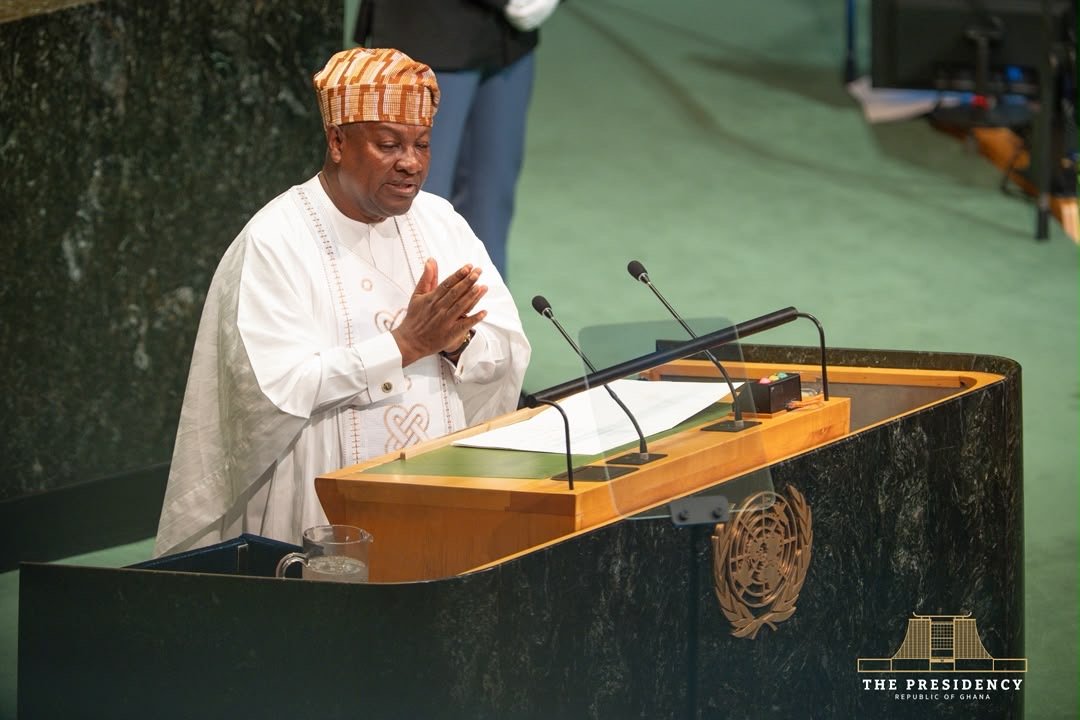
Addressing the 81st Session of the United Nations General Assembly in New York on Thursday, September 24, 2026, President Mahama said Africa must ensure that the growing global demand for critical minerals does not reproduce the patterns of exploitation associated with the colonial era.
He stressed that Africa’s mineral wealth must translate into greater value for African countries and their people, rather than leaving the continent primarily as a source of raw materials for external economies.
According to President Mahama, Africa must move beyond the extraction and export of critical minerals and develop the capacity to process these resources on the continent.
He argued that local processing would enable African countries to capture more value from their natural resources and support broader economic transformation.
“Critical minerals must not replicate colonial-era exploitation,” President Mahama said, warning against a situation in which Africa once again serves mainly as a supplier of raw materials while the greater economic benefits are realised elsewhere.
READ: Africa deserves permanent seat, veto power on UN Security Council – President Mahama
The President’s comments come as part of a broader call for a more equitable global economic order in which Africa participates as an equal partner rather than as a passive recipient of decisions made elsewhere.
He maintained that Africa is prepared to engage the world on the basis of partnership, but must have greater control over how its resources are developed and how the benefits are distributed.
President Mahama further called for reforms to the global financial architecture, arguing that Africa’s development must be supported by systems that provide fairer opportunities for countries on the continent.
The President said Africa would not accept a new resource scramble that reproduces the inequalities of the past, stressing the need for a relationship with the global economy based on mutual benefit, value addition and equal partnership.