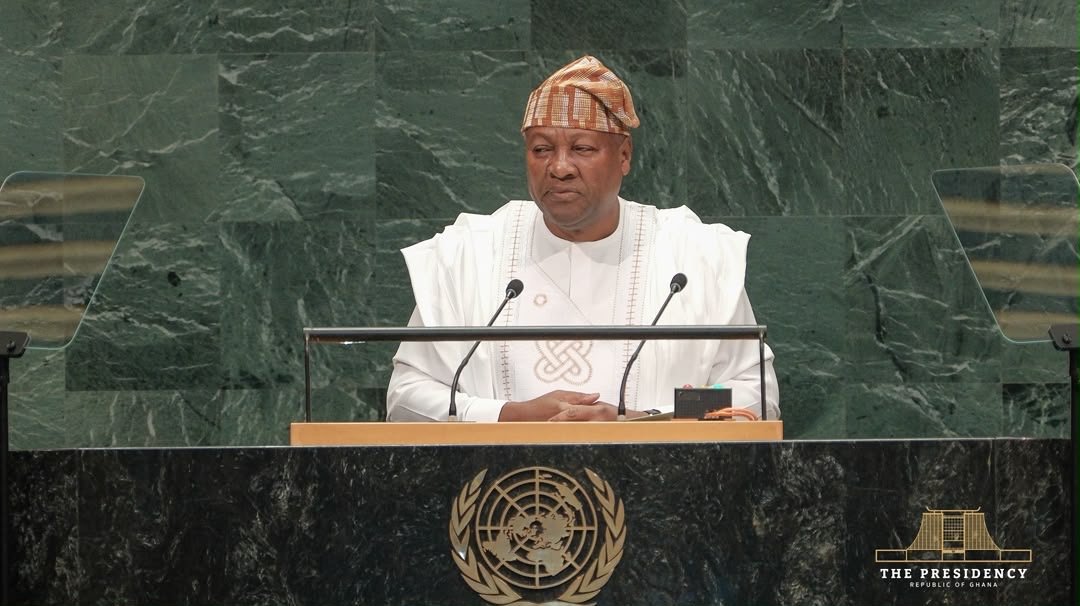
President John Dramani Mahama has called for Africa to be granted permanent representation on the United Nations Security Council, including the full rights, responsibilities and veto powers attached to such membership.
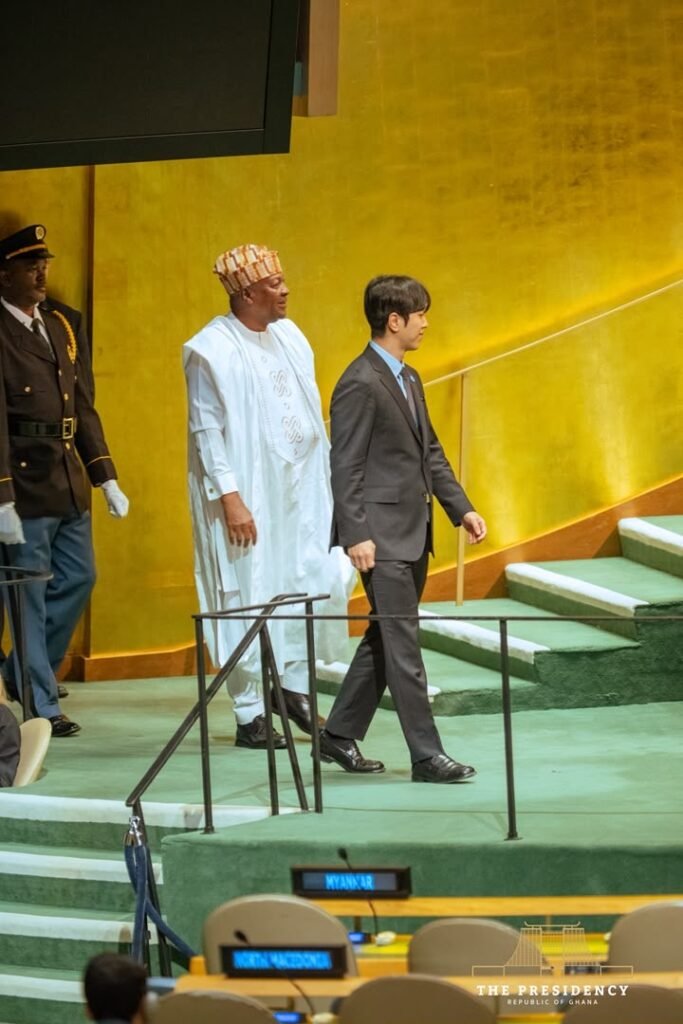
Addressing the 81st Session of the United Nations General Assembly in New York on Thursday, September 24, 2026, President Mahama said Africa’s continued absence from the permanent membership of the Security Council was unacceptable, particularly given the continent’s population and role within the UN system.
He noted that Africa is home to about 1.5 billion people, representing more than 18 per cent of humanity, and constitutes the largest regional voting bloc in the UN General Assembly.
“Yet, Africa remains without a single permanent seat on the United Nations Security Council. This is fundamentally unacceptable in the 21st century,” President Mahama said.
He argued that the existing structure of the Security Council does not reflect contemporary global realities, describing it as a global governance structure designed around post-war geopolitical circumstances.
“We cannot credibly champion the sovereign equality of nations while preserving a global governance structure designed for the post-war geopolitical realities,” he said.
President Mahama further maintained that reform of the Security Council should not be viewed as a favour to Africa, but as necessary for the credibility of the United Nations.
“Security Council reform is not a favour to Africa; it is an imperative for the legitimacy, credibility, and survival of the United Nations,” he stated.
READ: UNGA81: Africa will not remain passive arena for new scramble for resources – Mahama
His call formed part of a broader appeal for reforms to global institutions and systems to address what he described as persistent inequalities in international governance.
He also linked the issue of Security Council representation to broader concerns about inequality in the international financial architecture, arguing that developing countries face significantly higher borrowing costs than industrialised nations.
President Mahama called for long-term, affordable and accessible concessional financing to enable developing economies to invest in human capital, industrialisation and climate adaptation.