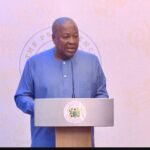
The Chief Executive Officer of Agri-Impact Limited, Dr. (h.c.) Daniel Fahene Acquaye, has praised the government’s significant increase in budgetary allocation to the agriculture and agribusiness sectors, but cautioned that persistent post-harvest losses could undermine its impact.
Speaking at the Regional Agribusiness Dialogue on Tuesday, December 9, 2025, at the Global Dream Hotel in Tamale, Northern Region, Dr. Acquaye noted that the 2026 budget allocation—rising from 0.5% in 2025 to 5% of the national budget—represents a bold step toward strengthening the sector.
He explained that the new allocation amounts to approximately GH¢13 billion, ten times higher than last year’s.
“It is important to mention that in the 2026 budget, we have seen a significant budget allocation for agriculture and agribusiness. The 2025 budget was so small that it represented about 0.5% of the total national budget. In 2026, it has increased to about 5% of the total national budget, which is very substantial—about ten times what was allocated in 2025. This is good, and we want to appreciate the government for that,” he said.

Dr. Acquaye, however, warned that without addressing Ghana’s post-harvest losses—which are estimated at US$1.9 billion annually—the investment may not deliver the intended transformation.
“Now that we have increased our budget to about 13 billion Ghana cedis (covering agriculture, agribusiness, and fisheries), it represents only about 50% of our post-harvest losses. This means our post-harvest loss is so huge that until we address it, any money we put into agriculture will only add to the existing post-harvest loss,” he noted.
Recurring Droughts and Gluts
The agribusiness expert also highlighted the recurring cycle of food shortages during droughts and gluts during periods of good rainfall, describing it as a systemic failure that must be urgently corrected. “When there is drought, we have a challenge; when it rains, we have a challenge. This problem existed before I was born, and today it remains the same. It cannot continue,” he stressed.
He pointed out a disconnect between production and processing, saying, “When farmers produce, they don’t have agro-processors. When processors establish factories, they don’t have raw materials. There is a clear disconnect.”
Dr. Acquaye added that unless Ghana strengthens critical infrastructure—roads, irrigation, storage facilities, and market access—these cycles of gluts and shortages will persist, leaving farmers unable to benefit fully from their hard work.
Northern Ghana: The Untapped Breadbasket
Dr. Acquaye further emphasized the need for deeper investment in Northern Ghana, which covers over 40% of the country’s land and produces key crops such as rice, maize, soya, yam, groundnut, sorghum, and cotton.
Yet, the region suffers from limited agro-processing facilities, compounding post-harvest losses. “This region should be the breadbasket of the entire nation,” he said, revealing that yam losses alone amount to roughly 30% of the 2026 agricultural budget.
He urged both government and private sector stakeholders to prioritize processing plants, storage systems, and post-harvest infrastructure to unlock Northern Ghana’s full potential.
Government Interventions
Speaking at the same event, Deputy Minister for Trade, Agribusiness and Industry, Sampson Ahi, reaffirmed the government’s commitment to repositioning agribusiness as a pillar for industrial transformation.
Delivered on his behalf by Mr. George Owusu Ansah Amoah, Director of Research, Statistics, and Information Management, the Deputy Minister highlighted the expanding global agribusiness market, currently valued at US$3.4–3.5 trillion and expected to reach US$4.4–5.8 trillion by 2033.
“We have a unique opportunity to tap into this expanding market through innovation, value addition, contract farming, and sustainable agribusiness practices,” he said.

Mr. Ahi also noted that the Ministry’s realignment signals a deliberate shift toward strengthening linkages between agriculture and industry.
To support agro-industrialization, he announced a two-phase strategy to improve access to agricultural machinery, including short-term tax waivers on agro-processing equipment to incentivize investment.
The Regional Agribusiness Dialogue, supported by Agri-Impact Limited and other partners, is part of the Ministry’s ongoing efforts to gather input for a national agribusiness policy.
Source: Starrfm.com.gh