


By: Alice Aryeetey/Bogotá, Colombia
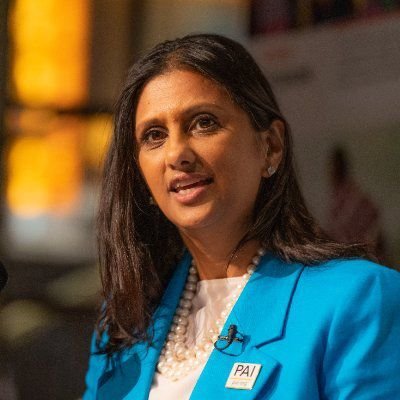
As the seventh International Conference on Family Planning (ICFP 2025) kicks off in Bogotá, the President and CEO of Population Action International (PAI), Nabeeha Kazi Hutchins, has called for the passage of the Global Health, Empowerment, and Rights (HER) Act.
Reintroduced in January 2025, the bill would permanently repeal the expanded Global Gag Rule, reinstated by the Trump administration. The rule bars foreign NGOs from U.S. funding if they provide abortion-related services, counselling, or advocacy, even with non-U.S. funds.
Speaking in an interview with EIB Network’s Alice Aryeetey, Hutchins decried the rule’s irrelevance amid broader aid cuts but warned of its anticipated expansion, which harms community autonomy. She also spotlighted the administration’s plan to incinerate $9.7 million in USAID-purchased contraceptives, mostly long-acting methods like IUDs and implants, destined for African countries currently warehoused in Belgium.
Despite offers from the UN and NGOs to redistribute them, the U.S. has opted for destruction at a cost of $167,000, a move Hutchins called “egregious” amid urgent needs.
“This year has been disorienting for family planning aligned with the values of over 70% of Americans who believe in reproductive freedom,” she said, noting that 90% support 1% of taxes for foreign aid.
Passage of the Global HER Act and the Saving Lives and Taxpayer Dollars Act aimed at preventing such incinerations would foster true partnerships, she argued.
PAI CEO Warns of Looming Contraceptive Crisis at ICFP 2025: US Aid Cuts Threaten Global Reproductive Health Gains
Nabeeha Hutchins highlighted the elimination of U.S. support for family planning programs as a “shock to the system” that risks reversing decades of progress, particularly in vulnerable regions like sub-Saharan Africa.
Her comment comes just days after a November 1 statement from UNFPA Executive Director Diene Keita alerting the world to dwindling contraceptive stocks worldwide. Keita emphasized that these shortages, driven by funding gaps, could lead to increased unintended pregnancies, unsafe abortions, and maternal deaths, echoing concerns Hutchins raised about the long-term impacts on adolescents and communities facing multiple crises, from climate shocks to humanitarian disasters.
A ‘Big Shock’ to Systems Like Ghana’s
Nabeeha Hutchins, whose organization has operated for 60 years to prioritize family planning as both a policy and funding imperative, zeroed in on Ghana as a case study.
PAI supports grassroots movements in over 36 countries, including Ghana, where USAID previously funded 45% of family planning commodities and 80% of broader foreign aid programs. “No matter how you slice and dice it, it is a big shock to the system,” she said, noting that Ghana’s progress such as integrating family planning into its National Health Insurance Scheme and universal health coverage roadmap from 2020–2030, stems from relentless civil society advocacy.
Yet, with over 50% of Ghana’s GDP now funneled to debt payments, Hutchins stressed the urgency of domestic financing.
She praised Ghanaian youth-led groups and civil society for pushing for dedicated budget lines but warned that the aid vacuum could exacerbate inequities, leaving women behind in the transition to self-reliance.
“This is our chance to really define what self-reliance means… but let’s not lose the progress,” she urged.
Lessons from Africa and Beyond: Building ‘Shock-Proof’ Systems
Drawing from PAI’s work in Kenya, Uganda, and across sub-Saharan Africa, Asia, Latin America, and the Caribbean, Hutchins advocated for a “four-pronged approach” to resilience: advocacy to policymakers, strengthening health systems, community mobilization (including youth, faith leaders, and women’s groups), and demand generation. She pointed to Latin America’s recovery from past donor cuts as a model, where civil society “stayed the course” to secure bold commitments to reproductive rights.
In Ghana, she said, “all the pieces are in place” from data tools for budget tracking to accountability mechanisms. The key, she added, is activating them simultaneously through local voices demanding compassionate, sustained services.
Call to Action: Advocates, Step Up
Hutchins urged global advocates, including those at ICFP 2025, to amplify these issues. “Change only occurs when communities demand them… with the tools to hold policymakers accountable,” she said.
PAI continues to equip partners with data and strategies, emphasizing that U.S. policy shifts send a dangerous message: a lack of commitment to reproductive rights emboldens restrictions elsewhere.
The ICFP, running through November 6 at Bogotá’s Ágora Convention Center, draws thousands from over 120 countries to forge solutions. As discussions unfold, Hutchins’ words underscore the conference’s theme: equity demands immediate, collective action to safeguard women’s health amid geopolitical turbulence.


