Road injuries are estimated to be the eighth leading cause of death globally. About 3,700 people across the world die every day due to road crashes.
Motorized two and three-wheelers comprise about 28% of all global road deaths.
In addition, approximately 55,000 to 137,000 people suffer non-fatal injuries, with many suffering disabilities as a result of the severity of injuries suffered in road crashes.
Our African continent is on record as the region with the highest death rate relative to the global rate and other world regions.
The region has 26.6 deaths per 100,000 population compared to the global rate of 18.2 deaths per 100,000 population, and 20.7 deaths per 100,000 population for countries in South-East Asia.
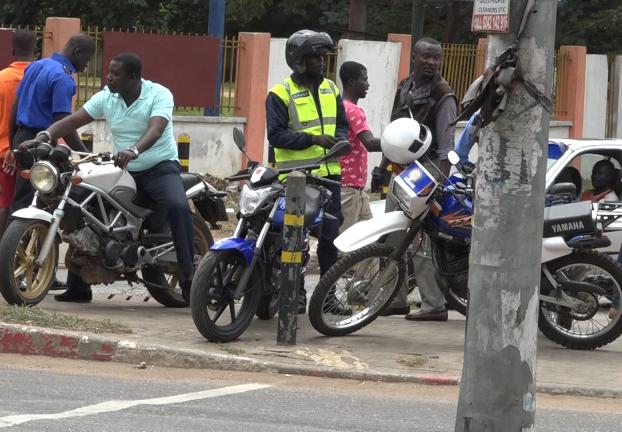
In Ghana, the use of motorcycles for commercial purposes popularly referred to as ““okada””, has become popular among some sections of the public despite concerns about its use.
The last decade has seen significant growth in the use of “okada” mainly due to inadequate, unreliable and poorly maintained public transport systems.
Its emergence maybe attributed to rapid urbanization and associated growth in economic, social and physical activities without a corresponding growth in transportation infrastructure.
One of the main objectives of the National Transport Policy is to ‘to establish an efficient, modally complementary and integrated transportation network for the movement of people’.
The policy is clear about the need to ensure sustained growth in the transport industry through adequate investment.
In the urban context, this translates into a specific objective of sustaining urban transport development initiatives, and making future development more proactive rather than being retroactive.
Unfortunately, there have been challenges towards the implementation of this policy.
The Road Traffic Regulations 2012 (Legislative Instrument [L.I] 2180), prohibits the use of motorcycles and three wheelers for commercial activities. The L.I states that “the licensing authority shall not register a motorcycle to carry a fare-paying passenger”.
However, there has been a blatant disregard for this regulation for many years, mainly due to challenges in enforcement and difficulty in distinguishing private from commercial use.
Perspectives
The different viewpoints advanced on legalising or maintaining the ban on the use of “okada” can be placed in three broad categories:
1) the safety perspective,
2) the economic perspective and convenience perspective.
The safety perspective
The use of motorcycles is arguably one of the most dangerous means of transport, bringing about justified concerns on safety with the use of “okada”. Data on road deaths and injuries depict a serious situation which cannot be ignored. Statistics from the National Road Safety Authority and Accra Metropolitan Assembly indicate motorcycle fatality rates are higher than vehicle fatality rates although the latter have higher occupancy rates.
A number of factors influence the safety of all vulnerable road users including having the correct and enforceable regulations, the standardisation of safety equipment, road infrastructure and furniture as well as behaviours. In managing and improving road safety for all, it is prudent to ensure all these facets are assessed and improved.
According to the National Road Safety Authority’s (NRSA) recent report on road crash statistics in Ghana, the number of deaths among motorcycle and tricycle users increased from 21% in 2016 to 28% in 2018 – the highest percentage increase compared to other road user types.
The Accra Metropolitan Assembly’s (AMA) recent road safety report (which covered all ten sub-metropolitan areas under AMA’s former boundary) showed that deaths among motorcycle users increased from 6% in 2016 to 22% in 2018 .
In other words, in a two-year period, deaths among motorcycle/tricycle users in Accra shot up by 16% – again, the highest increase relative to other road user types.
Furthermore, AMA’s report on a retrospective assessment of road traffic deaths and serious injuries conducted at the Korle Bu Teaching Hospital (KBTH) and the Greater Accra Regional Hospital (Ridge Hospital) showed that 55% of road crash victims who died in 2017 suffered severe head or neck injuries – a majority of these victims were motorcycle users .
It is informative to note that records at the Accident, Emergency and Orthopedic Department of KBTH showed that from December 20, 2019 to January 1, 2020, 58 out of the 79 casualties of road crashes were “okada” users. This equates to almost three-quarters of all road crash victims during the period.
To throw more light on the devastating effects of the use of “okada” on roads in our dear country Ghana, here is the story of a 43-year-old “okada” crash victim. Lawrence Yaw Gikunoo was a delivery rider for a company here in Accra.
He met an unfortunate crash in the year 2017 on the Tema motorway while riding from Accra to Tema. Lawrence slammed into a car while the car was making an unauthorized U-turn. He summersaulted several times, got dragged on the road for several feet and incurred multiple fractures in his right leg. He narrowly escaped death as he was wearing a helmet that was securely strapped.
After the crash, the 43-year-old father of 7 stayed in the hospital for a while and had his right leg amputated at a time when his eldest daughter was writing her BECE.
His oldest child is currently 17 years while the youngest is 7 years old. After his leg amputation, life became really hard because he couldn’t continue the delivery job with just one leg. He then had to resort to being a mechanic since he had already learnt that trade. What Lawrence does each morning is to sit in front of his house everyday hopping to get cars, motorcycles and tricycles to repair so that he can make a living and to also cater for his 7 children.
There is another instance of an “okada” rider in the Shai Osudoku District who got involved in a severe crash this year, 2020. The severity of the crash cost him both his arms after he suffered several fractures in his arms and had them amputated. He now has to face life head on without both arms.
We can also talk about another crash incident that happened on June 3 2020, involving two young men, one aged 21 years (“okada” rider) and the other 19 years (passenger) who met their untimely death after a tripper truck run into them at Kasoa School Junction. According to eye witnesses, the “okada” rider who was reportedly overtaking another car, unexpectedly met the tipper truck which run them over killing both rider and passenger. The list of incidents can go on and on.
Findings from a recent multi-country study also showed that Ghana (compared to Kenya, Tanzania and Uganda) has the highest proportion of motorcycle taxi users who have suffered from a health issue that can be attributed to the use of motorcycles, and who still suffer some physical, economic or financial impact from their injuries .
Another concern is the observed recklessness and general indiscipline of many motorcycle users in Accra.
As part of AMA’s participation in the Bloomberg Initiative for Global Road Safety (BIGRS), biannual roadside observational studies on speeding, helmet use, seat-belt/child restraints and drink driving have been conducted on eight selected corridors in the city of Accra.
The recent round in April 2019 showed that 86% of motorcycle users in Accra were speeding above the legal limit.
It is well established that speeding increases both the risk of being involved in a crash and severity of the consequences of a crash. In Ghana, more than half of all fatal road crashes was attributed to speeding
In addition, there have been reports of motorcycle users riding against the traffic flow and making illegal U-turns in a bid to avoid encounters with the police or to quickly arrive at their destination. These actions pose an increased risk of crash involvement. Many “okada” users do not obey traffic signals and manoeuvre dangerously on roads which pose a threat to pedestrians and other road users.
The use of helmets, particularly among motorcycle passengers, is also not encouraging. Again, findings from the last round of observational study showed that 75% of motorcycle drivers and 45% of passengers correctly wore helmets3. Helmet use by multiple passengers (especially during the coronavirus pandemic) and helmet standards are important aspects of safety which also needs to be assessed in detail.
Another important safety element is the nature of road infrastructure; which is heavily skewed in favour of vehicles. Road infrastructure of a country does not only serve the basic need of transporting people and goods but is also considered vital for development. Again, as part of AMAs’ involvement in the global road safety initiative (Bloomberg Philanthropies Initiative for Global Road Safety, BIGRS), a safety assessment was undertaken on selected corridors in Accra in 2016 and 2018 using the International Road Assessment Programme (iRAP) protocol.
The iRAP methodology rates the safety capacity of road corridors using a 5-star scale (with 1-star being the worst and 5-star being the best). The iRAP protocol advocates for a minimum 3-star safety rating standard on corridors and has been developed to separately assess the level of risk to car occupants, pedestrians, bicyclists and motorcyclists.
The assessment carried out in 2016 was undertaken on a total of 110.1 km of the strategic road network in Accra. Findings showed that the star rating for motorcyclists was worse – with 24% and 49% of the network length rated 1-star and 2-stars respectively. In other words, 73% of the assessed network length for motorcyclists did not meet the minimum 3-star rating recommended by iRAP.
In 2018, a total of 112 km of another road network was assessed. Findings showed that 60% of the assessed road network rated 1-star or 2-stars for motorcyclists. Worth pointing out is that motorcycle flows were present on 90% of the assessed network. In particular, 97% of the Accra–Tema motorway corridor rated 1-star or 2-stars for motorcyclists.
The evidence above indicates that the state of road infrastructure, particularly in Accra, is unsafe for motorcyclists. There is therefore an increased risk of serious injury and death for motorcycle users especially on corridors that do not meet the minimum recommended safety standard.
In this era of holistic planning to combat climate change, improve air quality and to reduce dependence on vehicles, we require rethinking our spatial development paradigm. The number of motorcycles in urban areas is on the increase. This maybe due to several factors including traffic congestion, lower purchase cost, fast and easy mobility, fewer parking lots and the low efficiency of public transportation. Motorbikes collectively emit 16 times more hydrocarbons, three times more carbon monoxide and a “disproportionately high” amount of other air pollutants compared to other vehicles moving similar numbers of people.
This contributes to air quality deterioration, according to research by the American Chemical Society in 2006.
An increase in motorcycle numbers and usage in most South-Asian cities have led to smog and short-lived climate pollutants.
Economic and convenience perspectives
The main reason cited by those involved in the use of “okada” is the opportunity it provides to earn a living. In Lagos, for example, about 85 percent of “okada” riders cite unemployment as the reason for getting into this business4. This is also the prime reason cited by most “okada” riders in Accra and other major cities in Ghana.
Proponents of legalizing the use of “okada” have highlighted the high unemployment rate (especially among younger age groups), ease of start-up (relative to other business types), high returns and an opportunity to promote economic wellbeing as major reasons.
It has been suggested that the growth in the use of “okada”, particularly in urban areas provides additional employment opportunities through the sale of spare parts, repair and maintenance services.
Others have also pointed out that in densely populated cities such as Accra, “okada” is a convenient way of overcoming traffic congestion. The convenience of “okada” for short distance travel, savings in time, flexibility and ability to serve low-density areas have been advanced as additional reasons for their legalization. In summary, the convenience perspective draws attention to the ability of motorcycles to adapt to changing travel demands.
The other perspective mostly advanced by riders or passengers of “okada” which is being raised by proponents of legalization of “okada” in our country has to do with convenience. The point has been advanced that motorcycles are sometimes ideal and convenient at navigating bad road networks and easily enter remote and far away areas where roads are either in a bad shape or not existing. It has been suggested that “okada” provides convenient accessibility to outlying peripheral areas which are inaccessible by four-wheeled vehicles and without any organized “trotro” or large bus transport service.

Issues to consider
Some have suggested regulation and enforcement as an approach to ensuring safety in the use of “okada” – should it be legalized. However, there are important questions to objectively reflect on:
1) How effectively have existing public transport modes been regulated?
2) How equipped are enforcement agencies in enforcing existing road regulations to ensure safety?
3) Are there unintended consequences of legalizing the use of “okada” we can foresee?
4) Does legalizing “okada” actually address the public transport challenges in our country?
Important lessons on challenges and successes (if any) can be learnt from cities/countries in Africa and elsewhere which have legalized motorcycle taxis.
For example, after the authorization of the use of “okada”, the government of Lagos State in Nigeria passed a law in 2012 which banned the use of motorcycles on many major roads and bridges mainly because of the high rate of motorcycle crashes and associated deaths and injuries. The law also prohibits motorcycle riders below 18 years, prescribes the use of a standardized protective helmet for all drivers and passengers, and prevents the use of motorcycles for haulage.
Findings of a study conducted after the enactment and enforcement of the law showed that motorcycle deaths reduced by one-third (33%) in Lagos State .
However, Lagos State government in January 2020 has had cause to ban the use of motorcycles for commercial purposes (okada) citing among other reasons, the increasing rate of road crashes, injuries and fatalities, It has highlighted the high negative economic impact on victims and families. Furthermore, in Rwanda, there were 184 reported fatalities caused by motorcycles in 2019. According to the Rwanda National Police traffic report, about a half of motorcycle crashes occur in the city of Kigali.
In cities such as Douala and Kampala, all commercial motorcycles are expected to be registered with a requirement for operators to possess a driving license, a roadworthiness certificate, and to provide customers with protective helmets . However, in practice, a large number of operators are not compliant with these regulations.
In some African cities, it is estimated that over 50 percent of motorcycle taxis are without a valid license6. This brings into sharp focus the challenge of enforcement by law enforcement agencies.
Generally, it is often easier and cheaper to obtain a forged certificate of roadworthiness than to pass a test with a vehicle in good condition. Similarly, driver licensing systems are not 100 percent secure and therefore possible to obtain fraudulent documents. These are important elements of regulation which require careful thought.
Way forward
As the debate for and against the legalisation of the use of “okada’ in Ghana unfolds, we at the Accra Metropolitan Assembly (AMA), based on our position and work with international road safety partners advice that it is better to maintain the current status quo (maintain the ban). This conservative approach favours the preservation of the law banning the use of “okada”. This approach requires enhanced enforcement than what currently prevails. Improving the capacity of MTTD personnel to enforce, improving and increasing motorcycle-only checkpoints, developing effective strategies for motorcycle stops and easily distinguishing motorcycle ownership type (e.g courier versus private use) are some of the suggested ways to improve enforcement.
There is also the option to repeal the law banning the use of motorcycles for commercial use. However, this approach should fully consider the safety issues highlighted above. In addition, the current road infrastructure will not be able to accommodate the potential exponential increase in numbers of motorcycles and tricycles (otherwise referred to as “aboboyaa” and “praggia”) if the law is repealed. This situation is likely to lead to further challenges in traffic management and increase the number of motorcycle/tricycle related crashes, injuries and deaths.
Another option is to have a restricted-use approach where the law will be repealed but use of motorcycle/tricycles for commercial purposes will be confined to non-major urban roads, peri-urban and rural areas. However, this approach will require clearly demarcated roads or areas for use by commercial motorcycles/tricycles and enforcement.
Conclusion
“Okada”s may be serving a short term public transport need but regrettably, a majority of them ride recklessly, speed above the legal limit, and disregard safety and other road regulations, thus, contributing to an increase in injuries and deaths. In addition, the challenges with enforcement and regulation of existing public transport modes gives an indication of problems likely to be encountered if the use of “okada” is legalized.
In some African cities, it has been difficult to control and regulate motorcycle taxis because with time they gain political leverage due to rapid growth in membership. It is therefore important to take the issues highlighted earlier into consideration before taking a stance on whether or not to legalize the use of “okada”.
The larger question which still looms is; Is “Okada” legalisation the sustainable approach to address Ghana’s long-term transportation challenges as the nation strives to attain the Sustainable Development Goals?
The systematic implementation of the National Transport Policy of 2012 would set Ghana on the path to a modernize multi modal transportation system that would be a means to “Ghana Beyond Aid”. Even though transportation remains one of the key pillars for sustained economic growth, the issue of safe movement of people must be a priority at all times.
The writer, Mohammed Adjei-Sowah is the Mayor of Accra and a Bloomberg Initiative for Global Road Safety (BIGRS) Advocate