On the 9th of October, 2018, having attended the 2018 TICAD Ministerial Meeting in Tokyo, Japan, I turned my attention to Yerevan, the capital city of Armenia where the 17th La Francophonie Summit was to be held. After an eleven-hour flight from Narita International Airport in Tokyo to the United Arab Emirates, Dubai, on board an Airbus 380 aircraft, I had to convince boarder agency officers of Dubai that I was part of an official party from Ghana attending the La Francophonie Summit in Yerevan. After nearly an hour of consultations and crosschecking of documents and emails I had from the Armenian Foreign Ministry, I was issued with my boarding pass and driven through virtually the whole Dubai Airport to Terminal Two to board a Fly Dubai Boeing 737+800 equipment to Yerevan. At about 11am local time in Armenia (7am GMT) on Wednesday 10th of October, 2018, I touched down at the Zvartinots International Airport.
Visa on Arrival
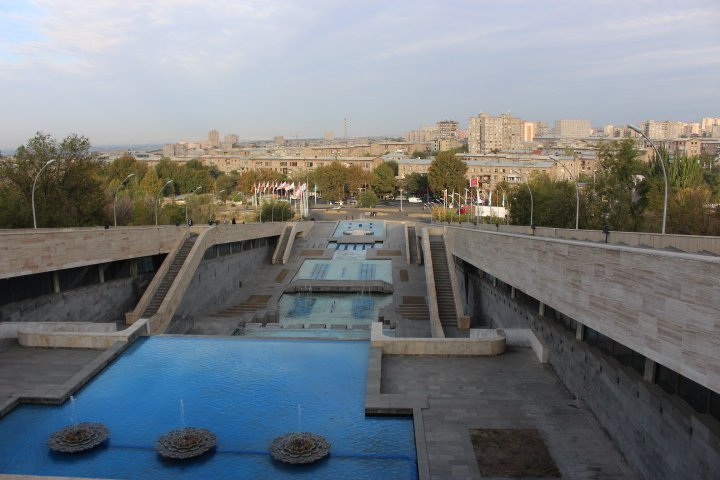
Volunteers for the 17th La Francophonie Summit were stationed at the airport to assist all arriving participants to go through all the necessary immigration processes to receive clearance from boarder agency officers for legal entry into Armenia. Five of my colleague journalists who came directly from Ghana had gone through the process the day before and I was the only one left from the Ghanaian side. Within a space of ten minutes, my entry visa was issued and I was cleared for entry.
Off to the Hotel
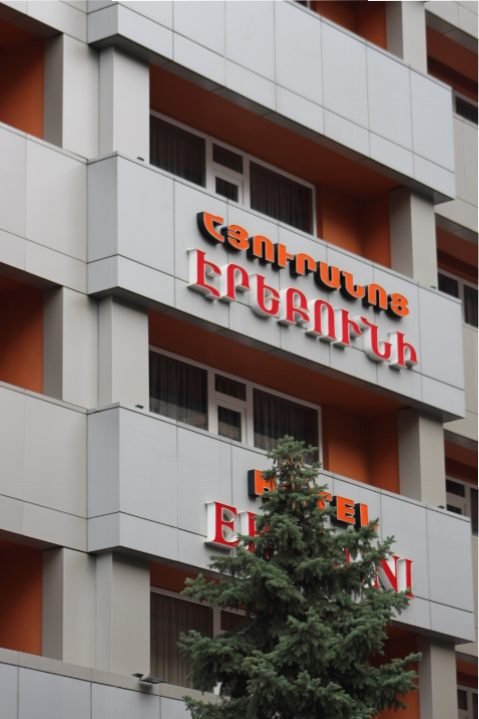
Organizers of the Summit had made arrangements for buses to convey all arriving participants to their hotels. An information desk setup at the exit point of the arrival hall had a list of all participants and their hotels as allotted. Mine was Erebuni Plaza Hotel together with two other colleagues. My three other colleague journalists were stationed at Opera Suite Hotel.
The President’s Arrival
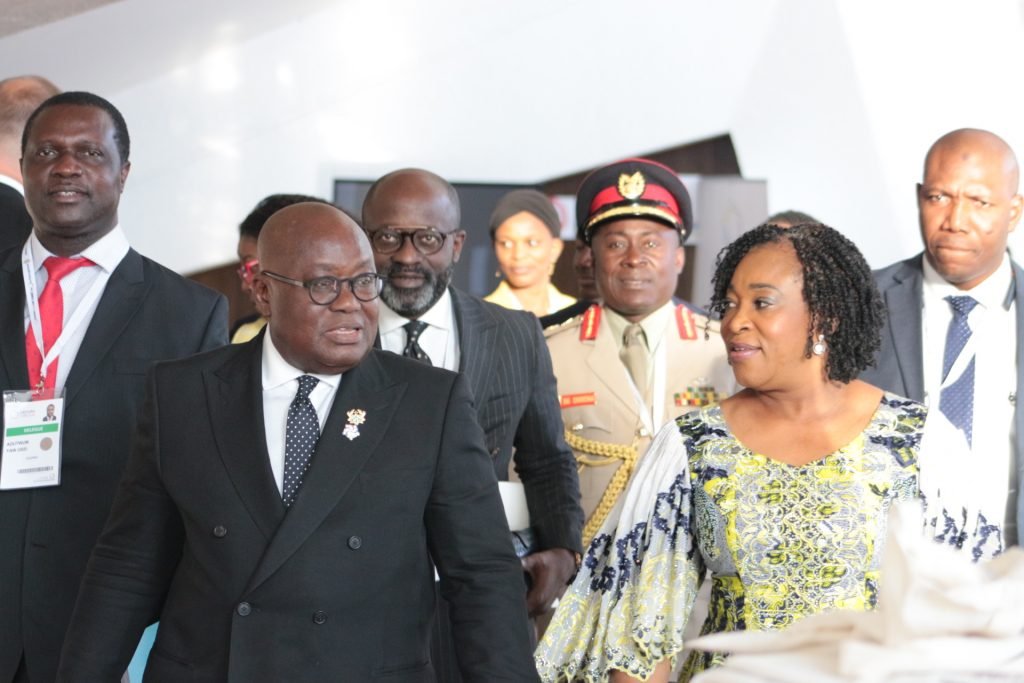
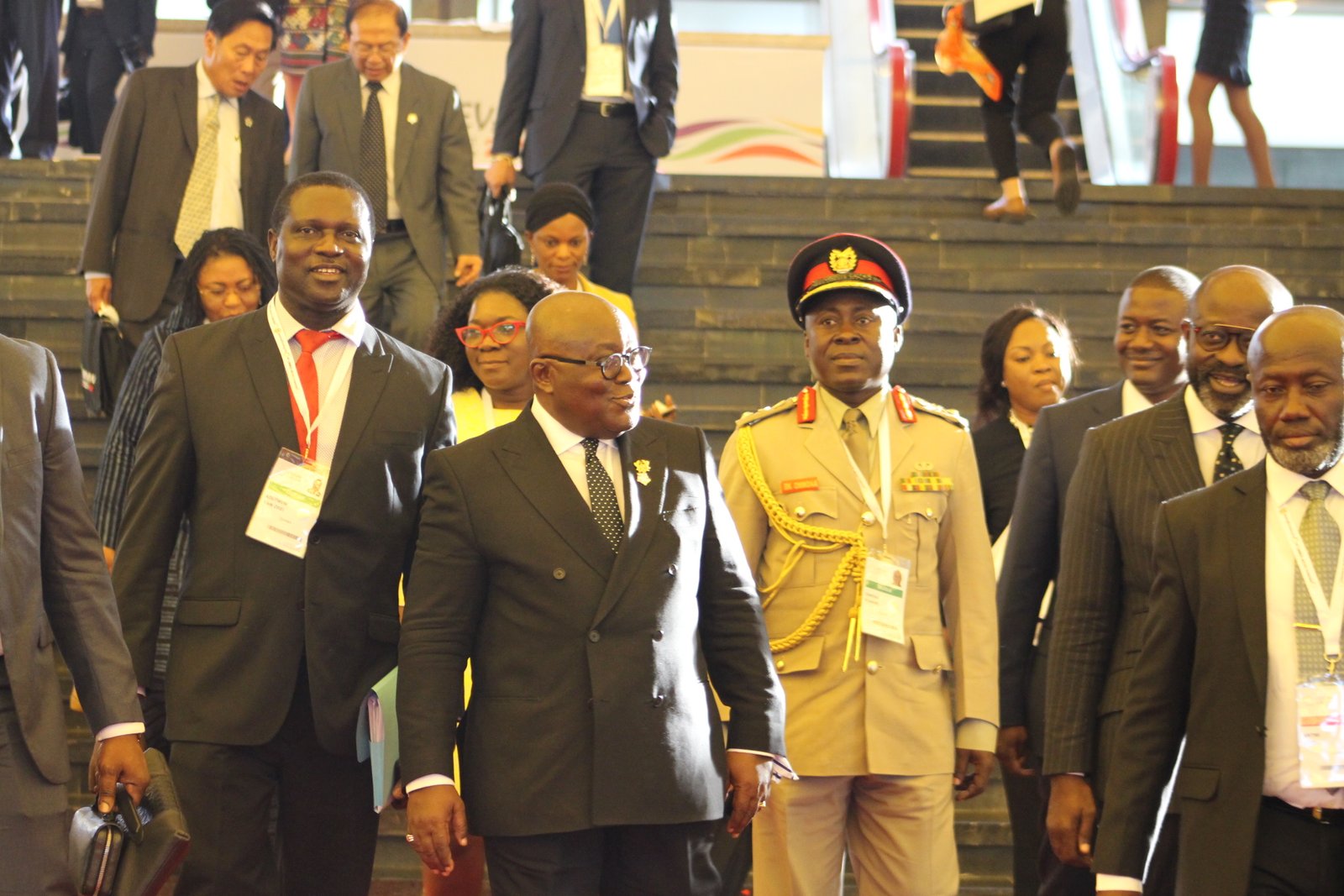
After settling in at the hotel, the next agenda was to await the arrival of His Excellency, the President, Nana Addo Dankwa Akufo Addo and his traveling party. Even though there was no arrangement to cover the arrival of the President, we were informed that his plane touched down in Armenia at about 18:30 local time in Armenia (14:30 GMT). Day one had thus come to a successful completion and all was set for the La Francophonie Summit to begin.
The Summit Grounds
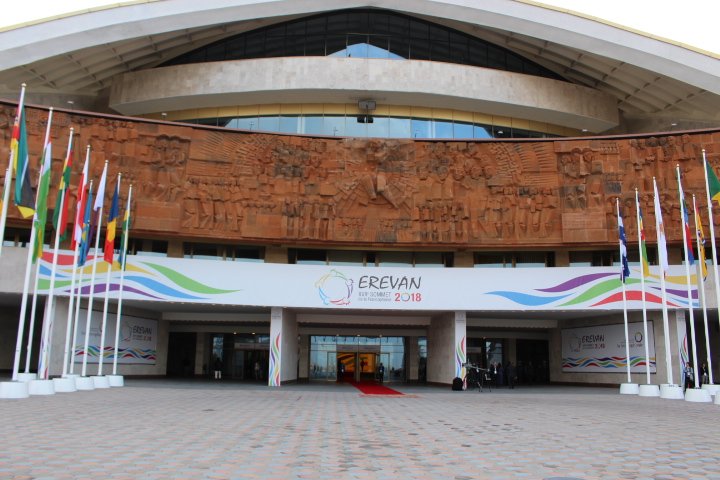
Time check and it is twenty minutes past the hour of seven in Yerevan (3:20am GMT). Breakfast was served at the Erebuni Hotel and the buses heading to the summit venue were also ready. My two colleagues and I grabbed a bite and quickly jumped on the bus for the fifteen (15) minutes journey to the conference grounds.
Taking Position
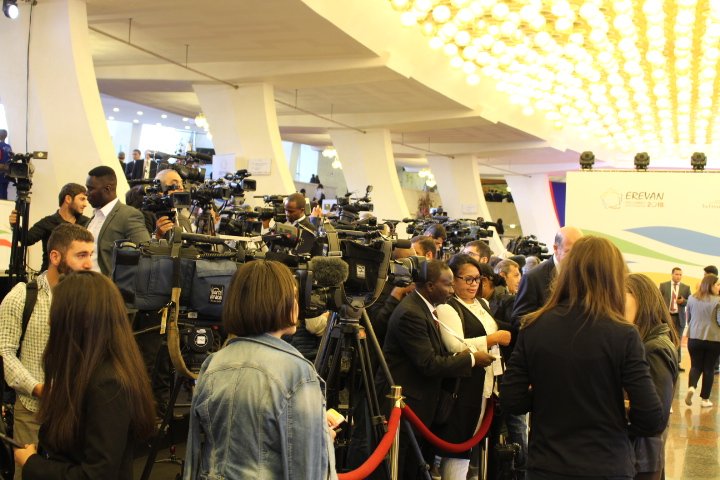
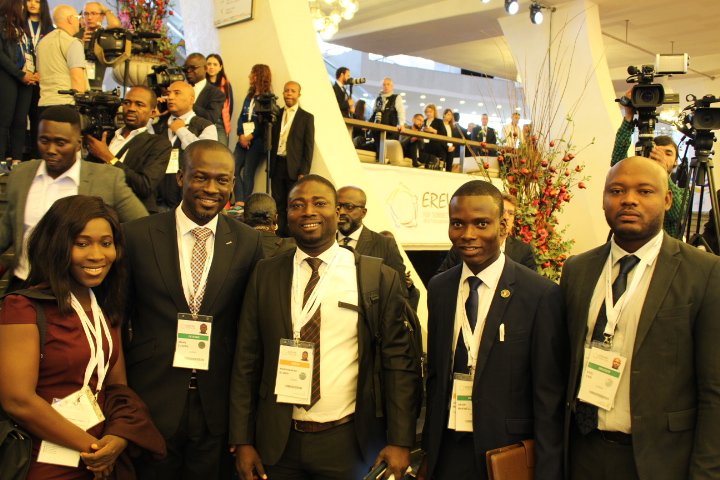
As was to be expected, a large contingent of journalists from all participating countries were on location, everyone wanting the best point to mount their cameras and tripods in order to get the best shot of their participating leader. After a little scramble here and there, everyone found the most suitable place. All 84 participating leaders arrived at the conference venue one after the other, walked the red carpet, exchanged greetings with the host and Prime Minister of Armenia, Nikol Pashinyan, and Mrs. Michaëlle Jean, the Secretary General of the Organisation Internationale de la Francophonie, OIF, posed for a one-minute photo shoot and then proceeded to the converging hall. After the individual photo sessions, all the leaders assembled on stage for the group photographs.
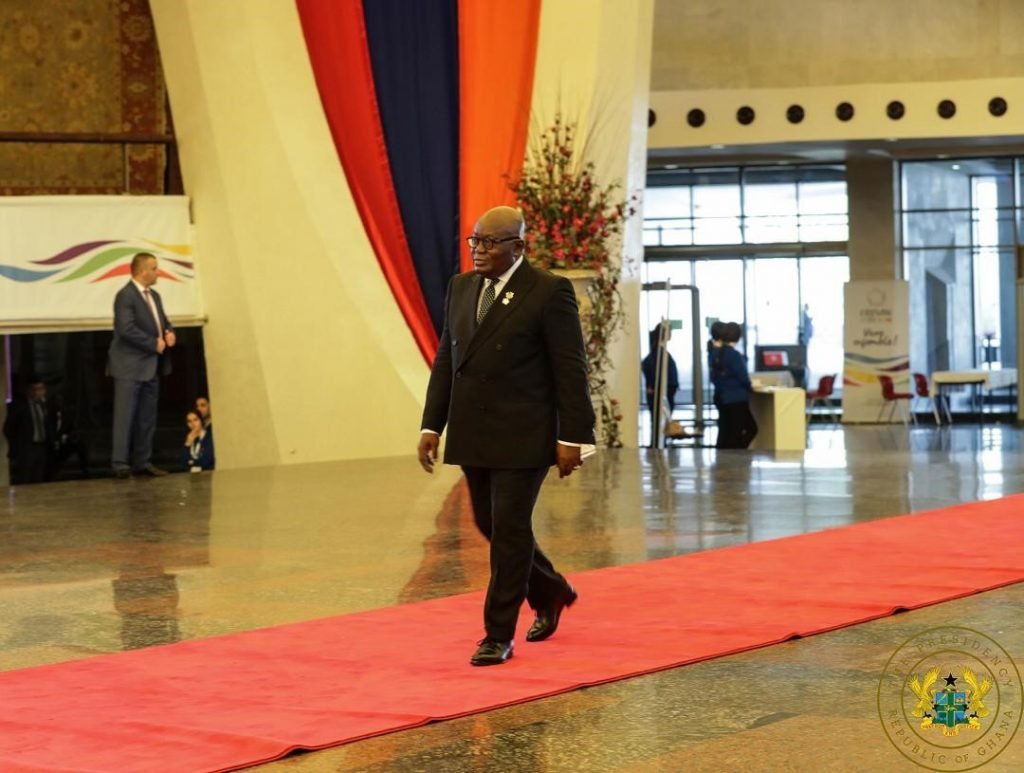
Francophonie Summit Opens in the Former Soviet Republic of Armenia
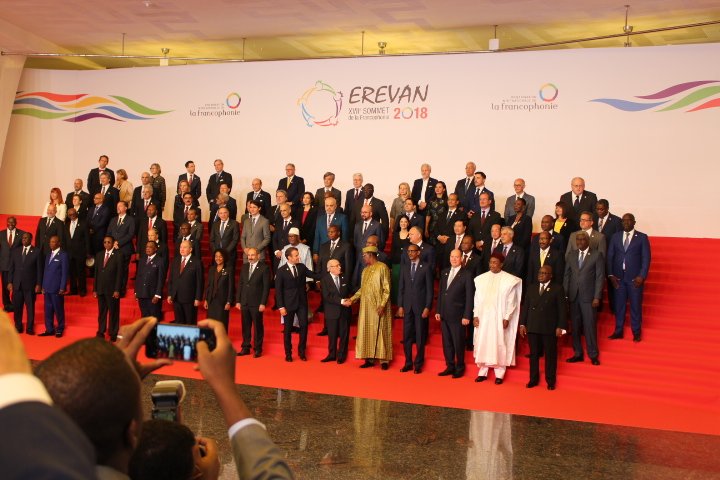
Armenia isn’t top in mind when one thinks of a thriving French culture just like Ghana. But on the 11th of October, the Armenian capital of Yerevan was transformed into a ‘Francophone Mecca’, a sign of the relaxed admission standards of the Francophonie organization representing the French-speaking world. Armenia at last is host of the two-day La Francophonie Summit which opened on the morning of the 11th of October, 2018.
Opening Ceremony

After the group photo session, participants hurriedly made their way into the auditorium where the opening ceremony was to take place amidst very tight security. Without the approved conference identity card that allowed you access into the main conference room, the security personnel would not under any circumstance allow you entry.
After a seven-minute video on the Francophonie summit interspersed with the rich ancient culture of the very religious Armenian state, Prime Minister Nikol Pashinyan was invited to deliver his welcome address and oh yes, it was delivered in French. After being kicked about with different versions of the French language delivered by several world leaders, President Emmanuel Macron of France (the ‘Barrack Obama of Europe’) took the centre stage and delivered his speech for well over 45 minutes. What a relief it was for all who were in the conference when he ended his address.
The first plenary had thus come to an end and the world leaders would take a break for lunch.
After a two-hour break, the world leaders assembled again for the second plenary where they discussed all the major issues on their plate such as the election of the Chairperson of the OLF and the admission of members and the upgrade of existing Observers to Associate Members and from Associate Members to full-fledged membership of the La Francophonie. At about 18:00 local time (14:00 GMT), the second plenary came to an end and one by one, President Akufo Addo and his colleague Heads of State were driven away from the conference hall to their various hotels.
The Summit Concert
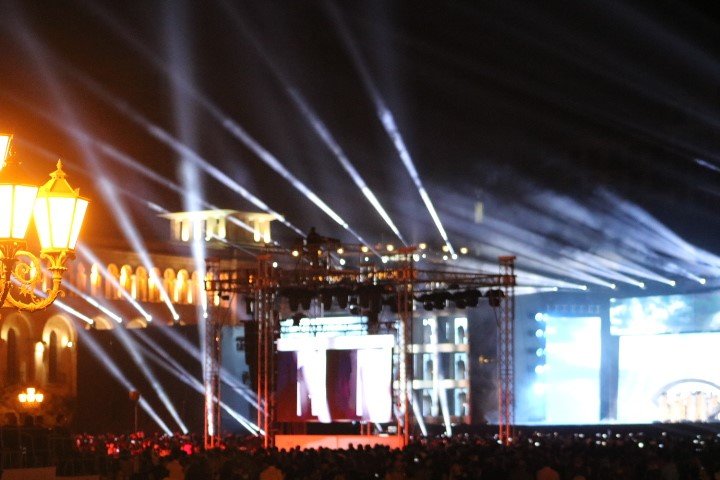
The Republic Square of Armenia played host to a mega concert to herald the La Francophonie Summit. The concert attracted over 300,000 attendees. It was telecasted nationwide on Armenia State TV Channel 1 and worldwide on the conference webpage. Angelique Kidjoe was the star performer of the night. The concert was climaxed with a 20-minute massive fireworks session that visibly shook Yerevan.
Day Two and the Last Plenary
President Akufo-Addo on day two addressed the Summit in a 10-minute speech. The address was delivered in French. However, the session was not opened to the media. In his address as captured in the speech, President Akufo-Addo said, “With French set to become one of the world’s most commonly spoken languages, and with French speakers rising to over 700 million, of which 80% will be in Africa, the lives of Ghanaians, therefore, are intimately linked with the Francophone world. As a country bordered to the north, east and west by French speaking countries, and to the south by the Gulf of Guinea, Ghana recognizes the strategic importance of her immediate neighbors, to whom we are bound by profound ties of blood, geography and history, and, indeed, of all French speaking countries, to the development of our country.”
The President further noted that during his time as Minister for Foreign Affairs in the government of His Excellency John Agyekum Kufuor, he was privileged, on 28th September, 2006, to lead the Ghanaian delegation to the 11th Francophonie Summit in Bucharest, which resulted in Ghana becoming an Associate Member of La Francophonie, without first having to be made an Observer Member.
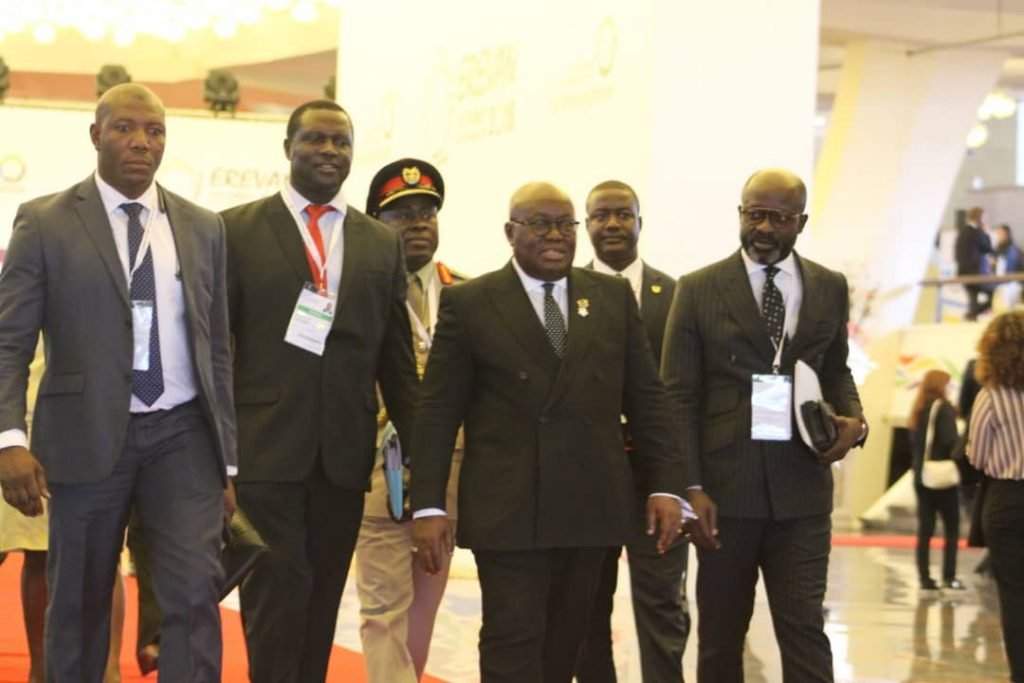
“Ghana, an anglophone nation, is only one of a handful of countries that enjoy membership of both the Commonwealth and La Francophonie, and we value this situation very much,” he said. President Akufo-Addo continued, “That is why we are determined to strengthen the bonds of friendship and co-operation with La Francophonie, by transitioning from an Associate Member to a Full Member.”
Ghana, a strong, functioning democracy, the President stressed, shared the aims and values of La Francophonie, adding that Ghana looked forward to playing a significant role in the realization of these values. “Our goal is to live, one day, in a bilingual Ghana, i.e. English and French, together with our own indigenous languages. We have already begun to work towards this. On 15th May, 2018, I authorized the signature of a language pact with La Francophonie, towards helping to make this a reality,” he said.
Additionally, President Akufo-Addo indicated that his government has introduced a bilingual classroom project at the basic education level, where certain subjects are taught in both English and French, and the study of French is being made compulsory at the basic level of Ghana’s educational system. With 84 members making up La Francophonie, the President said, “An increase in trade and investment co-operation amongst member countries should be deeply promoted and encouraged”.
“History tells us that this is the best route to general progress and prosperity. With the help of digital technology, we can then accelerate economic growth, create the much-needed jobs for our youth, and take advantage of the vast potential of Africa’s young population,” he added.
The 21st century, with the aid of science and technology, President Akufo-Addo said, offers humankind, despite the greed of a few, the prospects, for the first time in human history, of building a world civilisation of prosperity in freedom for all the peoples of the world, where all citizens live in dignity and security. “I am an unrepentant optimist, and I am confident that we can work together to build such a new world, with member states of La Francophonie taking the lead”.
The La Francophonie Organization
The Organisation Internationale de la Francophonie (OIF), generally known as the Francophonie and also called International Oganisation of the Francophonie in the English language, is an international organization representing countries and regions where French is a lingua franca or customary language, where a significant proportion of the population are francophone (French speakers), or where there is a notable affiliation with French culture.
The organization comprises 84 member states and governments; of these, 54 states and governments are full members, four are associate members and twenty are observers. The term Francophonie or Francosphere (often capitalized in English) also refers to the global community of French-speaking peoples, comprising a network of private and public organizations promoting equal ties among countries where French people or France played a significant historical role, culturally, militarily, or politically.
The modern organisation was created in 1970. Its motto is “égalité, complémentarité, solidarité” (“equality, complementarity, and solidarity”), a deliberate allusion to France’s motto liberté, égalité, fraternité. Started as a small club of northern French-speaking countries, the Francophonie has since evolved into a global organization whose numerous branches cooperate with its member states in the fields of culture, science, economy, justice, and peace.
The President’s Departure
The President’s busy schedule would not allow him to spend any more time in Yerevan, Armenia. His security team moved quickly to organize his departure from the conference grounds to the airport enroute to Paris, France, where he was scheduled to attend various meetings.
Time to Hit Town
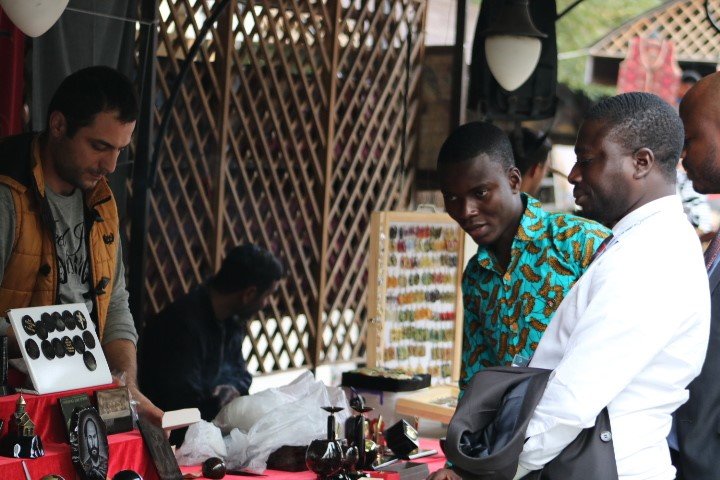
The conference was over, the President had left Armenia, leaving the floodgates opened for the media team to have a feel of the Armenian way of life. While on this move, I made a few observations.
Seeing a “Black” for the First Time
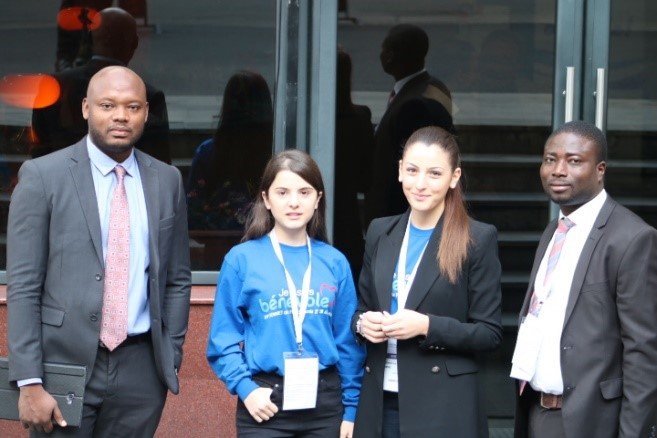
Whilst we walked about in town, we noticed that almost every young person we met and in some cases adults were visibly surprised to see us. Upon enquiring why it was so, we realized that most Armenians had not seen a black before. In no time, we were the toast of the town with everyone wanting to take a picture with us. I must admit, I was quite surprised that there are still white folks in the 21st century world who have not encountered a black yet.
The Yerevan “Trotro”
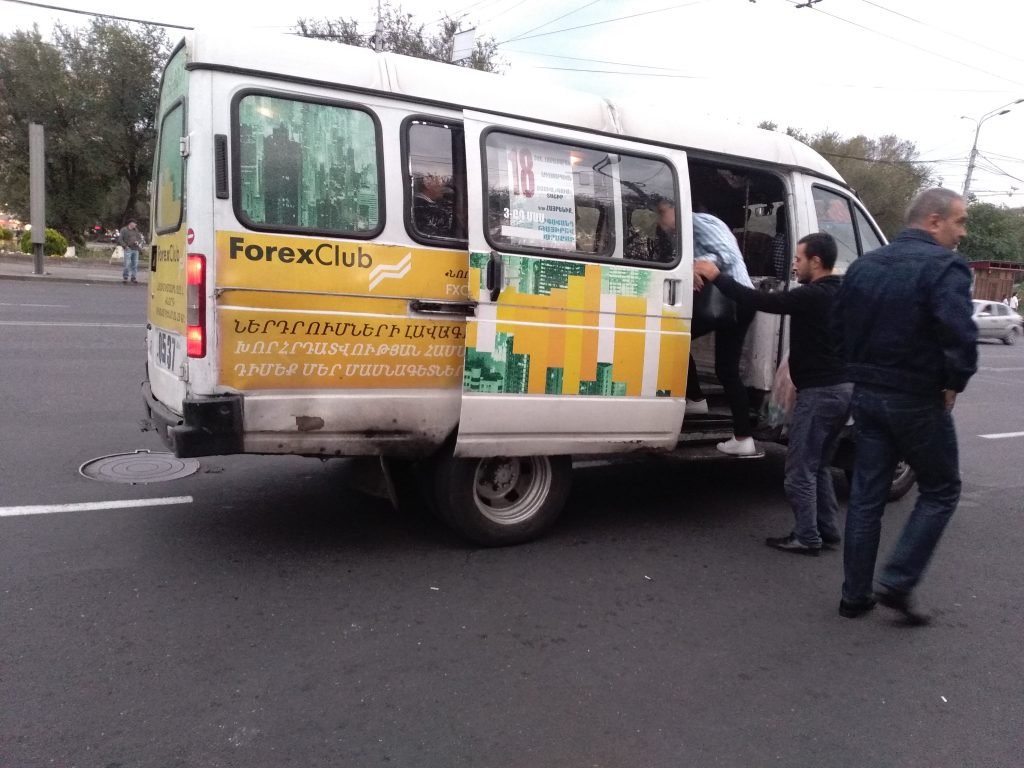
Standing by one of the byways on Yerevan, I saw a mini bus approaching a bus stop. My interest quickly ignited to want to know what service the mini bus was providing. Confirmed! It was “trotro” service in Armenia. A comparative analysis of the Accra “trosky” to the Yerevan “trosky” is entirely left to you.
Satisfying Your Thirst in Public
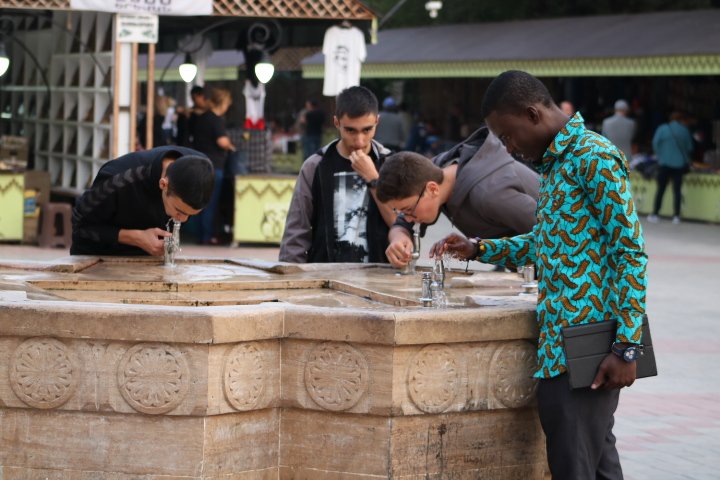
The entire Yerevan city is fitted with drinking water taps. Everyone walking by the taps can press same and drink directly from the tap with a cup and believe me it is clean water and the taps were also well kept. Was just wondering, can we make such a provision in our walk ways, markets and bus terminals? Wondering again what would happen to them the day there is an acute water shortage in the areas where they are situated?
Our Encounter with the Armenian Lady
Expressing themselves in the English language we realized was quite difficult for the average Armenian. However, we met one lady who sold traditional Armenian artifacts who was fluent in the English language. She assisted the team in interacting with the market women and men.
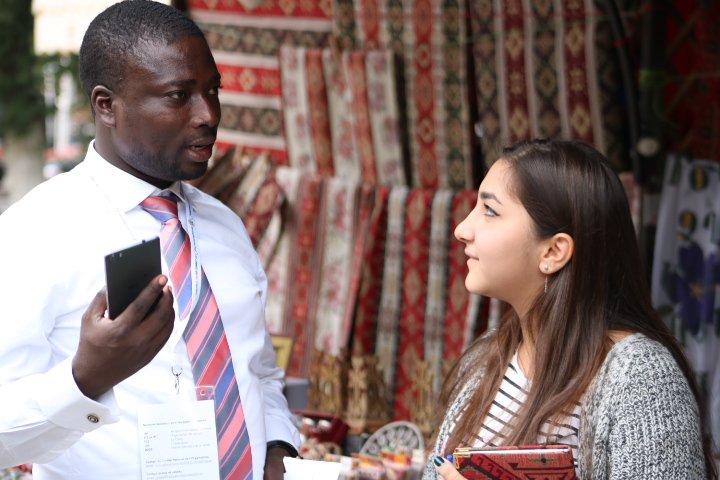
An enquiry by one of our colleagues on the process it takes should a man desire to marry an Armenian lady led to a major revelation. The 19-year old said the interested man has to initiate a friendship for at least 3 months. After the friendship period, the man has to seek permission from the brother of the lady. If you are successful in obtaining the approval of the brother, the next phase will be to seek the approval of the father of the lady. It is after this stage that a relationship can begin. Armenians are very family oriented and it is very difficult to see a daughter or a son act against the will of his or her parents and/or family. If you are planning to marry an Armenian lady, to be forewarned is to be forearmed.
The Street Artists
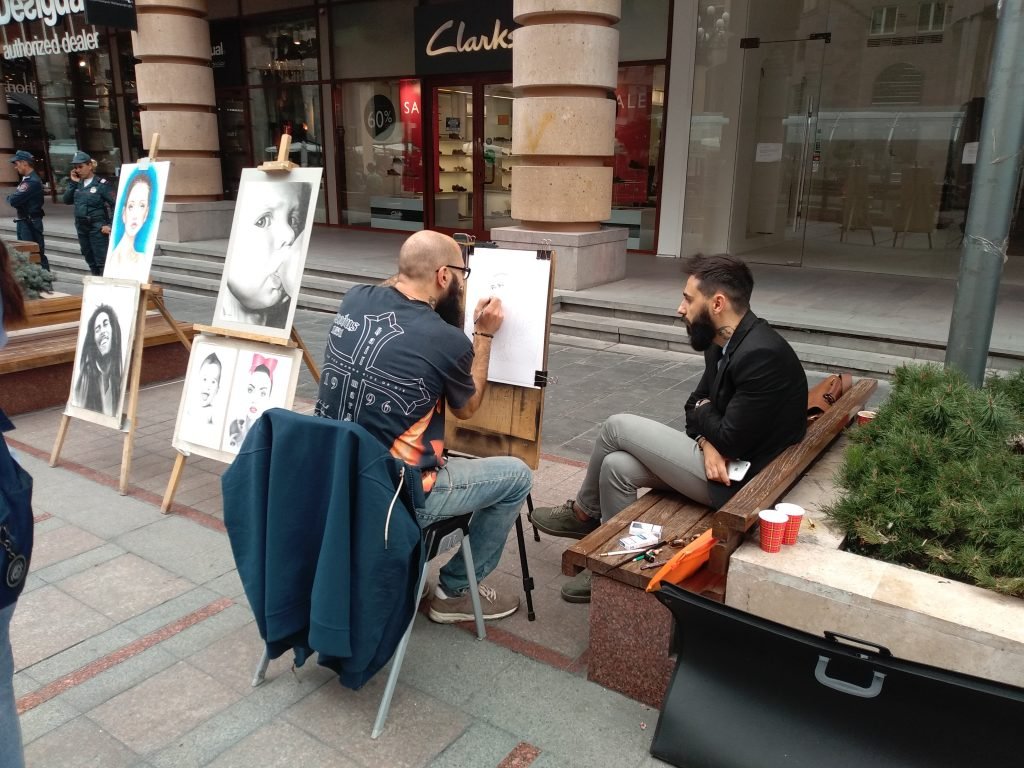
The artistic instincts of the average Armenian were visibly on demonstration on the streets of Yerevan. At every turn I noticed a group of people whose trade is to draw and to paint. They had access to very busy streets, the entrance to restaurants and shopping malls where they carry out their paintings and drawings for a fee.
The Wooden Bible
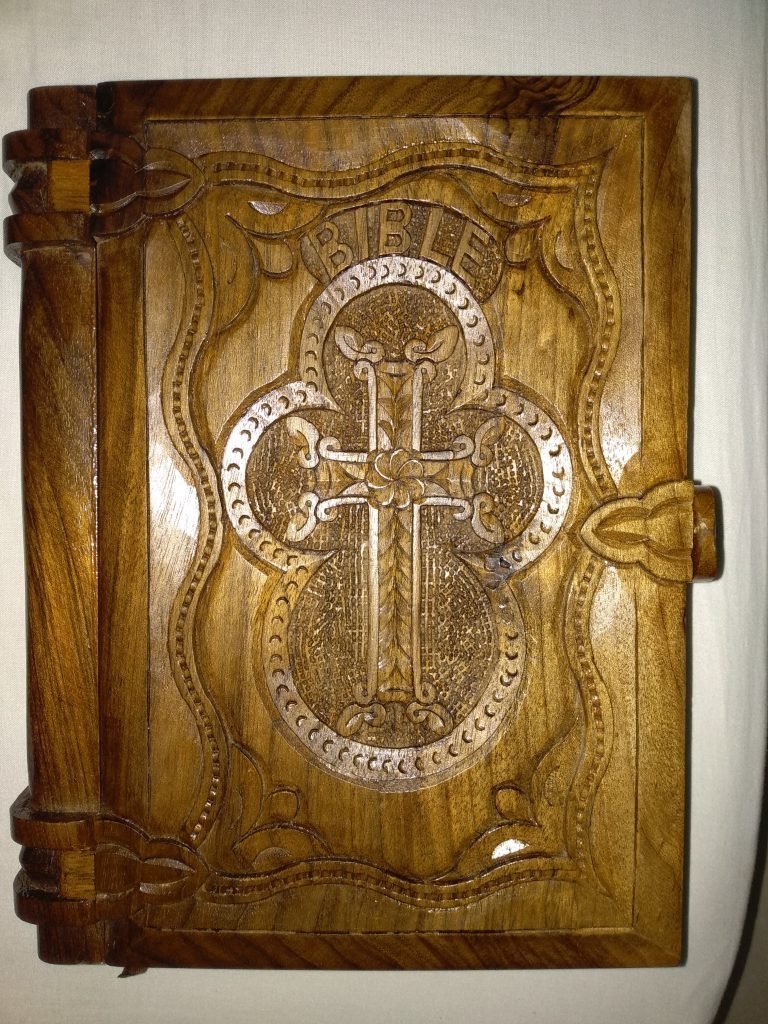
One of the things I looked out for was to find a Bible in the rather very religious nation and I found a special one made of a wooden cover that was every well calved. It is probably the most treasured item I have ever purchased. It will be exhibited in my home for viewing and reading at no fee.
The Stalin Currency
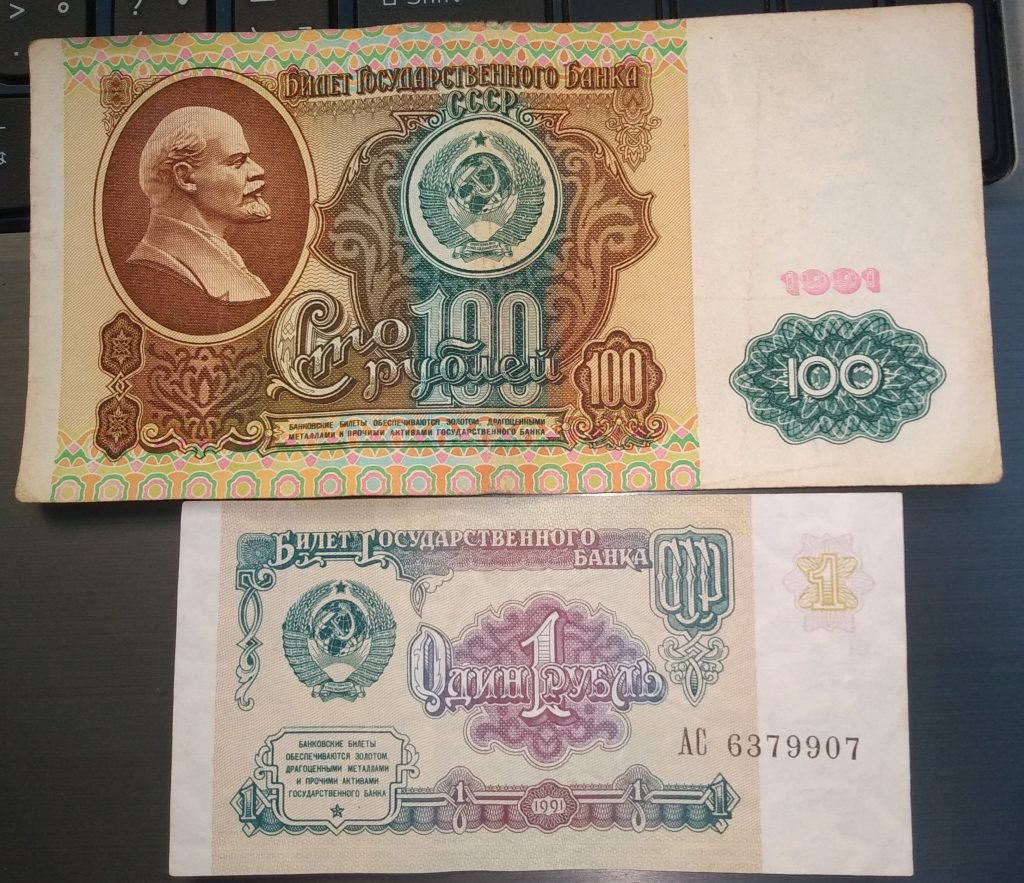
While walking in the alleys of the traditional market in Yerevan, an 82-year old man invited me to his table top shop. Guess what his trade was? Selling very old currencies that were used during the days of the Russian dictator, Joseph Stalin. I keep a money album and so I was naturally interested in his trade. With the equivalent of GHc 30.00 (3,000.00 Armenian Dirham), I purchased a few of the currencies for my money album. The album will also be on display but this one will be viewed for a fee!
Packing Time
After about six hours of walking the streets and shops of Yerevan, the team settled for Armenian sharwama with coke and fanta at a near-by joint. With a whole day of travel ahead of us beginning from 5:50am local time (1:50am GMT), we had to go and complete our packing, get some sleep and leave for the airport.
Three Take Offs, Three Landings
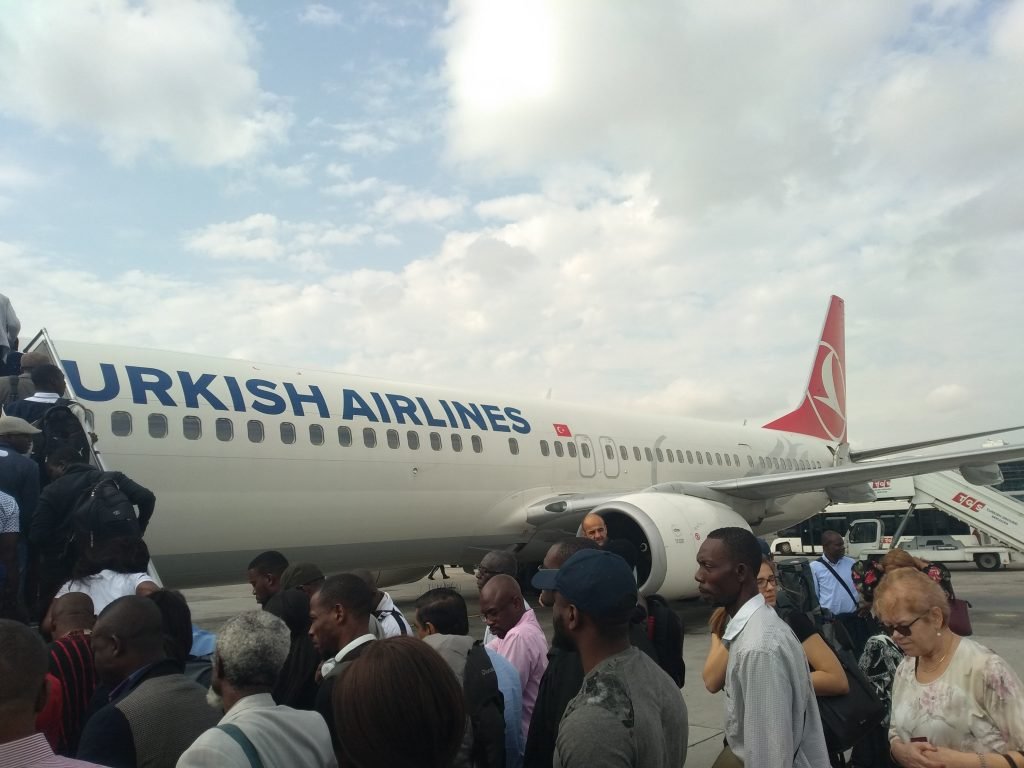
Due to a relaxed weekend flight schedule in Yerevan, leaving Armenia on a Saturday morning meant that the team would have to flight from Yerevan to Kiev, Ukraine for three (3) hours, catch a Turkish Air flight to Istanbul from Kiev for two (2) hours and then get unto another Turkish Air flight to Accra from Istanbul for seven (7) hours. At about 18:45 GMT, Turkish Air flight TK 729 touched down at the Kotoka International Airport to the glory and honour of the living God.
My Take
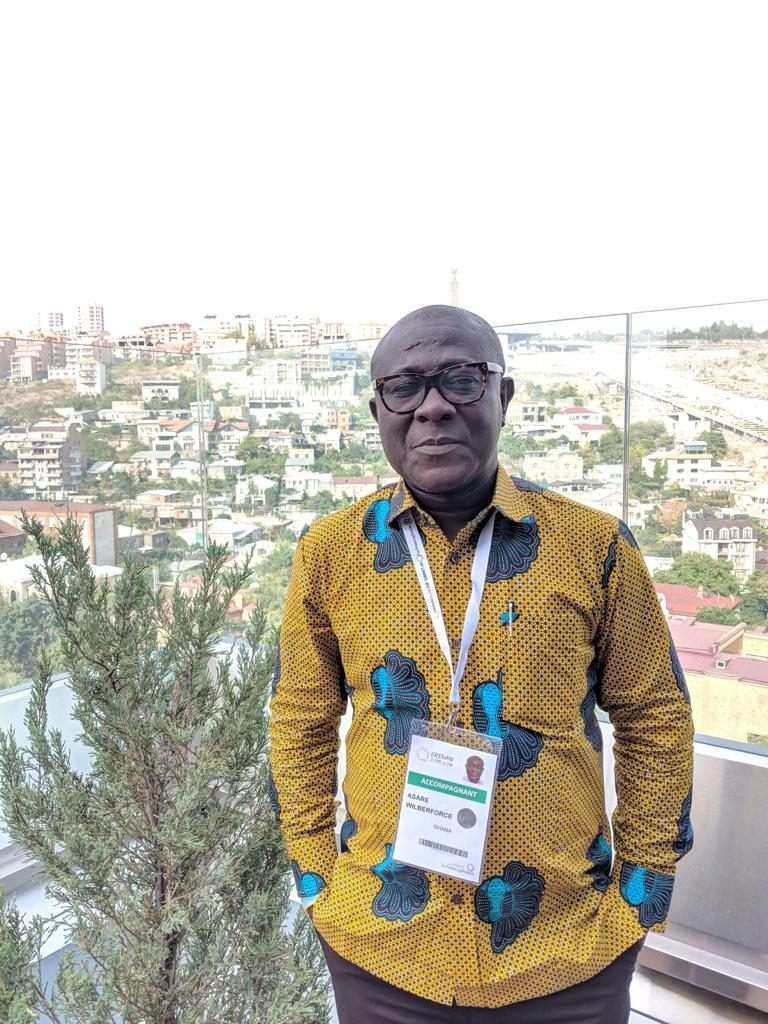
The La Francophonie Summit can be said to have sparked a challenge in me to pick up the study of French, howbeit late. I have also decided to be an ambassador of the promotion of the teaching and learning of French as a second language in Ghana. If the next generation of Ghanaian youth and young adults can speak both English and French, that would have added on value to the Ghanaian and nothing less. Our Education Ministry and governing authorities ought to develop a policy that would make the teaching and learning of the French language fun and easy.
The pages of the travelogue is shut momentarily awaiting the next challenge.
Merci!!!!
Source: Wilberforce Asare