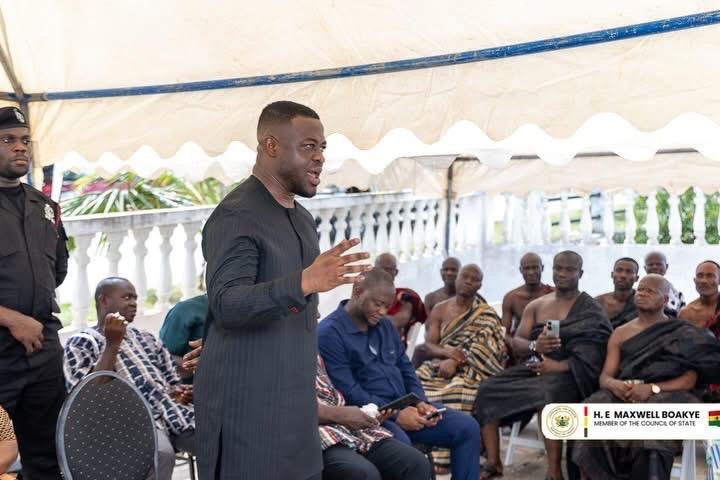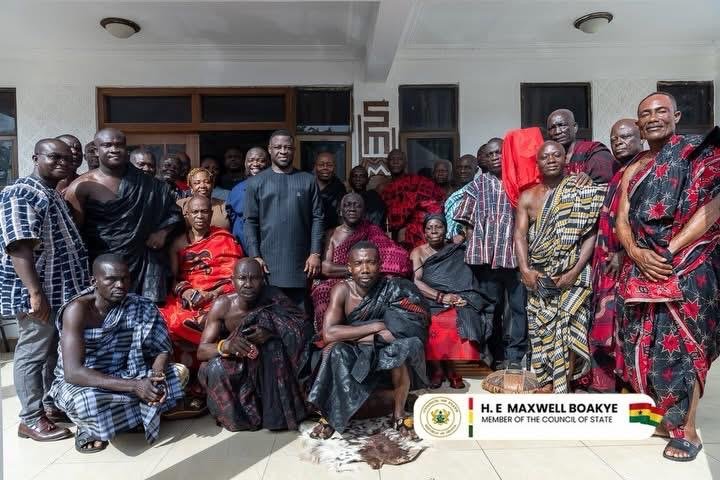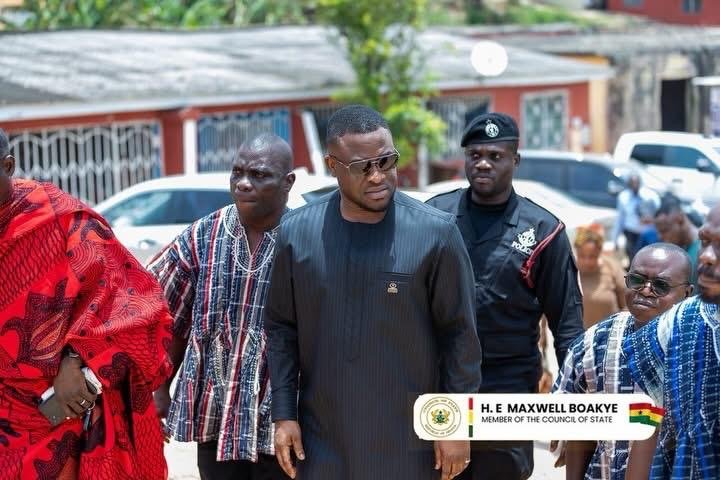
H.E. Maxwell Boakye is undertaking a strategic tour of Traditional Councils across the Western Region (11th–16th April 2026), strengthening collaboration with traditional authorities and advancing dialogue on regional development.
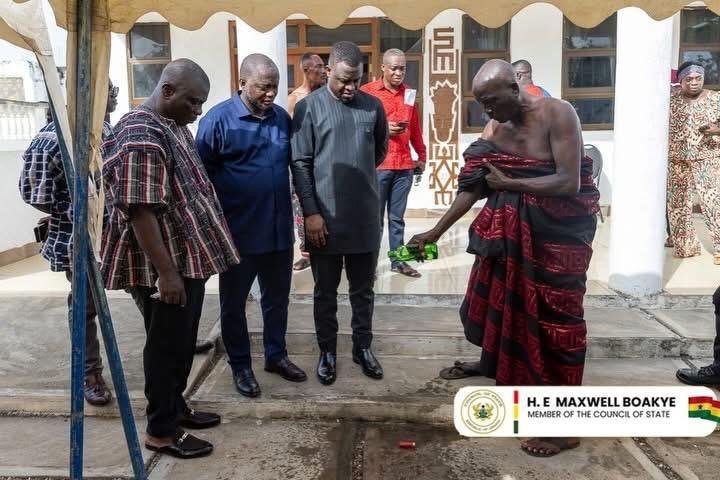
Dr. Boakye embarked on an official tour of Traditional Councils across the Western Region from 11th to 16th April 2026. The multi-day engagement involved a series of courtesy visits to paramount chiefs and traditional leaders, aimed at strengthening collaboration, seeking their support and prayers, and engaging in meaningful discussions on regional development priorities, including infrastructure and economic growth.
Visits Undertaken
• Essikado Traditional Area (Sekondi-Takoradi Metropolis) – 11th April 2026 (Tour Launch)
The tour commenced with a courtesy call on Nana Kobina Nketsia V, President of the Western Regional House of Chiefs. Discussions were highly productive, with a strong emphasis on revitalizing the railway sector to stimulate economic activity within the traditional area and the broader region.
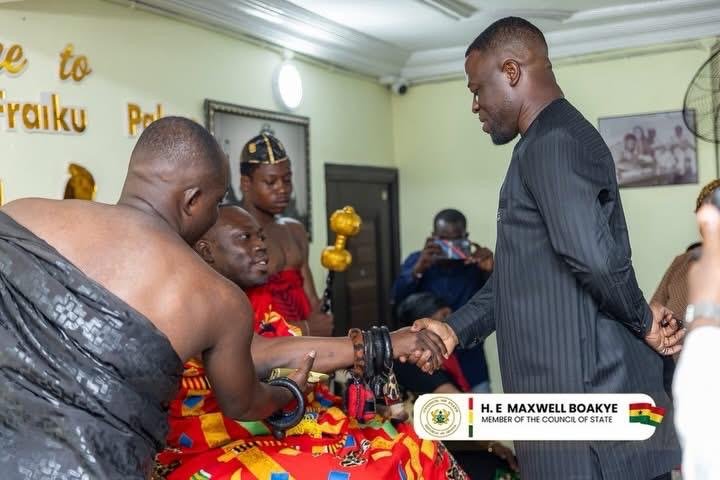
• Shama Traditional Council
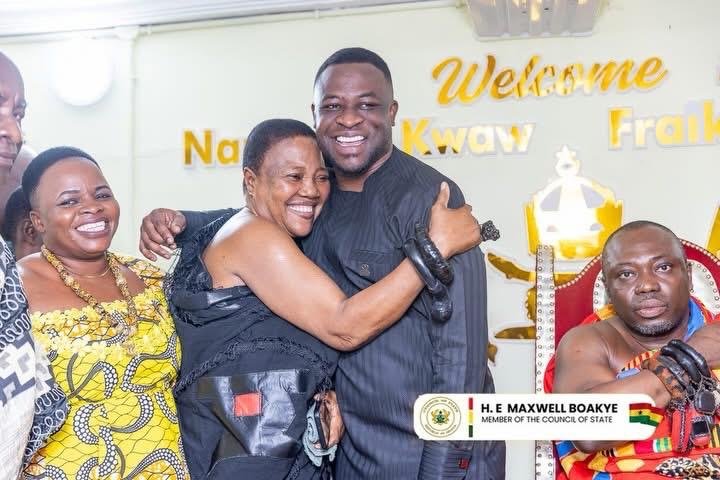
At Shama, Dr. Boakye paid a courtesy visit to Osagyefo Kwaw Fraiku IV. He received a warm welcome and sought the chief’s blessings and continued support as a key stakeholder in regional development.
• Wassa Amenfi Traditional Council (Amenfi)
Dr. Boakye visited Tetrete Okuamoah Sekyim II at the Wassa Amenfi Palace, accompanied by the Municipal Chief Executive for Amenfi East, Raymond Nana Ebbah. Discussions focused on deepening collaboration between traditional authorities and the Council of State, as well as addressing pressing development challenges in the area.
• Gwira, Axim, and Mpohor Traditional Areas
These visits formed part of the broader itinerary across the Western Region. Each engagement followed a consistent approach of courtesy calls, dialogue on local development concerns, and efforts to strengthen partnerships with traditional leadership.
Key Objectives and Outcomes
The tour, which concluded on 16th April 2026, was anchored on:
• Strengthening unity and collaboration with traditional authorities
• Gathering first-hand insights into local challenges and opportunities
• Identifying actionable pathways for infrastructure development and economic growth
• Reinforcing the role of traditional leadership in regional governance and development
While detailed resolutions from each engagement are still emerging, the tour has been widely regarded as a significant step toward deepening stakeholder engagement and promoting inclusive development across the Western Region.