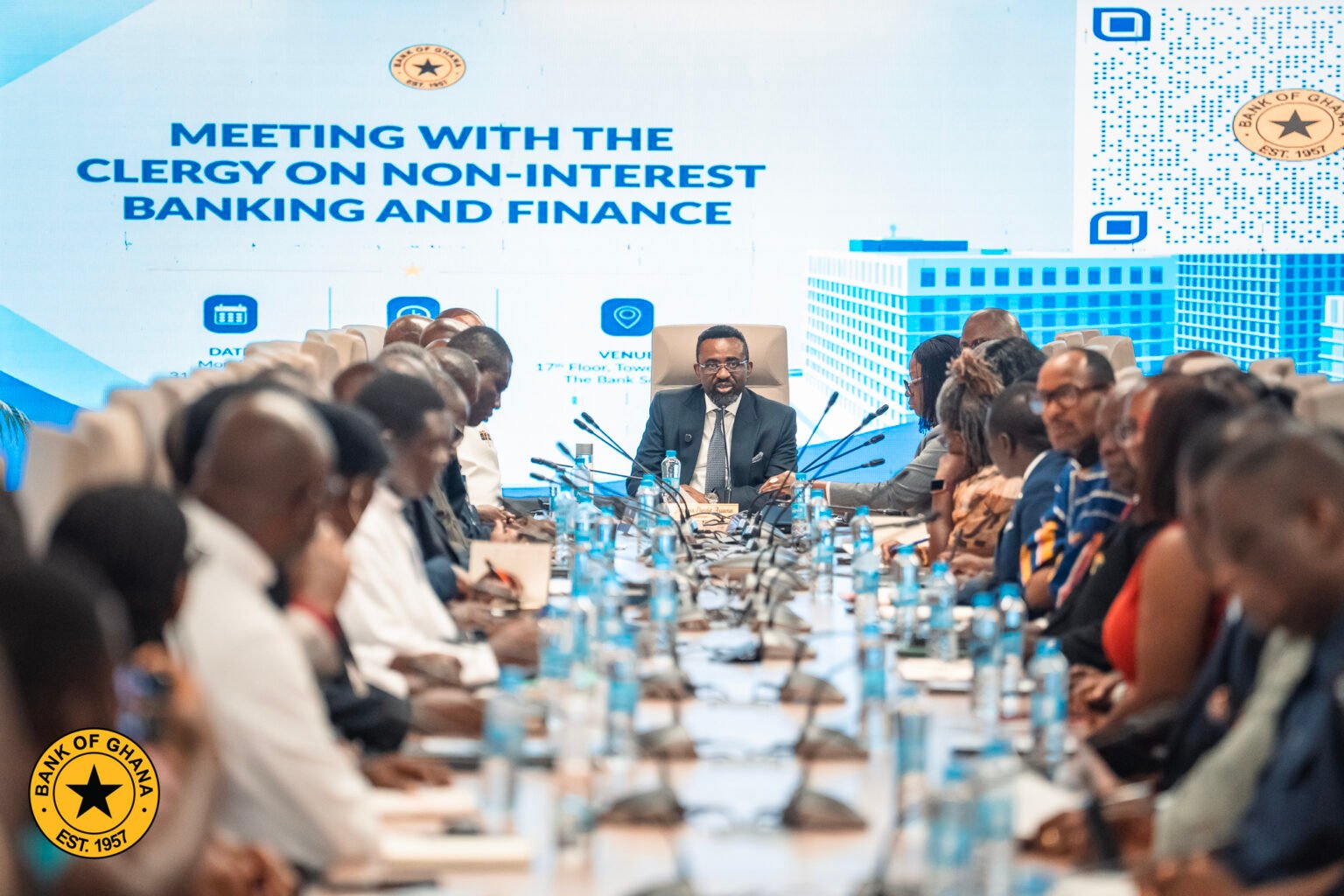
Governor of the Bank of Ghana (BoG), Dr. Johnson Pandit Asiama, has warned businesses and institutions against offering Non-Interest Banking services without a licence from the central bank.
He said providers in the emerging sector would be subject to strict regulatory and supervisory requirements aimed at protecting depositors and safeguarding the stability of Ghana’s financial system.
Dr. Asiama gave the warning at a public engagement with the Ecumenical Society at Bank Square in Accra on August 31, 2026.
He said the regulatory framework covers critical areas including payment systems, fund transfers, sources of capital, leadership and governance.
“The same regulatory discipline applies. This includes oversight of payment systems, transfers of funds, capital sources, leadership and governance,” he said.
Dr. Asiama stressed that only institutions authorised by the BoG would be permitted to conduct non-interest banking business.
“No person may carry on non-interest banking business without a Bank of Ghana licence,” he said.
He added that non-interest banking products would be subject to safeguards designed to protect depositors and maintain financial stability.
“Non-interest products remain fully subject to the controls that protect depositors and the financial system,” the Governor said.
Under the BoG’s guideline, Non-Interest Banking involves financial intermediation that avoids the payment and receipt of interest, excessive uncertainty, gambling and investments in prohibited activities. It instead promotes transactions backed by real economic activity and productive assets.
Dr. Asiama noted that Parliament had already recognised non-interest banking services as a permissible banking activity under Section 18(1)(r) of the Banks and Specialised Deposit-Taking Institutions Act, 2016 (Act 930).
The BoG published an exposure draft of its regulatory framework on December 9, 2025, before issuing the final Guideline for the Regulation and Supervision of Non-Interest Banking in Ghana on January 13, 2026.
The central bank has since undertaken public education through documentaries and Frequently Asked Questions materials to improve understanding of the framework.
The Governor said the regulatory structure is intended to support the orderly development of non-interest financial services while ensuring consumer protection, transparency and financial-sector stability.
Source: Starrfm.com.gh