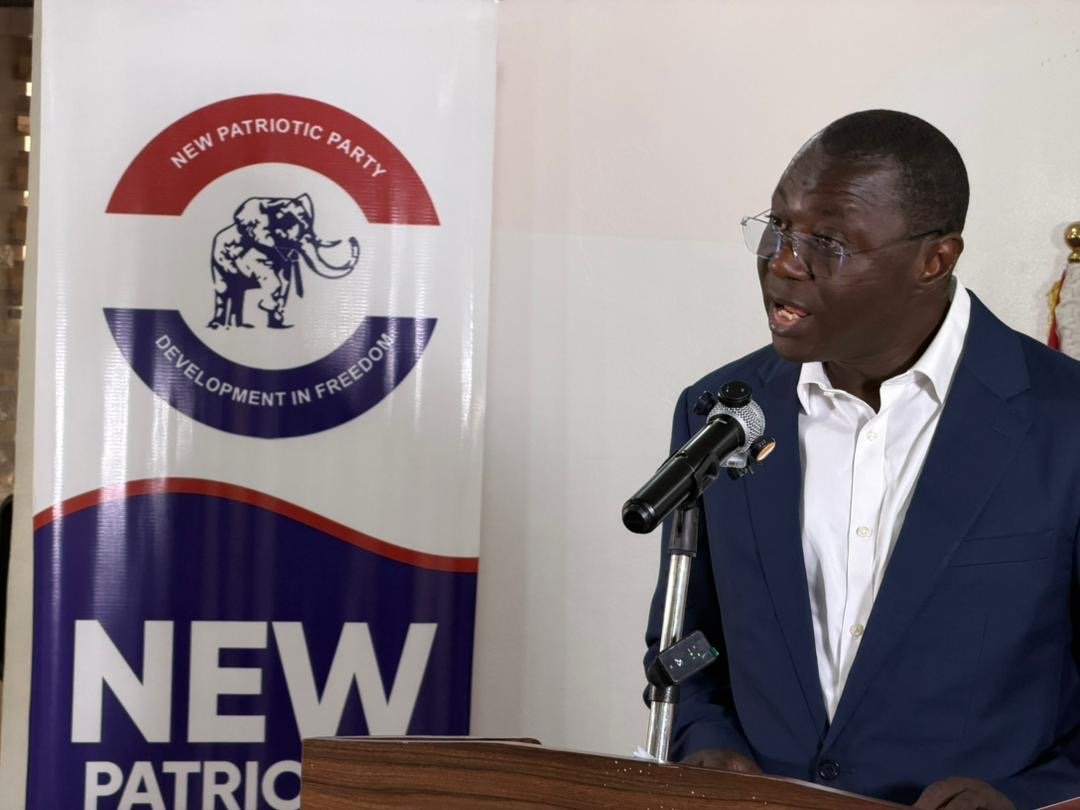
Karaga MP and former Finance Minister, Dr Mohammed Amin Adam, has criticised Ghana’s gold purchase programme, arguing that the country failed to benefit financially from a period of exceptional growth in international gold prices.
Dr Amin Adam said it was difficult to justify the losses recorded under the programme at a time when gold prices were experiencing one of their strongest performances in decades.
“Ghana bought gold, sold gold, and lost money, in the best gold market in 50 years,” he said.
According to him, gold prices rose by 62.9 per cent in 2025, from an average of US$2,395 per ounce to US$3,441 per ounce. He said the sharp increase should ordinarily have created an opportunity for Ghana to make significant gains from its gold trading operations.
However, Dr Amin Adam said the International Monetary Fund’s assessment showed that the programme still lost about 17 per cent of the value of the raw gold sold by the Bank of Ghana.
“This was not the market’s fault,” he stressed, arguing that the losses were largely linked to how the programme was structured and the costs attached to each transaction.
He identified differences in exchange rates, discounts granted to foreign buyers and transaction-related fees as key factors behind the losses. According to him, the Bank of Ghana advanced cedis at the official interbank exchange rate, while GoldBod paid miners at higher rates available at forex bureaux, leaving the central bank to absorb the difference.
Dr Amin Adam also pointed to the discount applied when Ghana sold its gold to foreign buyers. He said Ghana sold gold in October 2025 at US$3,919 per ounce, compared with a world average of US$4,054 per ounce, describing the difference as a cost that never accrued to the country.
He further criticised the 0.5 per cent service fee and 0.258 per cent assay fee charged on the value of gold transactions, arguing that the cumulative effect of these costs made the programme increasingly expensive as the volume of gold traded increased.
“The IMF puts these combined costs at 14.5% of the programme’s value in 2025, falling to 5.4% under the new arrangement,” Dr Amin Adam said.
He said the figures showed that Ghana was operating a gold trading system that was nearly three times more expensive than necessary, despite favourable conditions on the international market.
Dr Amin Adam has consequently called for a full parliamentary inquiry into the programme, insisting that the government must explain how Ghana could buy and sell gold during a period of record price growth and still incur such significant losses.