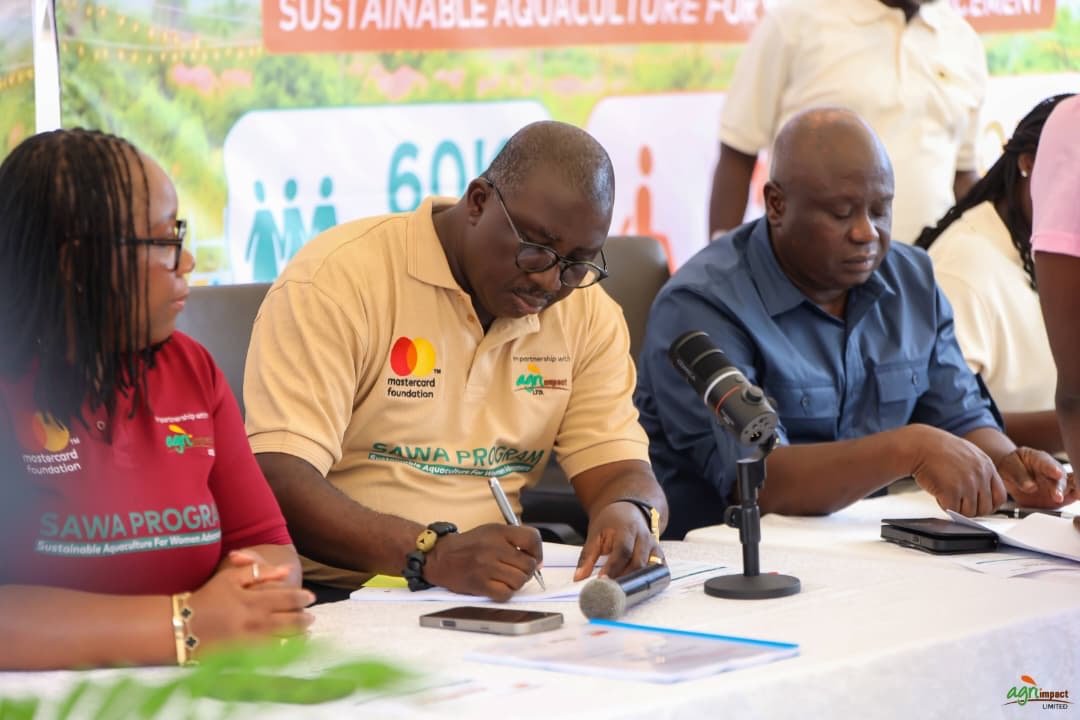
Agri-Impact Limited has signed agreements with private sector partners under a four-year programme targeting 60,000 job opportunities for young women across Ghana’s aquaculture value chain.
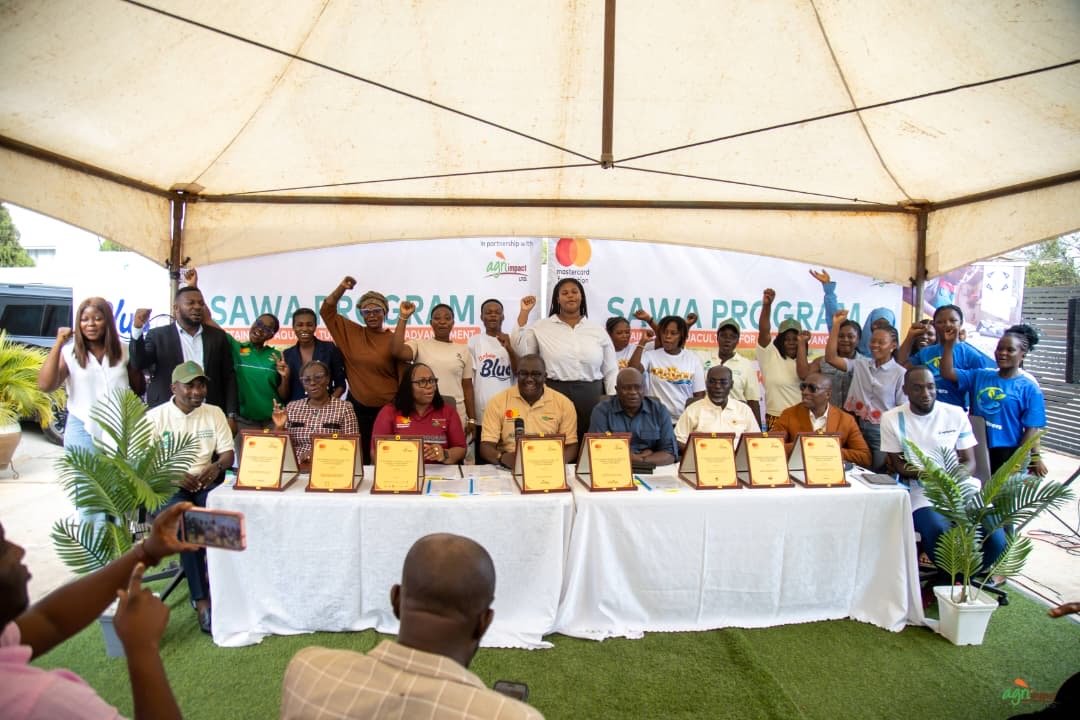
The agreements form part of the Sustainable Aquaculture for Women Advancement (SAWA) Programme, an initiative supported by the Mastercard Foundation to create dignified and fulfilling work opportunities for women aged 18 to 35 between 2026 and 2030.
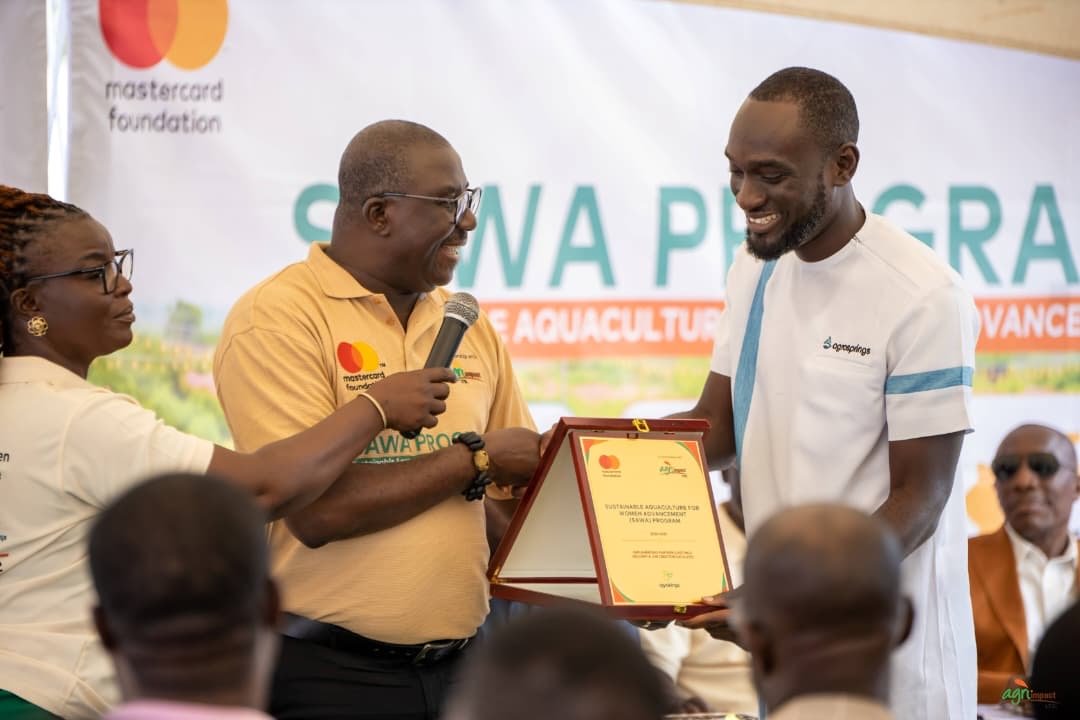
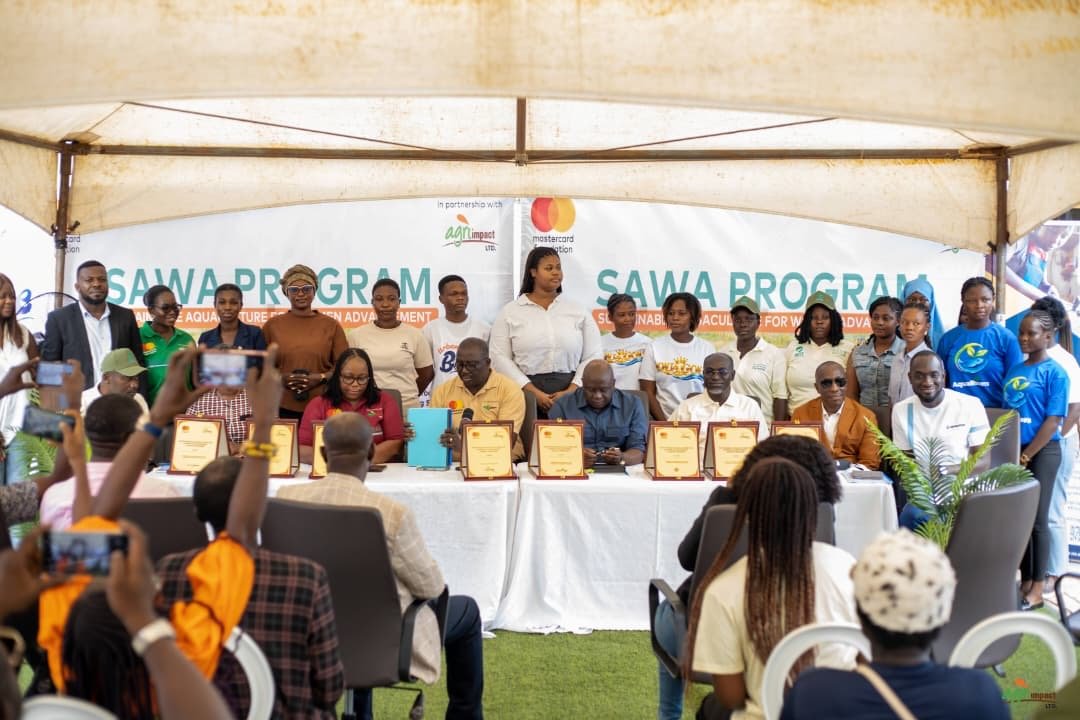
Agri-Impact is leading a consortium of 10 implementing partners, including Newage Agric Solutions, AgroKings, CEL, the Fisheries Commission, TechnoServe, Naple Betta, Afrigem Global, Aglow Farms and the Council for Scientific and Industrial Research (CSIR), with PwC serving as the institutional strengthening partner.
The latest signing follows the formal engagement of four other consortium institutions last week: the Fisheries Commission, CSIR, PwC Ghana and TechnoServe.
Deputy Group CEO of Agri-Impact, Juliana Asante-Dartey, said the private sector partners would play a central role in implementing the programme and creating direct employment opportunities for the targeted beneficiaries.
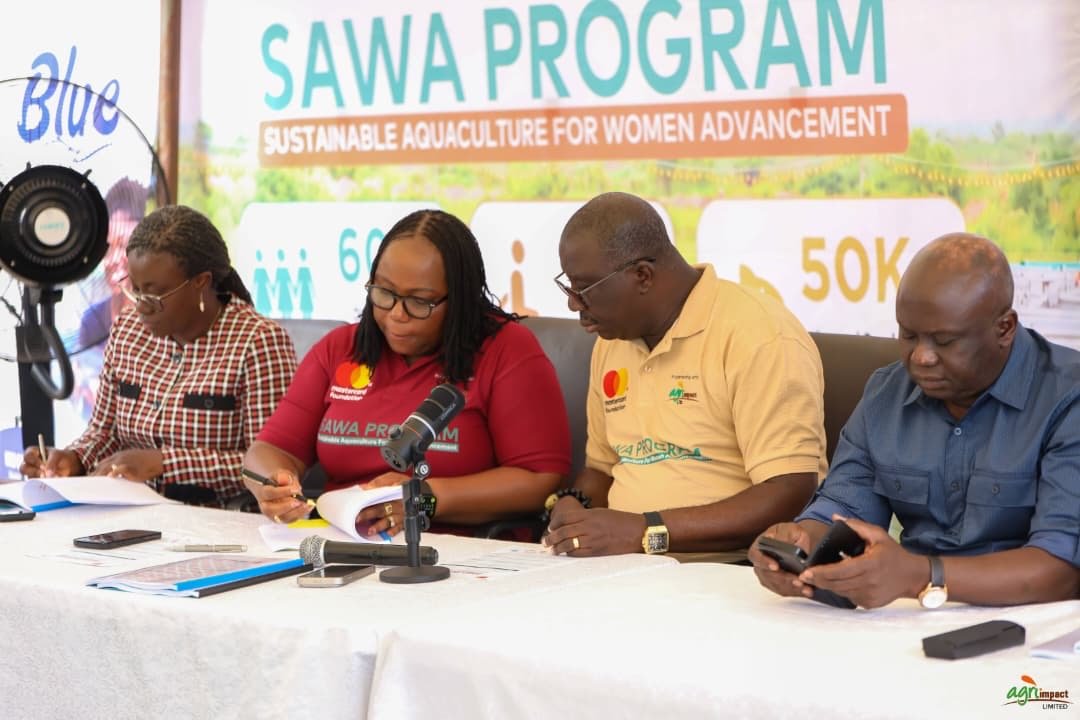
She explained that the partnership would leverage the investments, infrastructure and expertise of participating businesses to expand opportunities for young women in the aquaculture industry.
“We are working with our private sector partners and that’s why we are here signing a contract between ourselves, the project management firm and our private sector partners,” she said during a media engagement at the Agri-Impact office in Accra on Monday, November 2.
Mrs. Asante-Dartey said the partners would support job creation across different stages of the aquaculture value chain, including fish production, processing, smoking and marketing.
The programme will focus on inland aquaculture, particularly fish farming in tanks and ponds, rather than marine or lake-based production.
To prepare beneficiaries, Agri-Impact and its partners will provide technical training, mentorship and business development support to help participants establish viable businesses.
“We provide training, we provide hand-holding, mentoring, technical training, business development training,” she said.
Beyond the employment target, the programme seeks to increase local fish production by about 50,000 metric tonnes and reduce fish imports by US$90 million by the end of its four-year implementation period.
“We want to do about 50,000 metric tons. We want to reduce our imports by 90 million US dollars,” Mrs. Asante-Dartey said.
She added that the initiative would also seek to make fish and fish products more affordable on the local market while helping young women earn reliable incomes.
Mrs. Asante-Dartey urged young women across the country to take advantage of the initiative, stressing that applicants would not need prior experience in aquaculture to participate.
The programme is open to young women aged 18 to 35 across Ghana, with a target of including 3,000 young women with disabilities.
She said some participants were already receiving training in fingerling and juvenile production, fish farming, smoking and marketing as the programme gets underway.