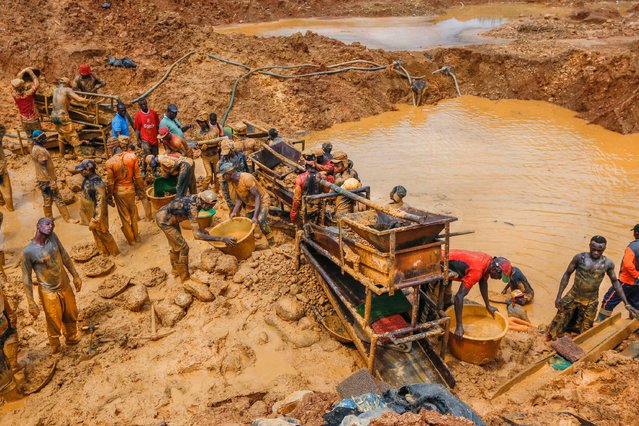
Private legal practitioner and senior Convention People’s Party (CPP) member Kwame Jantuah has called for a complete three-year ban on all forms of mining in Ghana as a decisive measure to address the country’s illegal small-scale mining crisis, popularly known as galamsey.
Speaking on GHOne TV, Mr. Jantuah acknowledged the significant economic contribution of gold mining but insisted that its devastating environmental and social consequences demand far stronger action.
“There are two sides to this gold debate. There’s one side that is the action, where people are mining. The other side is the effect that it has on all of us. That effect would live with us for years,” he said.
He questioned the effectiveness of existing institutions and the heavy financial cost of ongoing anti-galamsey efforts, arguing that authorities have failed to take the necessary decisive step.
“We’ve got NAIMOS, we’ve got X, we’ve got this, we’ve got what. Do you know the amount of money that we are spending to fight this thing? There’s one thing that we are not doing that we should do. Ban mining for three years. Restructure,” Mr. Jantuah stated.
He identified political interference as a major obstacle, alleging that some politicians profit from illegal mining.
Describing the fight against galamsey as a “war,” he pointed to the heavily armed nature of illegal miners and their willingness to use lethal force.
“These illegal miners, do they not have guns? Sophisticated ones. Do they not kill? So, why are we sitting there pussyfooting around them?” he asked.
Mr. Jantuah urged the next president to take an uncompromising stance, regardless of political consequences.
“I would want to see the next president come in and say, ‘I don’t care whether my party comes the next time or not, I’m going to be very ruthless with this act.’ If you have to shoot to kill, shoot to kill.”
Acknowledging that some may oppose a shoot-to-kill policy, he proposed an alternative: “Make it treasonable.”
Galamsey has caused widespread destruction of water bodies, forests, and farmlands across Ghana, prompting repeated government interventions that critics say have yielded limited results.
Source: Starrfm.com.gh