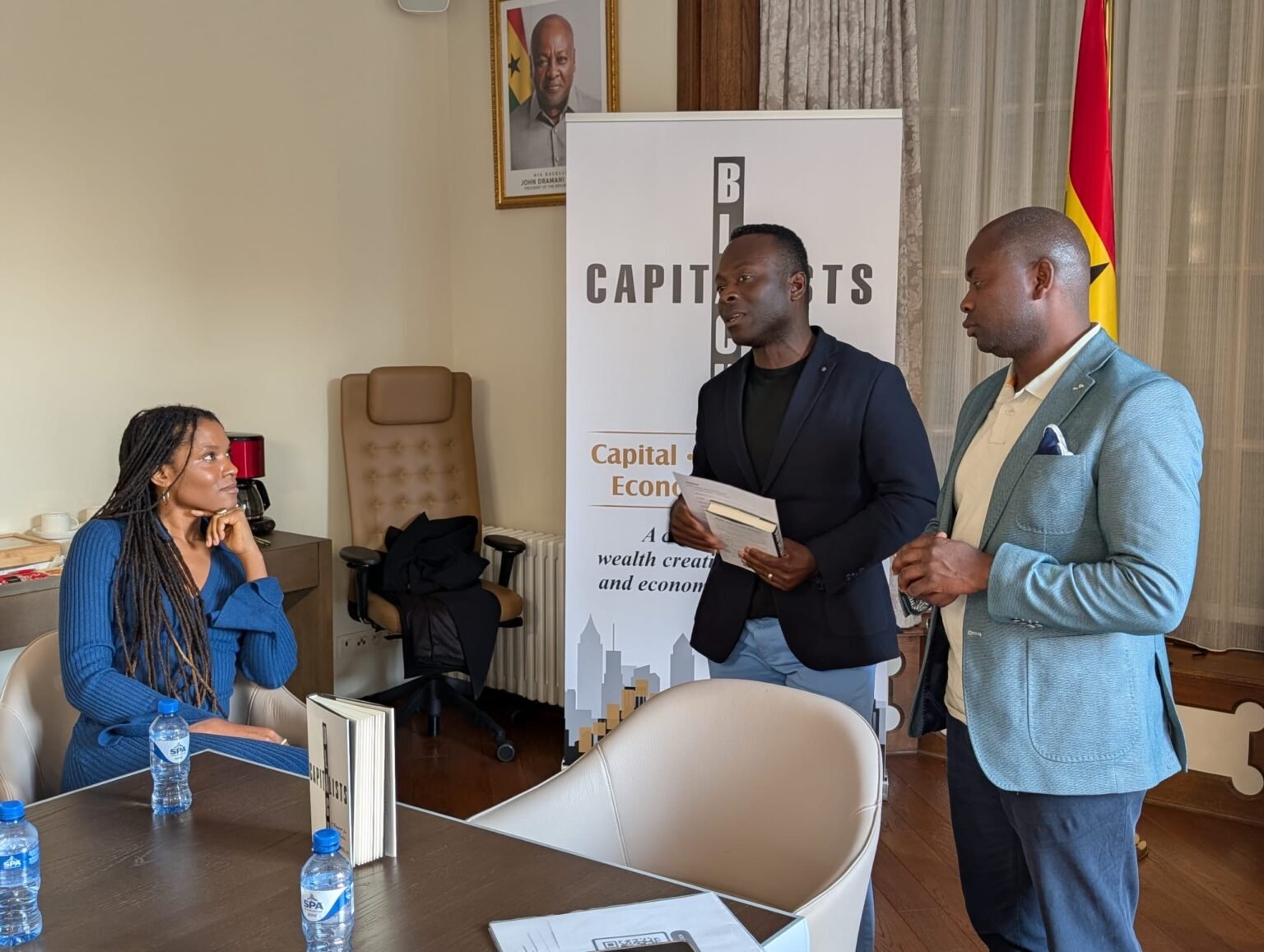
The Ghanaian Embassy in Belgium welcomed Ghanaian-American author and Wall Street scholar Dr. Naa-Du Laryea this past Sunday as part of her European Black Capitalists book tour, bringing together embassy officials, entrepreneurs, and members of the African diaspora for an evening of dialogue on wealth, power, and economic opportunity.
The gathering, hosted at the embassy and attended by the Deputy Head of Mission alongside staff and entrepreneurs from Antwerp, Brussels, and other parts of Belgium, formed a key stop in the broader Black Capitalists European tour. The discussion centered on Dr. Laryea’s book, Black Capitalists: A Blueprint for What Is Possible, and quickly evolved into a dynamic and, at times, deeply divided exchange on the meaning and practice of capitalism through the lens of race and ethnicity.
Participants offered contrasting views on what capitalism represents in today’s society. For some, capitalism was defined simply as the mechanics of supply and demand—markets functioning freely to allocate resources efficiently. Others argued that true capitalism can only exist when governments step back, allowing markets to operate without interference. At the same time, voices in the room emphasized that structural realities cannot be ignored.
A key theme that emerged was the question of unequal outcomes within the Afro-Belgian community. Some attendees pointed to language barriers and institutional racism as significant factors shaping access to opportunity and long-term success. Others challenged this perspective, arguing that Europe offers ample opportunities and that individual mindset, discipline, and decision-making ultimately determine outcomes.
Dr. Laryea engaged directly with these differing viewpoints, acknowledging the complexity of the issue while reframing the conversation. “The tools of capitalism are race neutral. However, those tools have been, and continue to be racialized,” she noted. “It is a system shaped by history, by power, and by access. The question is not only how we participate in it, but how we reposition ourselves within it.”
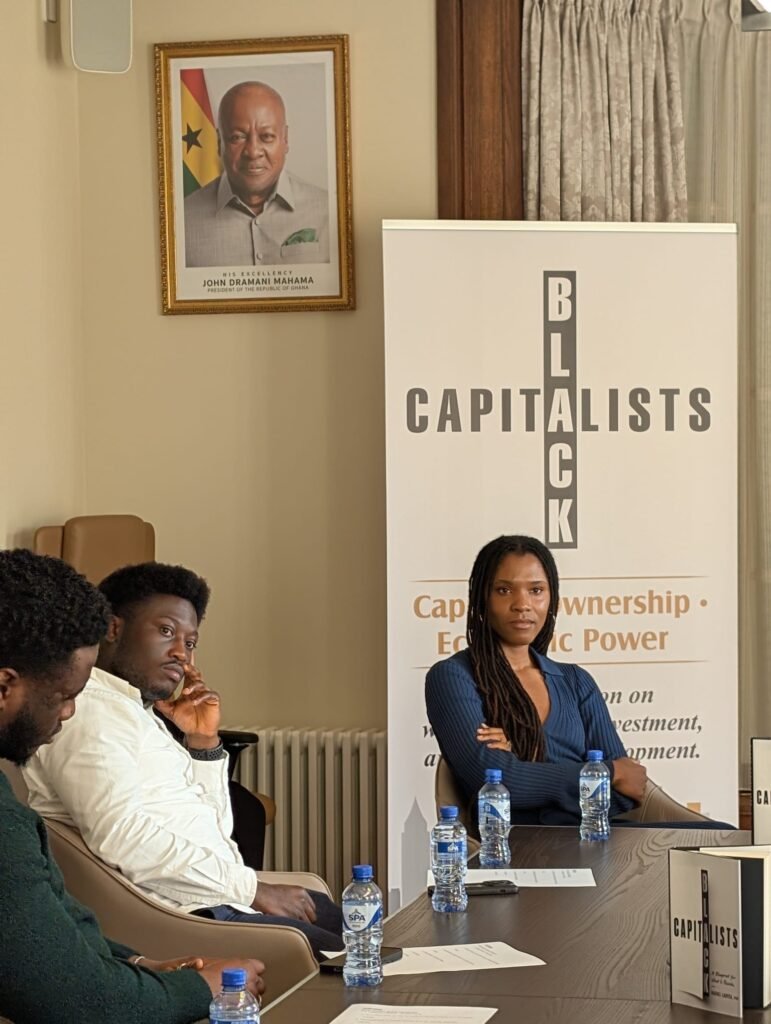
Drawing on her background as a financial anthropologist and her experience on Wall Street, she emphasized that wealth-building requires individual and communal agency and structural astuteness. “We cannot ignore barriers where they exist,” she said, “but we also cannot build a strategy based only on those barriers. The real work is understanding the system deeply enough to navigate it, leverage it, and ultimately reshape it.”
Throughout the evening, Dr. Laryea returned to a central theme of her work: ownership. As she explained, “Ownership is about control, influence, and the ability to make decisions that shape and protect your future and your community. Capital without ownership leaves you exposed. Ownership without strategy leaves value on the table.”
The discussion was described by attendees as both “heavy” and “energizing,” reflecting the urgency and relevance of the topics addressed. Conversations extended beyond theory into practical questions around entrepreneurship, access to capital, and how diasporic communities can collaborate more effectively across borders.
The event in Brussels follows earlier engagements in Amsterdam and precedes additional stops in Paris and London, as the Black Capitalists European tour continues to build momentum. More than a book tour, the initiative is proving to be a movement; one focused on fostering dialogue, building networks, and advancing economic development within the African diaspora.
As the evening concluded, one message stood out: the conversation around capitalism, race, and wealth is far from settled, but it is gaining clarity, depth, and direction through platforms like these.