
The Ghana Immigration Service (GIS) is harnessing the support and expertise of Agri-Impact Limited as it prepares to venture into agriculture as part of efforts to contribute to food security and diversify its activities.
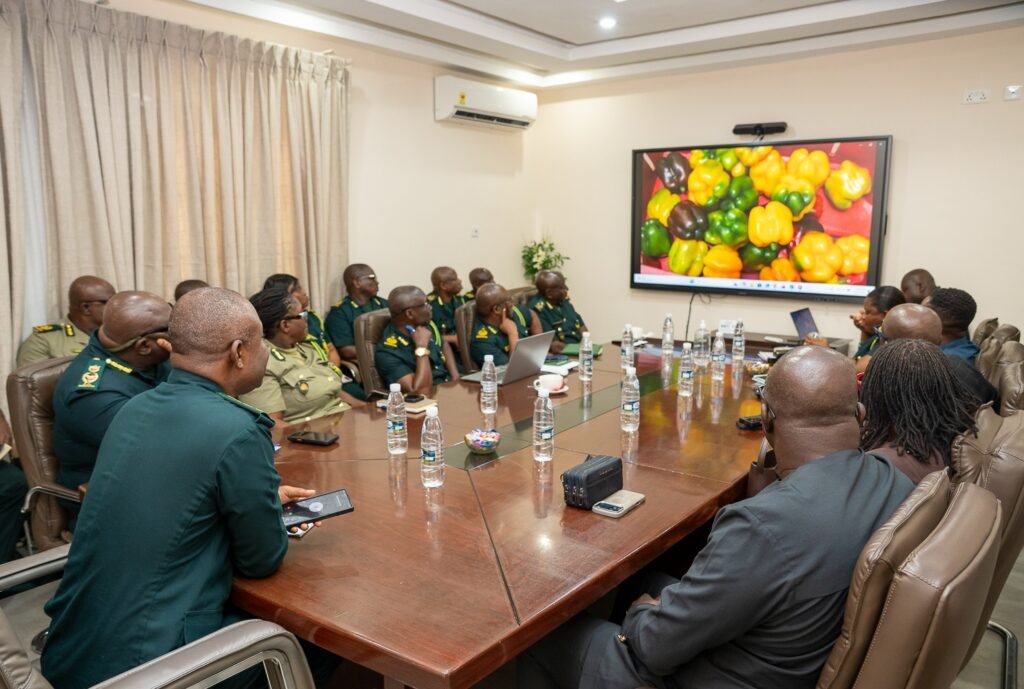
This came to light when senior management of the Service, led by the Comptroller-General, Samuel Basintale Amadu, met with management of Agri-Impact Ltd to discuss the development and implementation of the Service’s agricultural initiative.
The GIS operates training schools, barracks, offices and other facilities nationwide, which depend on commercial supplies to meet their food requirements.
The Service is seeking to leverage this demand by investing in agricultural production to strengthen its institutional food supply while making productive use of its vast land holdings across the country.

The initiative could enable the Service to produce food for its personnel and facilities while also creating the potential to supply produce to the wider market.
Speaking at the meeting held at the Ghana Immigration Service Head Office in Accra on Wednesday, August 26, 2026, Chief Executive Officer of Agri-Impact Limited and Board Chairman of the CSIR-Crops Research Institute, Dr. (h.c.) Daniel Fahene Acquaye, expressed Agri-Impact’s readiness to support the Service in making significant strides in the country’s agricultural space.
He said the GIS’s vision aligns with Agri-Impact’s ongoing projects with the Mastercard Foundation, namely the HAPPY Program, which is unlocking dignified and fulfilling job opportunities for over 300,000 young people in the rice, tomato, poultry and soybean value chains, as well as the SAWA Program, which seeks to create job opportunities for over 60,000 young women in aquaculture.

Additionally, he said the initiative leverages Agri-Impact and Ghana EXIM Bank’s greenhouse projects dotted across the country.
Dr. (h.c.) Acquaye further highlighted Agri-Impact’s collaboration with the Ghana Armed Forces on poultry production, as well as other upcoming agricultural projects.
For his part, Mr. Amadu said the Service’s interest in agriculture was partly driven by the recognition that food security is also a national security issue.
He noted that the country’s security services have been encouraged to venture into agriculture.
“We therefore need to take measures to reduce our food bill. Our food bill is very high, and apart from the cost, we are also not always getting the right quality of food,” the Comptroller-General said.
Mr. Amadu further noted that the Service has vast tracts of land nationwide that would be used for the production of cereals, cassava, poultry, livestock and other agricultural enterprises.
A technical committee drawn from both institutions was consequently formed to advance the initiative.
Source: Starrfm.com.gh