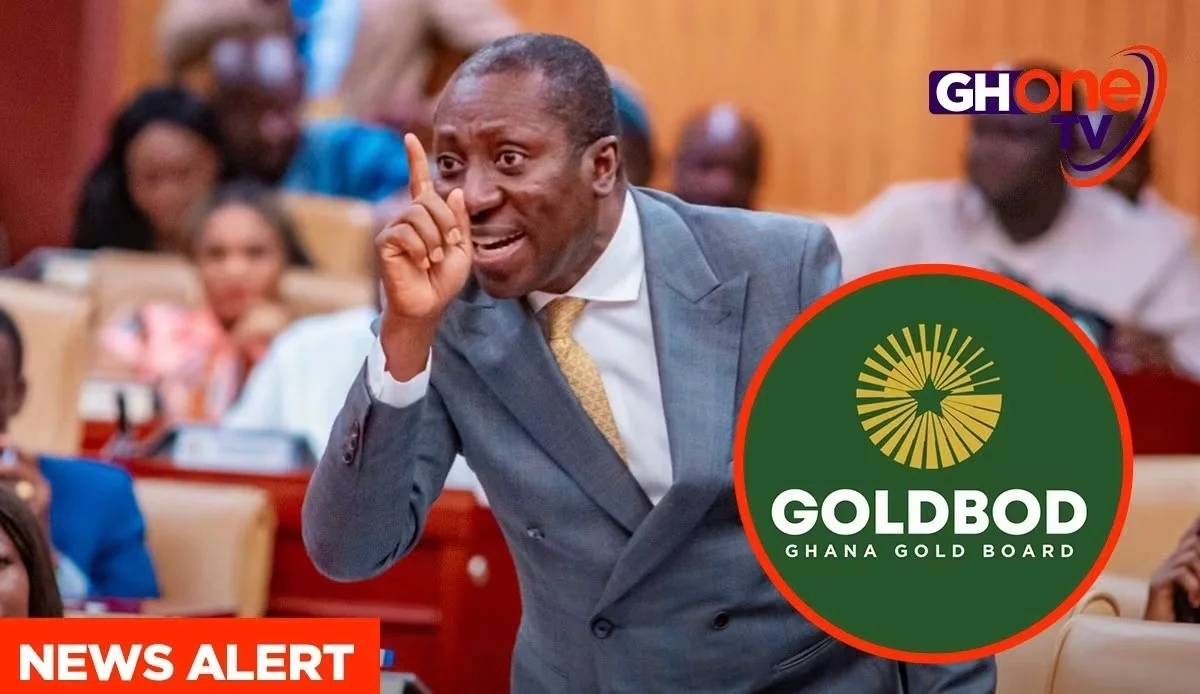
The Minority in Parliament has challenged the Ghana Gold Board (GoldBod) to take responsibility for both the economic benefits and financial costs associated with the Domestic Gold Purchase Programme (DGPP).
In a statement issued on Wednesday, August 19, 2026, the Minority said GoldBod could not claim credit for economic gains attributed to the programme while distancing itself from the reported losses.
“The same statement credits the scaling up of the DGPP with the 41 per cent cedi appreciation, the rise in reserves from US$8.9 billion to US$13 billion, and the fall in inflation,” the Minority said.
According to the Caucus, GoldBod had been “foremost in taking public credit” for those outcomes.
It therefore argued that the institution could not present itself as a passive agent when the costs associated with the programme were considered.
“An institution that claims authorship of the benefits cannot describe itself as a passive agent when the costs are counted,” the Minority stated.
The Caucus was responding to a statement issued by the Chief Executive of GoldBod on Wednesday following the Minority’s press conference a day earlier on the financial and operational performance of the institution and reported losses under the DGPP.
The Minority said the GoldBod CEO had not disputed the International Monetary Fund’s reported finding of a US$1.7 billion (GH¢22 billion) loss under the Domestic Gold Purchase Programme in 2025, but had instead disputed who should be blamed for the loss.
The Caucus maintained that the issue was ultimately about public funds.
“This is public money, whichever State balance sheet it sits on,” it said.
The Minority further questioned GoldBod’s reported operational surplus of GH¢907 million, comparing it with the fees it said the institution earned from the programme.
READ: GoldBod failed to dispute GH¢22bn DGPP loss – Minority
According to the Caucus, the GoldBod CEO stated that the institution accounted for about GH¢133 billion in advances in 2025 and was paid an assay fee of 0.258 per cent and a service fee of 0.5 per cent.
The Minority said those figures indicated that GoldBod earned approximately GH¢1 billion in fees from the programme.
It argued that the reported GH¢907 million operational surplus was therefore smaller than the fee income collected from a programme that, according to the IMF finding cited by the Minority, resulted in a GH¢22 billion loss to the state.
“Strip out the agency fees and there is no operational surplus to speak of,” the Caucus said.
The Minority said this was a key issue that it believed the GoldBod CEO had not addressed.
The Caucus also raised concerns about the funding arrangements for the Ghana Accelerated National Reserves Accumulation Programme (GANRAP).
It said, based on the GoldBod CEO’s account, responsibility for GANRAP implementation costs moved from the Bank of Ghana to the Ministry of Finance in July 2026, while from August 2026, GoldBod began seeking to raise funds independently.
The Minority described the changes as “three funding arrangements in six months” and questioned whether the arrangement constituted a settled funding model.
The Caucus reiterated its position that the GH¢22 billion loss reported in the IMF Sixth Country Report, No. 26/213, issued in August 2026, represents a financial loss to the Republic and must be accounted for.
Below is a copy of the statement:
Source: Starrfm.com.gh