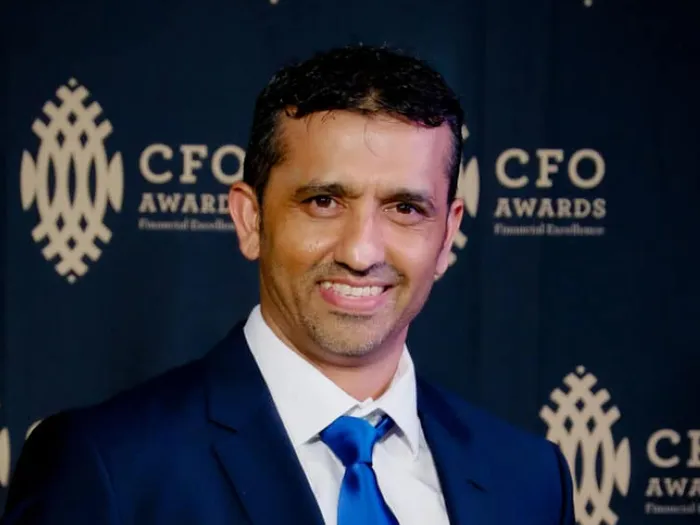
Rand Refinery Chief Executive Officer, Dean Subramanian, is set to participate in the African Minerals Policy Forum – Mining in Motion (AMPF–MiM) 2026 in Accra, Ghana.
The three-day forum is scheduled for October 19 to 21, 2026, and will bring together stakeholders to discuss developments and opportunities in Africa’s mining sector.
Subramanian will participate in a panel discussion on “Capturing More Value from Africa’s Gold: Refining, Responsible Purchasing and Global Market Access.”
He is expected to share insights into Rand Refinery’s role in strengthening Africa’s gold value chain, regional integration and cooperation, as well as expanding downstream refining and value-addition capacity across the continent.
Ahead of the forum, Subramanian said Africa’s position as one of the world’s major gold-producing regions presents an opportunity to strengthen in-country beneficiation, technical capacity, responsible sourcing systems and access to international bullion markets.
He said Rand Refinery’s role has evolved beyond refining gold volumes to include technical expertise, responsible sourcing capabilities and market knowledge aimed at supporting a sustainable and internationally credible African gold ecosystem.
The company has also highlighted its collaboration with Gold Coast Refinery in Ghana as an example of its approach to expanding local capacity.
According to Subramanian, Rand Refinery is providing technical, operational and commercial support to Gold Coast Refinery, while also working on risk modelling and progressively implementing responsible sourcing practices.
The collaboration includes skills transfer in areas such as refining, analysis, metal balance and sampling, with the broader objective of developing sustainable local capability and an internationally credible ecosystem capable of responsibly processing both large-scale and legitimate artisanal and small-scale mining (ASM) production.
READ: African mining chambers to converge at AMPF–MiM 2026, drive regional cooperation
Subramanian said the development of Africa’s gold industry should not be measured solely by production volumes, but also by the continent’s ability to build technical capabilities, credible supply chains and responsible businesses that can connect African gold to international markets.
He identified reliable feedstock, technical and assaying capabilities, security and logistics, access to finance, governance, responsible sourcing and traceability systems as key requirements for developing competitive regional refining and beneficiation networks.
He also stressed the importance of regulatory certainty, noting that while gold operates in a global market, licensing, regulatory and export frameworks are largely determined at the national level.
On artisanal and small-scale mining, Subramanian said responsible sourcing should serve as an enabler of formalisation rather than simply an additional compliance requirement.
He said legitimate ASM production should be identified, its provenance verified and responsible producers progressively integrated into transparent supply chains capable of meeting international standards, including OECD and London Bullion Market Association (LBMA) requirements.
Subramanian further called for a practical approach involving training, access to finance, technical support, geological information, appropriate due diligence and increasingly sophisticated traceability systems.
He said Africa also does not necessarily need to replicate every component of the gold value chain in every producing country, arguing that complementary capabilities and stronger regional connections could support a commercially sustainable and internationally credible African gold ecosystem.
Ahead of AMPF–MiM 2026, Subramanian said Rand Refinery’s central message would be that Africa has an opportunity to deepen its participation in the global gold value chain through a long-term approach to value creation.
He said refining remains fundamental, but the opportunity extends to in-country beneficiation, responsible sourcing, traceability, technical capability and higher-value products supported by stronger links to international markets.
Rand Refinery, he noted, brings 106 years of operational experience to the discussions, with responsible sourcing, international standards and commercial competitiveness viewed as complementary rather than separate objectives.
He said the Accra forum would provide an opportunity to engage governments, producers, refiners, ASM stakeholders, financial institutions and international market participants on practical measures to strengthen responsible sourcing, develop local capabilities, improve regional connectivity and expand access to formal international markets.