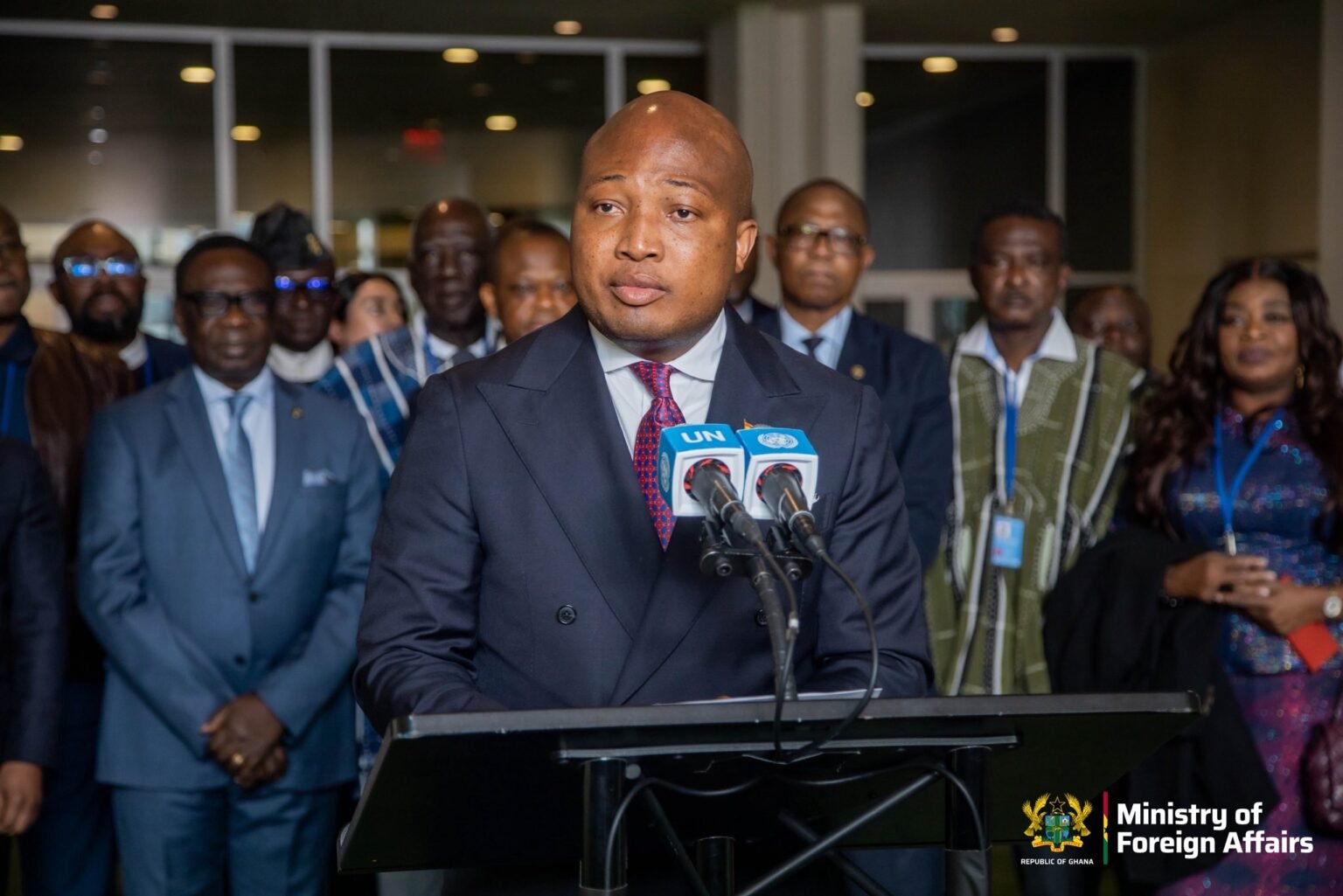
Ghana is seeking to use the current global geopolitical tensions to reduce its dependence on external support and achieve greater control over its natural resources, Foreign Affairs Minister Samuel Okudzeto Ablakwa has said.
Ablakwa said the changing global order presented African countries with an opportunity to develop homegrown solutions, negotiate better deals and build greater resource sovereignty.
“We see this as an opportunity to look within and find homegrown solutions to our challenges,” he said, arguing that Africa could no longer afford to depend on external handouts despite its vast natural and human resources.
Africa, with a median age of 19 and a population of about 1.4 billion, is projected to account for one in every four people globally by 2050, making it the continent of the future, Ablakwa said.
He pointed to Africa’s abundance of oil, gas, lithium, cobalt, cocoa and bauxite, saying the continent must use those resources to create wealth rather than continue depending on external assistance.
Ablakwa disclosed that Ghana recently rejected a health financing package worth less than $200 million because of concerns over the conditions attached to the deal, including access to health and pathogen data and the privacy of Ghanaian citizens.
“We refused. But we found the resources within,” he said.
He said the decision demonstrated the need for African countries to become more resilient and develop their own capacity rather than sacrifice strategic national interests for external financing.
“Smart leaders must take advantage and create new wealth for Africans. That’s how we see it,” he said.
Ghana targets end to raw-material exports by 2030
Ablakwa said Ghana had set a target of ending the export of raw materials by 2030 as part of efforts to industrialise the economy and retain more value from its natural resources.
“By 2030 we are no longer going to export any raw material. Not one,” he said, citing cocoa, gold and bauxite among the resources Ghana intends to process locally.
He said the government was also seeking to renegotiate resource agreements to secure better returns for the country, arguing that previous arrangements had left Ghana with a relatively small share of the wealth generated from its resources.
He cited gold mining agreements under which Ghana currently has a 10% interest, with the remaining 90% going elsewhere, and said the country’s oil and gas interests also needed to be reassessed.
“We have a new framework where we are negotiating hard and smart,” Ablakwa said.
He added that technological advances, including artificial intelligence and other generative tools, offered countries such as Ghana the opportunity to develop internal expertise and strengthen their ability to manage their natural resources.
Ghana seeks new global partnerships
On the emerging global order and the importance of new alliances among countries of the Global South, Ablakwa said Ghana was looking beyond traditional alliances and seeking partnerships based on mutual interests.
He cited Ghana’s role in championing a recent United Nations resolution declaring transatlantic enslavement the greatest crime against humanity, which he said received the support of 123 countries.
According to Ablakwa, such votes provide an indication of countries with which Ghana can develop closer partnerships.
He said Ghana was preparing to assume the African Union chairmanship and intended to deepen cooperation with groups and blocs including BRICS and CARICOM.
Ghana also hosts the Secretariat of the African Continental Free Trade Area, which Ablakwa described as having the potential to become the world’s largest trade market if barriers to intra-African commerce are removed.
He noted that intra-African trade currently accounts for only about 14% of the continent’s trade, arguing that African countries needed to trade more among themselves.
Ablakwa also disclosed that Ghana’s Cabinet had recently considered the country’s potential membership of BRICS and was taking a positive view of the grouping.
He said Ghana’s approach to international relations would increasingly be guided by national interest rather than historical ties.
“This business of these are my traditional allies, these were colonial masters, these are the people who have been with us — it doesn’t work,” he said.
“We are looking at those who are willing to create win-win partnerships. Negotiate fairly, no exploitation, no arm-twisting, no conditionalities.”
Ablakwa said Ghana would be prepared to pursue alternative partnerships where existing arrangements did not serve the country’s interests.
He said the urgency was heightened by the limited time governments have to deliver on electoral promises, arguing that countries must move beyond nostalgia and historical relationships and focus on partnerships capable of producing tangible results for their citizens.