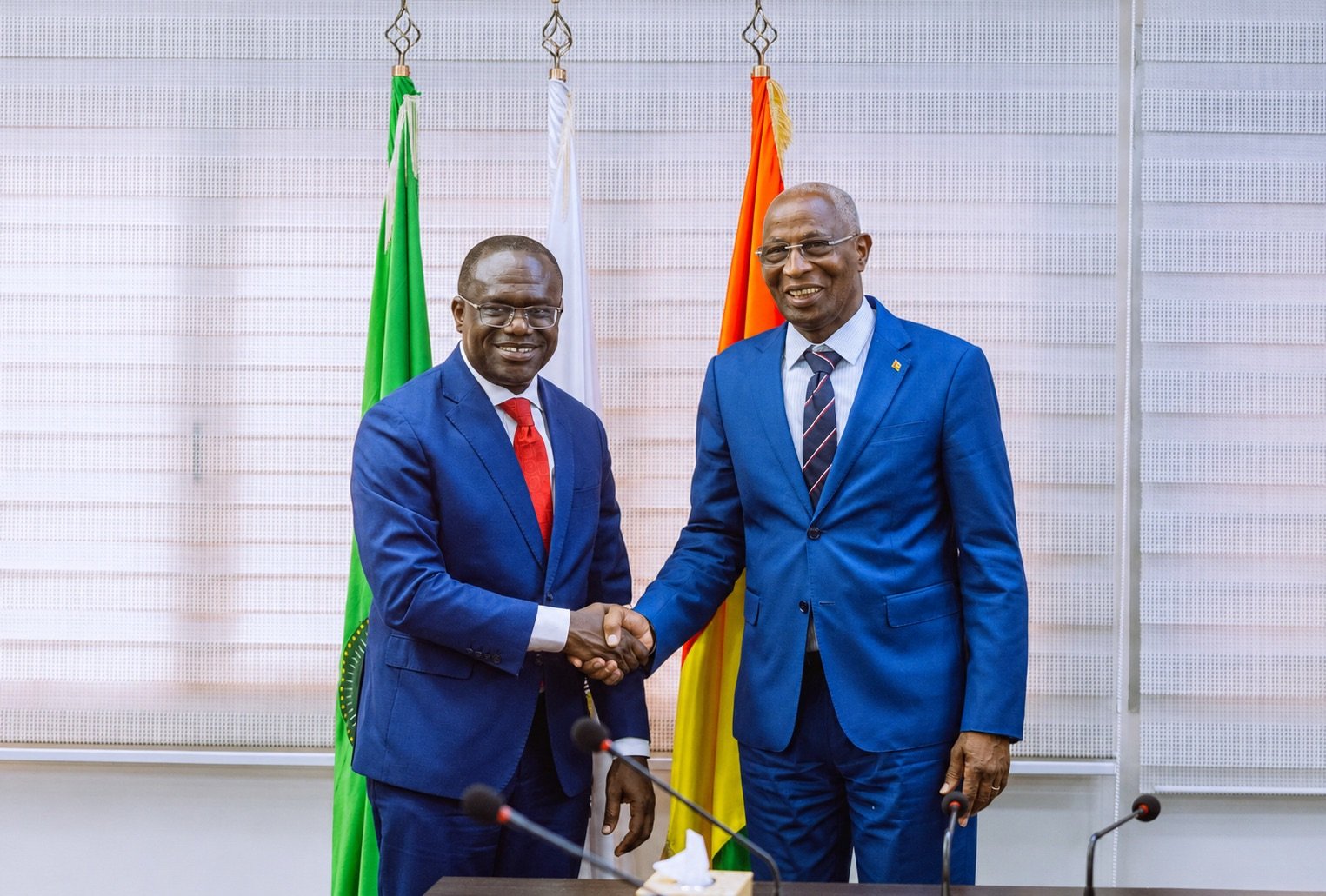
The Prime Minister of Guinea, H. E. Amadou Oury Bah, has described the new waste management partnership between Ghana’s Jospong Group of Companies (JGC), through its environmental services subsidiary, Zoomlion Ghana Limited, and Guinea as a continuation of the “historic brotherhood” between the two countries.
“The relationship between Ghana and Guinea has been historic, dating back to the days of independence. Our two countries have been friends since then, and this partnership is a continuation of that brotherhood,” he said.
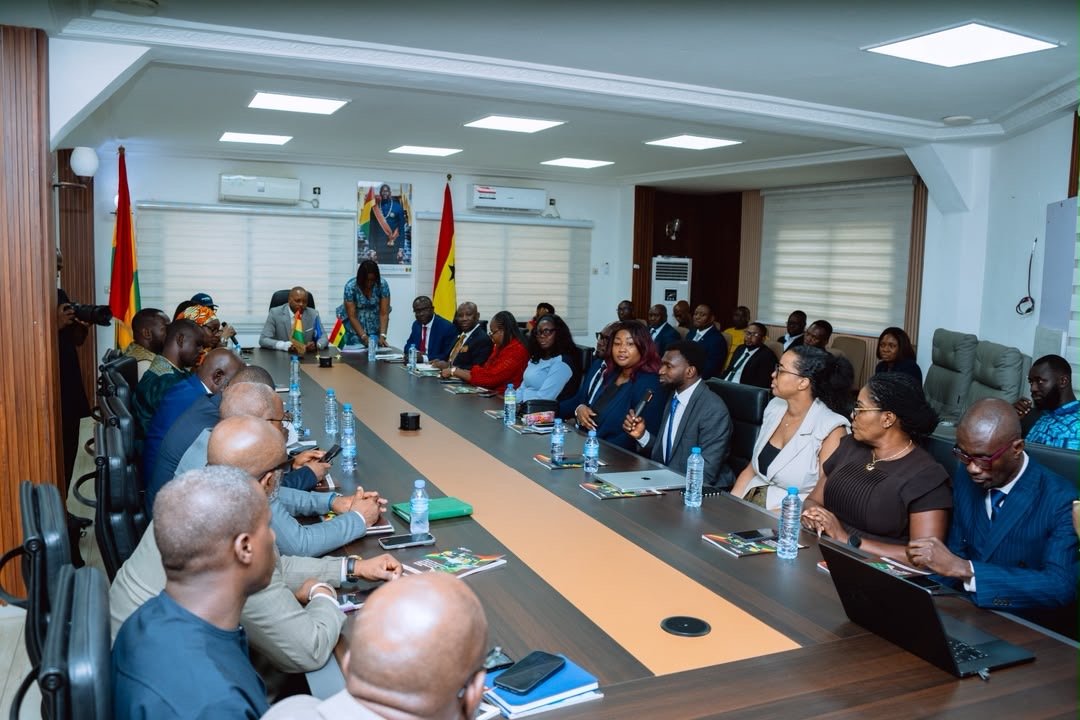
The Prime Minister spoke when JGC leadership, led by Executive Chairman Dr. Joseph Siaw Agyepong, paid a courtesy call on him on Tuesday, November 3, after signing a landmark public-private partnership agreement with the Government of Guinea Conakry.
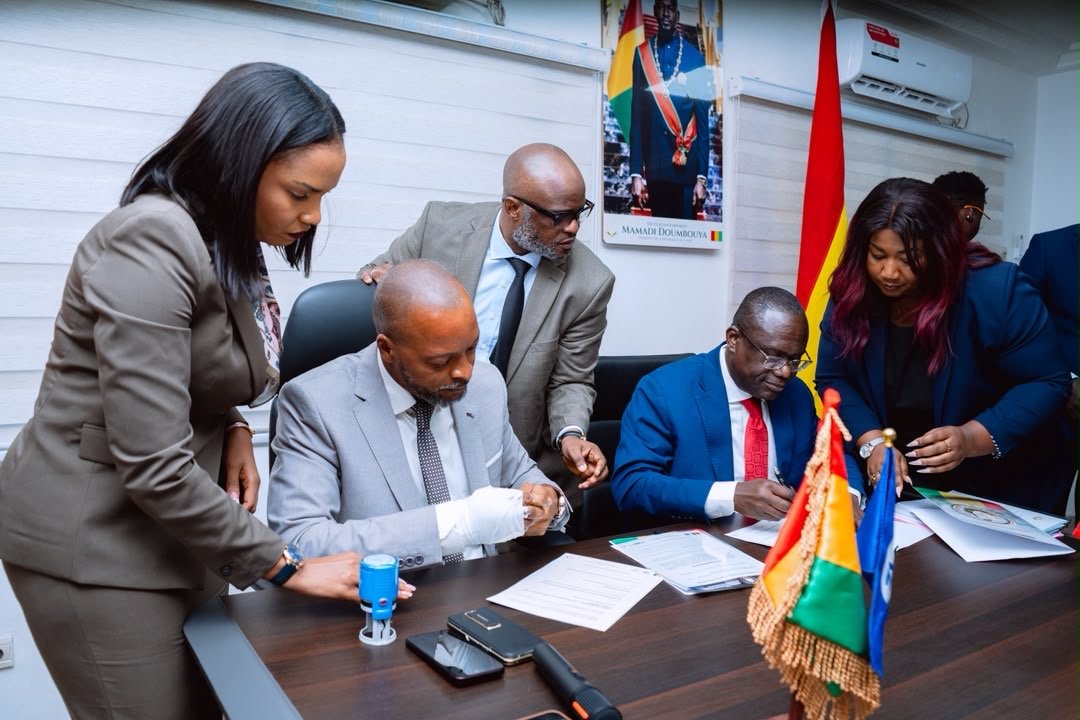
The agreement aims to establish an integrated, modern municipal waste management system for Conakry, moving the city from an unsustainable linear disposal model toward a circular sanitation economy prioritising waste recovery, recycling and resource utilisation.
Operating locally through Zoomlion Guinea Integrated Waste Solutions Limited (ZGIWSL), the company will work closely with the Ministry of Sanitation, Hydraulics and Hydrocarbons (MAHH) and the National Agency for Sanitation and Public Health (ANASP). Its responsibilities include managing and operating key Zone de Tri et de Transit (ZTT) transfer stations, organising waste collection in major public markets, and overseeing transportation to the Baritodé landfill and future resource-recovery facilities.
Minister Outlines Challenges
Earlier, Guinea’s Minister of Sanitation, Hydraulics and Hydrocarbons, Aboubacar Camara, said Conakry’s sanitation sector had reached a major turning point with the signing of the contract, which he said aligned with the vision of President Mamadi Doumbouya and the orientations of the Prime Minister.
For years, he said, Conakry was cleaned, but waste from Manéah and elsewhere was transported and dumped again in the heart of the city. “We cleaned the city, but afterwards we would gather these piles of trash again in the middle of the city. And that is what motivated the President of the Republic to ask us to close Dar-es-Salam in the first place.”
He explained that the second phase, coordinated by the Prime Minister, was to find solutions to definitively end catastrophic waste management. He said Guinea had worked with Jospong for years, describing the group as operating in 29 countries with enormous experience in waste management, recovery and transformation.
After initial due diligence, Guinean teams travelled to Ghana several times, he said. A month ago, negotiations intensified and after a three-day visit, the parties finalised the contracts binding the Ministry and the communes of Conakry.
“Today, we can announce that the question of sanitation at the level of Conakry is meeting a major turning point in a decisive stage, namely the modernisation, the transformation, but also the industrialisation of our waste,” he noted.
For about thirty years, he said, Guinea had not been able to find a definitive solution “and I think that this time, we are on the right track. And it is thanks to the vision of a man but also the coordination and accompaniment of the Prime Minister.”
2,000 to 3,000 Jobs, New Image for Sanitation Work
The Minister thanked Dr. Agyepong, who he said was ready to commit funds for the early establishment of a waste processing and recovery plant. He said the plant will create at least 2,000 to 3,000 jobs and give sanitation a new image.
He noted that most young people currently working in the sector are foreigners, and that society’s view of the profession still leaves much to be desired. “With professionalisation and the valuing of this profession, it will allow many young people who are currently unemployed to say: ‘Thank God, at last we will participate in the construction of our lives and of our country,'” he expressed.
He linked the project to the Simandou 2040 programme initiated by the President, saying its vision is to make the capital clean. “If we have companies capable of providing solutions, but also employing young Guineans, I think that is an opportunity that we must seize and we will seize it,” he noted.
He emphasised that success would depend not only on equipment and technical capacity but also on active community participation, indicating ZGIWSL would work with municipal authorities and the Office of the Prime Minister to implement extensive public education and environmental awareness campaigns, extending to schools, local communes, traditional leadership structures and youth organisations.
“African Solution” for African Cities
Dr. Agyepong conveyed fraternal greetings from the President of Ghana and commended President Doumbouya for his vision and commitment to transforming Guinea’s development landscape. He stressed the need for African countries to move beyond traditional financing and operational arrangements that have often failed to deliver sustainable solutions.
“For over 30 years in Africa, governments have depended almost exclusively on World Bank and IMF frameworks to solve urban sanitation problems, which has repeatedly proven unsustainable over time,” he said. “What we are bringing to Guinea is a self-sustaining, circular industrial model built on localised African capacity. We are proud to buy into President Doumbouya’s Simandou 2040 vision, turning urban environmental challenges into drivers of economic growth, public safety and job creation.”
He outlined the group’s capacity — operations in 29 countries, an asset base exceeding $2.4 billion, approximately 10,000 employees globally, and a research and technical pool of more than 200 PhD holders specialising in waste engineering and related fields (figures provided by the company). He assured that machinery and equipment deployed in Conakry would be purpose-built to meet local operational requirements rather than standard imports — a principle he described as “exactement à nos propres besoins” (“exactly tailored to our own needs”). He also cited the group’s experience in Ghana and its reported $180 million infrastructure investments in Lagos State, Nigeria, as evidence of its capacity to deliver large-scale environmental infrastructure projects across Africa.
Dar-es-Salam Tragedy Underscores Urgency
The weaknesses in the city’s existing system were brought into sharp focus in August 2025 when torrential rainfall triggered the catastrophic collapse of the main Dar-es-Salam landfill at Gbessia, claiming at least 30 lives. The subsequent closure forced municipal authorities to redirect collected waste to distant disposal sites outside the urban centre, placing additional pressure on transportation and transfer infrastructure and reinforcing the need for a comprehensive intervention capable of restructuring Conakry’s waste management value chain.
Aligning with Simandou 2040
The agreement aligns with Simandou 2040, Guinea’s 15-year national socio-economic development framework championed by President Doumbouya. Anchored on five strategic pillars, the vision prioritises sustainable development, infrastructure modernisation and social inclusion, recognising that the country’s natural resources must be supported by functional, clean and climate-resilient urban infrastructure. Its water and sanitation objectives include expanding sanitation coverage, modernising waste collection systems and improving living conditions across the country’s communes.
Recovering Economic Value
The partnership comes at a critical time for Conakry, one of West Africa’s rapidly expanding capitals. Located on a narrow coastal peninsula along the Atlantic Ocean, the city’s population growth has significantly outpaced municipal sanitation infrastructure.
A major component of the partnership is recovering economic value from Conakry’s waste stream. Characterisation studies indicate household waste contains approximately 46 per cent organic matter, 18 per cent plastics, seven per cent metals, six per cent glass, and six per cent paper and cardboard. Through ZGIWSL’s circular approach, these materials will be systematically separated and recovered for productive use rather than sent directly to landfills, creating opportunities for local industries while reducing waste requiring final disposal.
Under the agricultural component, organic waste will be processed into quality compost for Guinean farmers, expected to improve soil fertility, support agricultural productivity and contribute to food security and agribusiness ambitions under Simandou 2040. Recovered plastics, paper, glass and metals will provide raw materials for domestic recycling facilities and manufacturing enterprises, creating green employment and expanding local SME participation in the sanitation value chain.
In addition to daily collection, transportation and processing, the partnership is expected to address longstanding environmental challenges associated with abandoned and poorly managed dumpsites. Drawing on Zoomlion’s experience rehabilitating degraded sites and converting them into productive public spaces and recreational facilities, the initiative could pave the way for eventual ecological restoration of former disposal locations, including the Gbessia site.
With administrative arrangements, land allocation and legal frameworks being advanced under the supervision of the Prime Minister and the MAHH, the establishment of Zoomlion Guinea Integrated Waste Solutions Limited represents a significant step toward restructuring Conakry’s sanitation system.
With more than 2,500 tonnes of municipal solid waste generated daily, Conakry has historically collected only about 44 to 55 per cent, contributing to refuse accumulation in communities and markets, blocked drainage systems, coastal plastic pollution and open-air burning, with serious public health and environmental implications.