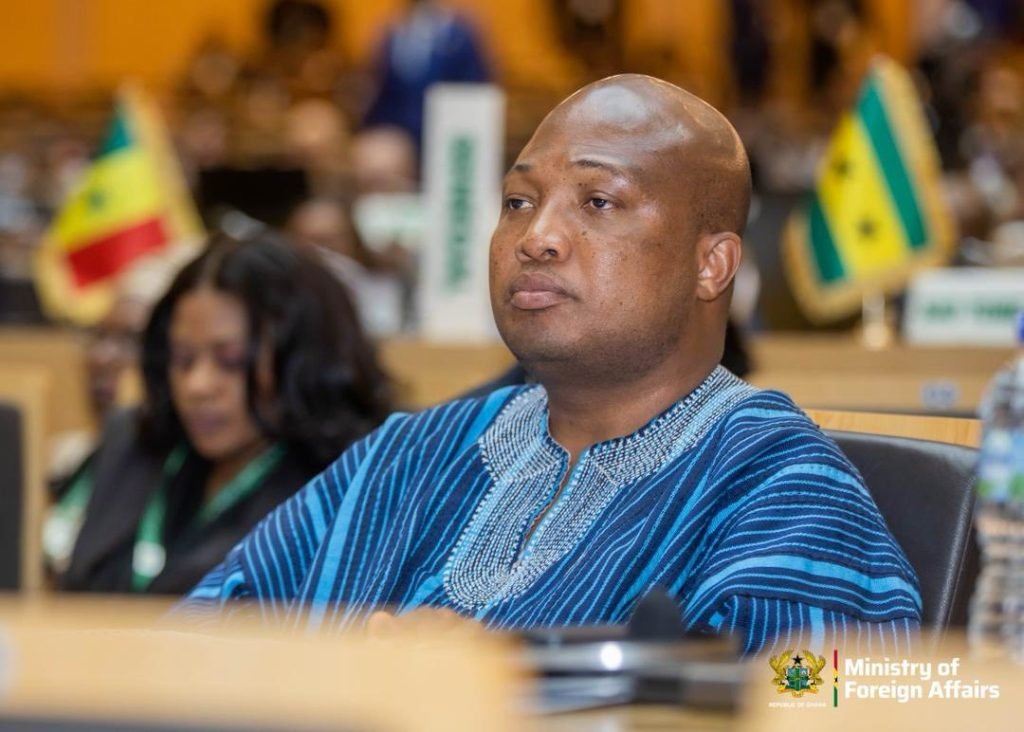
Deputy National Communications Officer of the National Democratic Congress (NDC)Julius Kwame Anthony, has argued that the New Patriotic Party (NPP) has failed to establish sufficient grounds to justify calls for the removal of Foreign Affairs Minister Samuel Okudzeto Ablakwa over alleged financial irregularities surrounding the evacuation of Ghanaians from South Africa.
Speaking to Isaac Addae on Morning Starr on Starr FM, Mr Anthony said the NPP had not identified any specific amount allegedly embezzled or pointed to any component of the evacuation expenditure that had been misappropriated.
He maintained that merely questioning the expenditure breakdown presented by the minister and an accountant does not amount to evidence of theft, insisting that the opposition must provide concrete details to support its allegations.
According to him, the absence of receipts for some flight-related expenses does not, on its own, establish that public funds have been stolen.
Mr Anthony drew a comparison with criminal proceedings, arguing that allegations must be supported by sufficient evidence before a person can be made to face trial. He said the same principle should guide calls for the minister’s removal.
“When the state makes an allegation, they must first of all establish substantial basis for trial to continue, in the absence of which the submission of no case will be made and courts are forced to dismiss the action,” he stated.
He said the NPP had so far failed to meet that standard, adding that its criticisms of the minister’s explanation did not constitute proof of financial misconduct.
“So far, no case has been made out on this matter,” Mr Anthony said.
He further praised Mr Ablakwa’s work and international engagements as Foreign Affairs Minister, arguing that the minister should not be pressured to step aside simply because he had presented an account of the expenditure incurred during the evacuation exercise.
Mr Anthony insisted that any demand for the minister’s removal must be backed by specific and credible evidence of wrongdoing rather than questions or suspicions surrounding the expenditure breakdown.
Story By Pamela Quayson