
The Ashanti Green Initiative (AGI) has selected kenaf, a commercial fibre crop, for the restoration of mining-degraded lands along the Jimi River, citing its potential for soil rehabilitation and sustainable packaging.
The initiative’s Chief Executive Officer, Oheneba Nana Kwaku Duah, said the decision was intended to ensure that the soil was restored to a healthy condition before any food crops were cultivated.
“We want to ensure that before we plant any food crops, that the soil has been restored into a place where it’s healthy,” he said.
Oheneba Nana Kwaku Duah, son of Asantehene Otumfuo Osei Tutu II, made the remarks during a royal visit to the Jimi Land Reclamation and River Watercourse Rehabilitation Project on Wednesday, October 14, 2026.
Explaining the choice of crop, he said kenaf was selected not only for its potential in phytoremediation, a process that uses plants to help remove, contain or reduce contaminants in the environment, but also for its applications in sustainable packaging.
“Now in line obviously again, Daddy, with your vision of pushing for a proper circular economy and for pushing for sustainable packaging, and in line with Ghana’s SDG goals, we’ve obviously decided that kenaf would be the right place to start,” he said.
He added that the crop could contribute to efforts to reduce plastic use by providing an alternative source of raw material for packaging.
“I know that the EPA is making efforts to reduce plastics in some of these plastic bags, and kenaf would play a very pivotal role in that. So that’s why we landed on kenaf,” he said.

The project forms part of efforts to rehabilitate lands severely degraded by unregulated small-scale mining and protect the Jimi River, whose water resources are vital to surrounding communities.
Project awaits completion of permitting process
Oheneba Nana Kwaku Duah said the project began in 2023, with the team advancing its preparations and first moving to the site in 2024.
“The project started in 2023. We advanced in 2024. That’s when we first hit site,” he said, acknowledging the time and collaboration required to reach the current stage.
He said the team had engaged the Environmental Protection Authority (EPA) and was working to complete the permitting process before commencing the main reclamation works.
“We are in the process of finalising our permitting. And so once the permit is done … we can hit the ground running hopefully very soon,” he said.
According to him, the project team is working with engineering and consulting firm Zutari, which is undertaking the front-end engineering design.
He explained that the design work was nearing completion and that the outstanding technical information would enable the team to provide the EPA with the documentation required to finalise the permit.
“We are at the tail end of that. That’s the only reason we haven’t finished our permitting,” he said.
“As soon as the final bits and bobs coming from Zutari, we can furnish the EPA with the necessary information that they need to give us the permit so that we can start working.”
He expressed gratitude to the Minister for Lands and Natural Resources, Emmanuel Armah-Kofi Buah, for his support with the permitting process and acknowledged the contributions of other stakeholders.
Oheneba Nana Kwaku Duah said the team hoped to get substantive work underway before the end of 2026, subject to the completion of the necessary processes.
He also gave a timeline for the project’s first phase, saying: “We are making a commitment that by the end of next year at least we should have finished with one of the lots.”
Reclamation to be undertaken in three lots
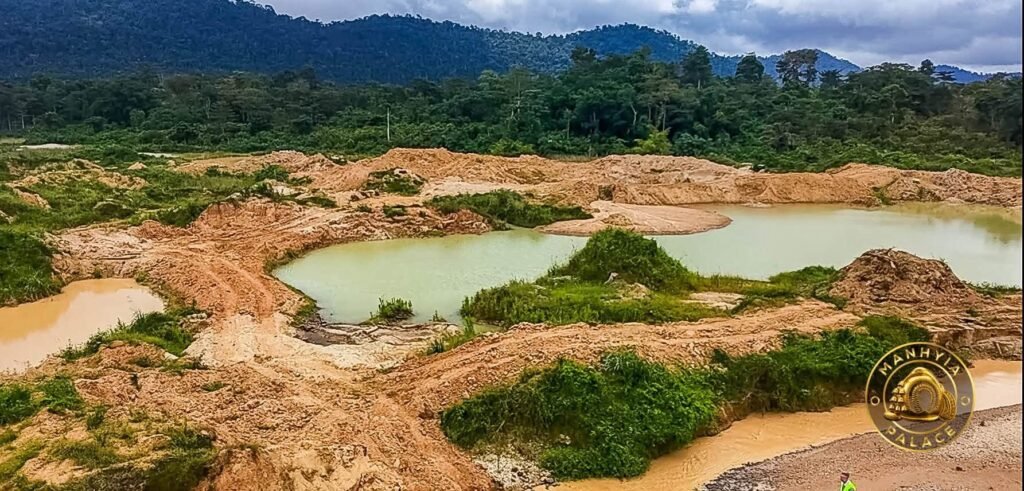
The project covers approximately 153 hectares across three designated lots in the Obuasi East Municipality and the Adansi Akrofuom and Adansi Asokwa districts.
The restoration works are expected to include backfilling abandoned mining pits, regrading spoil heaps, managing contaminated soil, installing drainage and erosion-control structures, restoring topsoil and replanting the land.
Oheneba Nana Kwaku Duah said the decision to divide the project into three lots was also informed by the need to manage the river’s course and reduce the risks associated with excessive water velocity.
“The idea is to break up the project into three lots,” he said.
He explained that the team wanted to establish a suitable path for the river to meander naturally, helping to slow the movement of water and reduce the risk of flooding in nearby communities.
“The river is supposed to meander so that the velocity of the water does not cause [damage] to the villages in the community,” he said.
“So we are trying to come up with a proper path that the river can meander around and so that it can reduce the speed with which the water is coming.”
The approach is intended to support the rehabilitation of the river corridor while protecting communities and water resources affected by mining activities.
Kenaf to support sustainable livelihoods
Beyond its role in land restoration, kenaf is expected to provide an economic opportunity through the production of fibre for sacks, ropes and other sustainable materials.
The crop was selected partly because of concerns about residual heavy-metal contamination in mining-affected soils. Its cultivation would allow the project to focus on rehabilitation and commercial fibre production rather than introducing food crops before soil health has been adequately assessed.
The initiative also plans to monitor water quality, soil conditions, vegetation, biodiversity and community health as restoration progresses.
The Jimi project emerged from Otumfuo Osei Tutu II’s advocacy against illegal mining at the Mining in Motion forum and became the flagship pilot initiative of the Ashanti Green Initiative.
AGI is leading the project on behalf of the Asantehene, with the Manhyia Palace providing strategic direction and royal patronage, and AngloGold Ashanti offering technical and operational support.
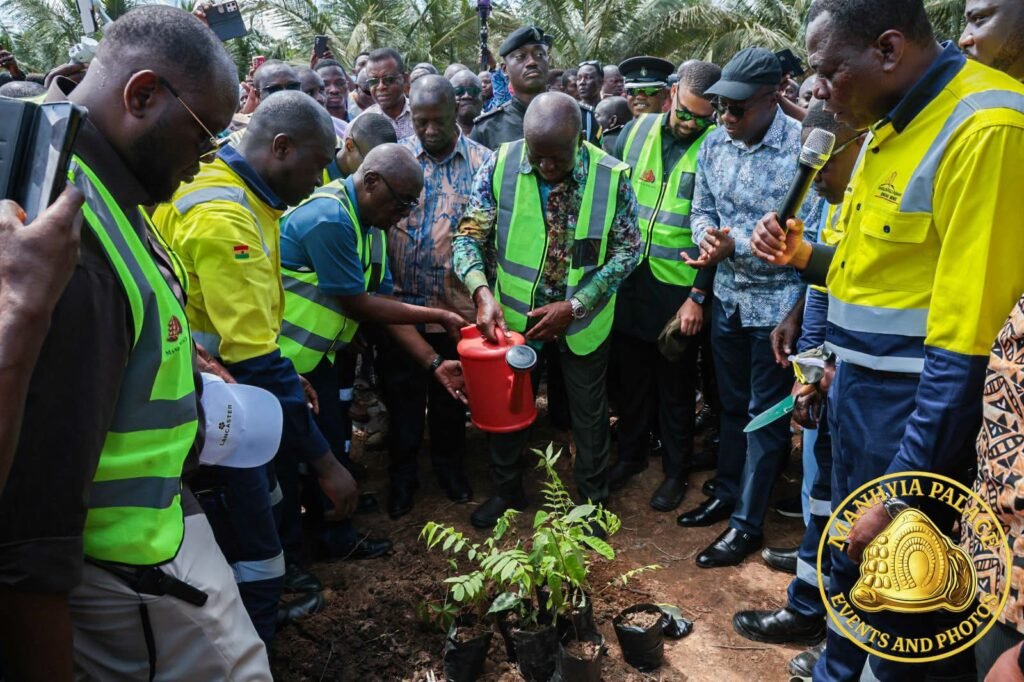
The royal visit also featured a tree-planting exercise along the Jimi River, involving Otumfuo, the Ministers for Lands and Natural Resources and Local Government, Chieftaincy and Religious Affairs; Emmanuel Armah-Kofi Buah and Mahama Ayariga; and representatives of AngloGold Ashanti.
During the visit, Otumfuo expressed concern about the destruction of land and water bodies through illegal mining, emphasising the importance of protecting water resources while creating employment opportunities for young people.
READ: Jimi reclamation: Otumfuo warns galamsey could endanger health, future generations
The Jimi Dam, which supplies drinking water to communities across the Adanse Traditional Area, faces threats from toxic runoff and heavy sediment accumulation associated with mining activities.
The reclamation project is intended to help address these environmental challenges and provide a model for restoring other mining-degraded lands and water systems across Ghana.