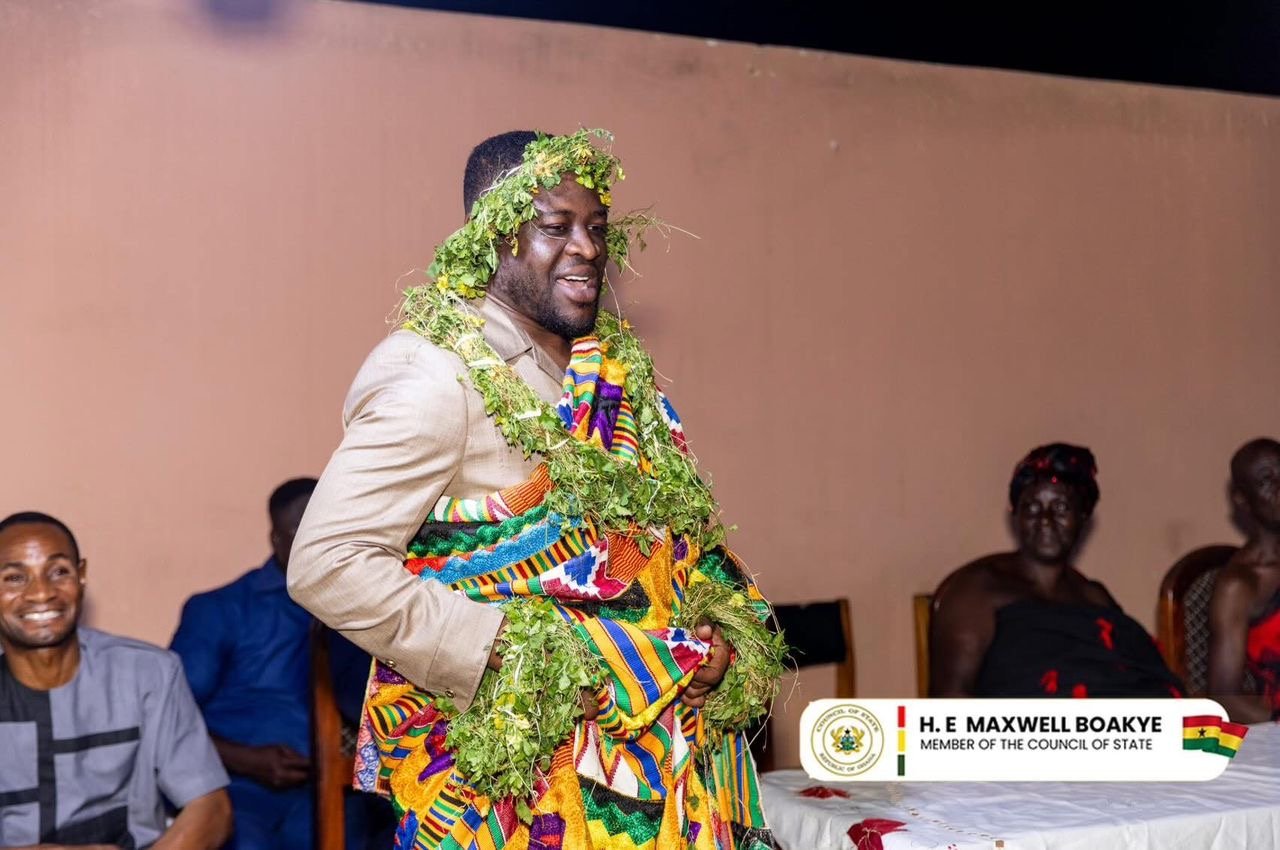
Western Regional Council of State Member, Dr. Maxwell Boakye, has been installed as the Nkabomhene (Unity King) of the Ahanta Traditional Council during a colourful traditional ceremony held at Busua in the Western Region.
The ceremony, which took place at the Ahanta Traditional Council Hall, brought together divisional chiefs, queen mothers, elders and community members in a strong display of unity and cultural pride.
In a rare collective gesture, the honour was jointly conferred by the queen mother and chiefs of the Council, symbolising their shared commitment to peace, unity and development within the traditional area. As part of the installation rites, Dr. Boakye was draped in kente cloth, a revered symbol of dignity, honour and acceptance into the Ahanta community.
Addressing the gathering, the chiefs disclosed that they had closely monitored Dr. Boakye’s engagements across various traditional areas in the region and recognised his contributions towards promoting peace and unity in communities that had experienced divisions and conflicts.
According to the traditional leaders, his interventions and engagements with some traditional councils had helped restore calm and strengthen cooperation among stakeholders.
“Your presence has brought instant unity among members who were previously divided,” the chiefs stated during the ceremony.
They further noted that discussions surrounding his visit had already renewed a collective commitment towards pursuing a common development agenda for the Ahanta Traditional Area.
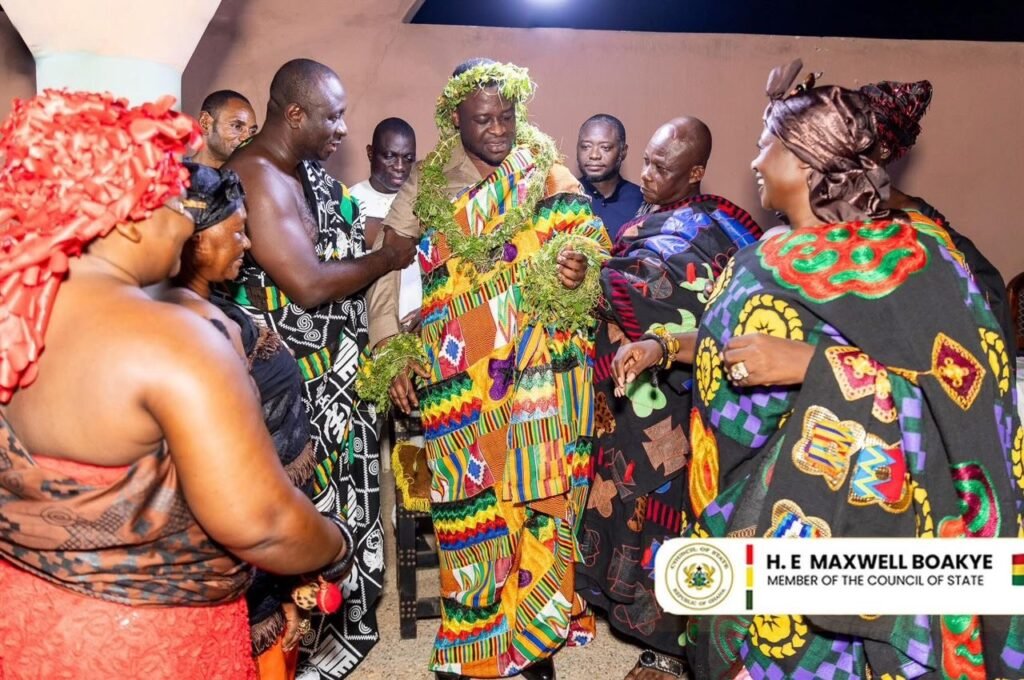
In his remarks, Dr. Maxwell Boakye expressed appreciation to the Ahanta Traditional Council for the honour bestowed on him and pledged his continued support and engagement with traditional authorities across the region.
He emphasised the need for stronger collaboration between traditional leadership and governance institutions at the decentralised level to promote peace, unity and sustainable development in communities.
The installation is expected to further strengthen relations between traditional authorities and governance structures in the Western Region while fostering social cohesion within the Ahanta Traditional Area.