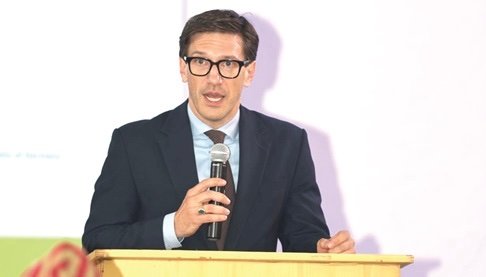
German Ambassador to Ghana Frederik Landshöft has called for a people-centred approach to coastal adaptation in the Volta Region, emphasising the need to protect the lives, homes and livelihoods of communities affected by coastal erosion.
He said efforts to address coastal erosion must go beyond physical protection of the coastline to include early prevention, community preparedness and sustainable livelihood interventions to help residents cope with climate-related risks.
The Ambassador made the call during a Climate Talks 2026 dialogue organised by the German Embassy in Keta on Wednesday, October 14, under the theme, “Coastal Erosion and Its Impact on Human Security.”
“Coastal erosion is not only an environmental challenge. When the sea creeps closer to people’s homes, it threatens their livelihoods, their communities and their sense of security,” he said.
Mr Landshöft added that protecting livelihoods and human dignity was integral to maintaining peace and stability, noting that interventions must build on the resilience demonstrated by Keta residents over generations.
Coastal erosion and flooding continue to pose risks to land, homes and infrastructure in coastal communities, with households dependent on fishing and farming particularly vulnerable to disruptions in income and food security.
These challenges can also affect access to essential services and increase the risk of displacement, highlighting the need to integrate climate adaptation into broader efforts to strengthen community resilience and human security.
The dialogue brought together representatives of the Environmental Protection Authority, the National Disaster Management Organisation (NADMO), traditional leaders, community members, security personnel and academic experts to examine the relationship between coastal degradation, livelihoods and community security.
Participants stressed the importance of coordinated and locally appropriate responses that address both the physical effects of coastal erosion and its wider social and economic consequences.
They called for greater emphasis on early prevention and locally tailored adaptation measures, alongside stronger links between coastal protection, public health, social protection and sustainable livelihoods.
Such interventions, they noted, should deliver tangible improvements in the lives of affected communities while helping them prepare for future climate-related risks.
The discussions also highlighted the importance of collaboration among government institutions, traditional authorities, security agencies, researchers and local communities in developing effective adaptation strategies.
According to the German Embassy, combining local knowledge with scientific and technical expertise would help ensure that interventions respond to the needs of affected populations and build long-term resilience.
Germany reaffirmed its commitment to supporting Ghana’s climate objectives through technical cooperation, institutional capacity-building and partnerships aligned with national priorities and local needs.
The embassy said protecting coastal communities required more than reducing the physical impact of erosion, stressing the need to help residents safeguard their homes, sustain their livelihoods and prepare for future risks.
It added that integrating coastal adaptation with human security and sustainable development was essential to building resilient communities across the Volta Region.