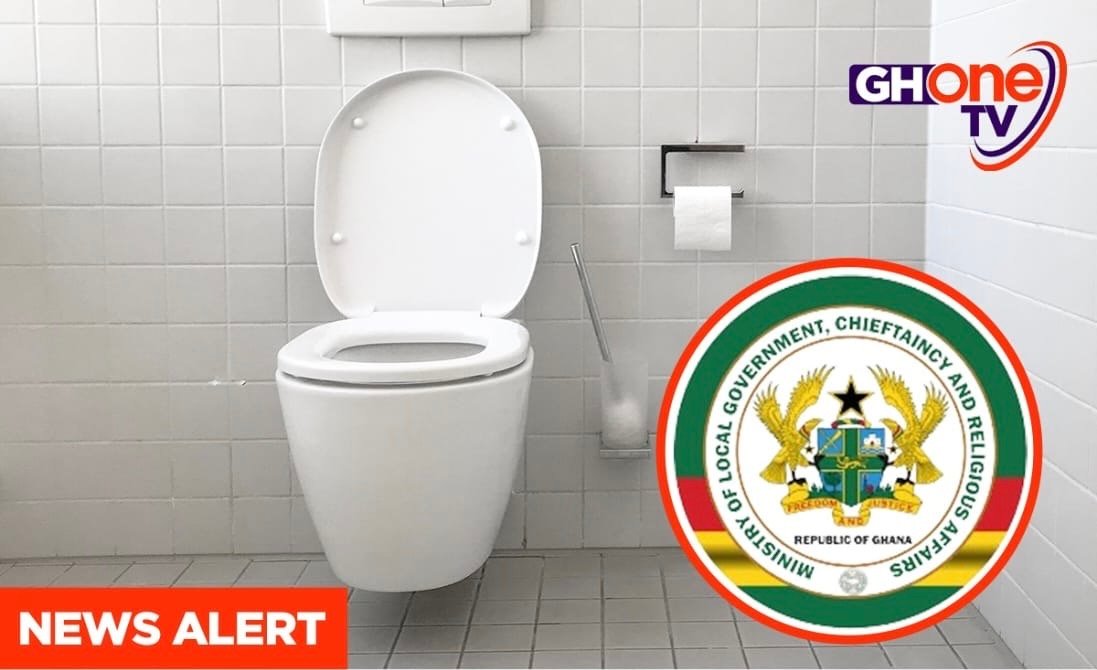
Only 59.3 percent of households in Ghana have access to improved toilet facilities, highlighting persistent sanitation challenges despite progress in the country’s water and sanitation sector, the Ministry of Local Government, Chieftaincy and Religious Affairs (MLGCRA) has disclosed.
The figure, contained in the Ministry’s statement marking the 2026 African Day for Decentralisation and Local Development, is based on data from the 2021 Population and Housing Census.
The Ministry said the situation underscores the need for accelerated efforts to expand access to safe and dignified sanitation services, particularly in underserved communities.
While Ghana has made progress in access to drinking water, sanitation remains a significant challenge, with inequalities in access to improved household toilet facilities, effective wastewater management and sustainable solid waste disposal services continuing to affect communities.
According to the Ministry, 87.7 percent of households have access to basic drinking water services, while 92 percent use improved sources of drinking water.
However, access to basic drinking water services remains significantly higher in urban areas, at 96.4 percent, compared with 74.4 percent in rural areas, reflecting persistent geographical disparities.
The Ministry said addressing these gaps requires stronger local institutions, increased community participation and greater investment in sanitation infrastructure and services across the country.
The Ministry emphasised the critical role of Metropolitan, Municipal and District Assemblies (MMDAs) in planning, coordinating and delivering water, sanitation and hygiene (WASH) services as part of Ghana’s decentralisation agenda.
It said strengthening local governments is essential to building resilient, inclusive and sustainable communities and improving the quality of life of citizens.
“As part of Government’s commitment to advancing the objectives of this year’s commemoration, the Ministry reaffirms its resolve to strengthen local governments through improved institutional capacity, sustainable financing arrangements and stronger multi-stakeholder partnerships to enhance the delivery of water and sanitation services across the country,” the statement said.
The Ministry also highlighted the importance of collaboration among Regional Coordinating Councils, MMDAs, Ghana Water Limited, the Community Water and Sanitation Agency, development partners, civil society organisations, traditional authorities and religious institutions.
According to the Ministry, such partnerships are necessary to extend water and sanitation services to underserved and hard-to-reach communities while fostering community ownership of development interventions.
The Ministry further acknowledged the role of traditional and religious leaders in mobilising communities, promoting behavioural change and supporting initiatives focused on sanitation, environmental stewardship and responsible water use.
It called on stakeholders to renew their commitment to strengthening decentralised governance and supporting local governments as key actors in the delivery of sustainable water and sanitation services.
The 2026 African Day for Decentralisation and Local Development is being commemorated under the theme: “Empowered Local Governments for Sustainable Water and Sanitation: Advancing Resilient, Inclusive and Sustainable Cities and Territories towards Agenda 2063.”
The annual observance, held on August 10, is pursuant to the African Charter on the Values and Principles of Decentralisation, Local Governance and Local Development.
The Ministry said Ghana’s continued decentralisation reforms are aimed at strengthening local governance institutions and empowering MMDAs to drive inclusive and sustainable local development.
Source: Starrfm.com.gh