
The government is expanding digital skills training at the Kwame Nkrumah University of Science and Technology (KNUST) with an additional 2,000 laptops under the One Million Coders Programme, bringing the university’s allocation to 2,500.
Communications, Digital Technology and Innovations Minister Samuel Nartey George announced the allocation during a visit to the university, saying the expansion would support the establishment of 15 learning centres and strengthen efforts to prepare students for the job market.
He said the ministry was restructuring its engagement with KNUST to prioritise third- and fourth-year students, ensuring they acquired relevant digital skills before graduating.
“We are looking to redesign our engagement with KNUST. The new focus is to make sure that we are training students as they exit the University and equipping them with the right kinds of skills,” he said.

Mr. Nartey George said the revised training approach would be guided by a skills gap analysis being conducted in collaboration with experts from Harvard University. The exercise is intended to identify labour market needs and align the programme’s training with the skills employers require.
Beyond digital skills training, he said universities would be critical partners in implementing the government’s digital policies, particularly in artificial intelligence (AI) and the development of language models that reflect Ghana’s linguistic and cultural diversity.
He identified KNUST as a potential partner in developing AI language models for Twi, stressing the importance of involving local academics and traditional authorities to ensure the technology accurately represents indigenous languages and cultural contexts.
According to the minister, integrating local languages into AI systems could make digital services more accessible to communities that face language barriers when using technology.
He cited potential applications in agriculture, including precision farming, weather monitoring and crop disease detection, as well as healthcare services that could connect patients in underserved communities to specialists through telemedicine supported by 5G technology.
“President John Dramani Mahama launched Ghana’s National Artificial Intelligence Strategy in April 2026, and the country has since moved into the implementation phase,” he said, adding that KNUST’s technical expertise would be essential to the strategy’s implementation.
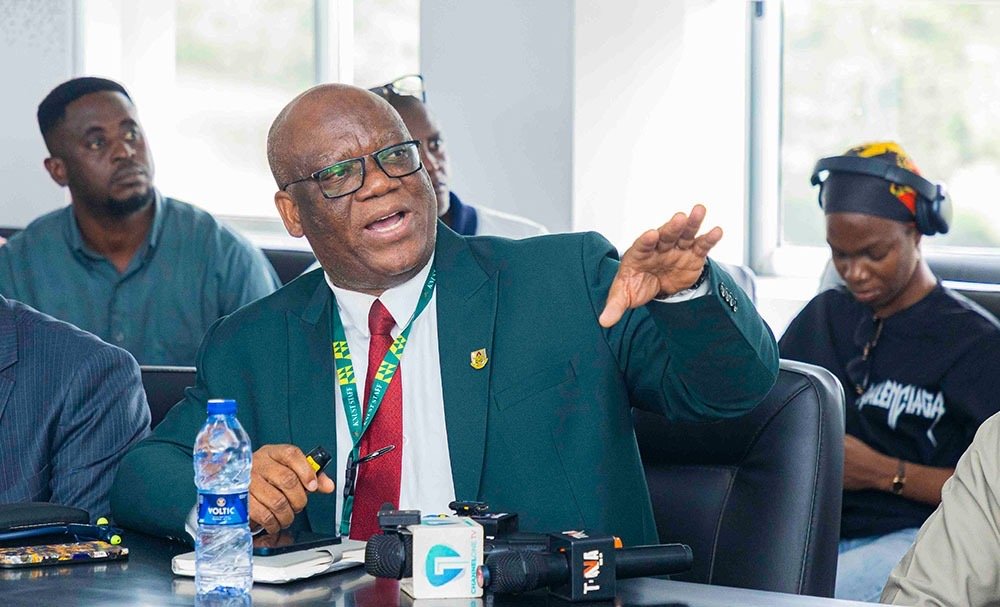
KNUST Vice-Chancellor Prof. Christian Agyare welcomed the additional laptops and the ministry’s continued partnership with the university.
“We are very grateful for this visit and the donation. The fact that you identify KNUST as a partner institution means a lot to us,” he said.

Prof. Agyare also welcomed the emphasis on students nearing graduation, noting that the initiative would help improve their employment prospects and encourage entrepreneurship. He said the university would deploy the equipment through its existing learning centres.
Meanwhile, Prof. Jerry John Kponyo, coordinator of the One Million Coders Programme at KNUST and head of the Responsible AI Lab, said 1,447 students were enrolled in the programme across four training centres, with 195 having completed their training.
He said the programme was designed to equip one million Ghanaians with practical digital skills to improve their employment prospects.
Although KNUST had the capacity to accommodate more trainees, Prof. Kponyo stressed that connecting participants to jobs would be crucial to achieving the programme’s objectives.
“We have the facilities to accommodate more participants, but connecting them to employment opportunities is essential to achieving the programme’s objectives,” he said.
Story By Isaac Justice Bediako