President John Dramani Mahama has called for climate finance to be provided to developing countries in the form of predictable, non-debt-creating grants rather than loans.
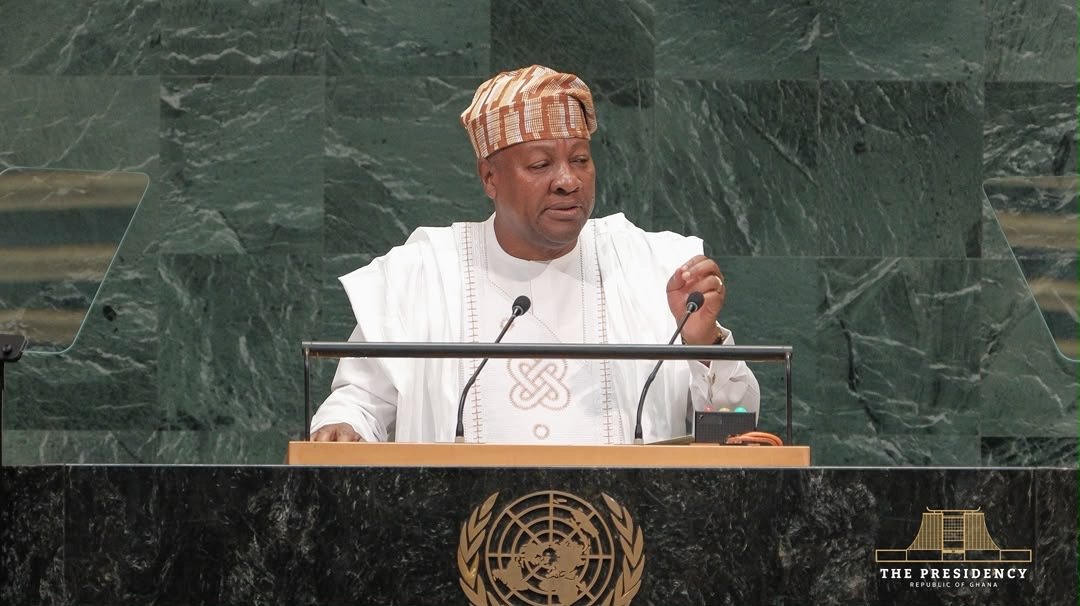
Addressing the 81st Session of the United Nations General Assembly in New York on Thursday, September 24, 2026, President Mahama said countries that have contributed least to global emissions should not be forced to take on additional debt to address the effects of climate change.
He noted that Africa contributes less than four per cent of global greenhouse gas emissions but continues to bear a disproportionate share of the consequences of climate change.
“Climate finance must be predictable, adequate and accessible, and it must come in the form of grants, not loans that deepen the debt burden of developing countries,” he said.
President Mahama also drew attention to the impact of climate-related disasters on Ghana, citing the heavy rainfall that hit the country and parts of coastal West Africa on June 29, 2026.
READ: Africa deserves permanent seat, veto power on UN Security Council – President Mahama
According to him, more than 160 millimetres of rain fell within 24 hours during the event, resulting in 39 deaths and leaving one person missing.
He said such events demonstrate the urgency of strengthening international action on climate change and ensuring that countries vulnerable to its effects have access to the resources needed to respond and build resilience.
President Mahama argued that climate justice requires a global response that recognises the differing contributions of countries to the climate crisis and the unequal burden borne by vulnerable nations.
He therefore called for stronger international commitment to climate financing mechanisms that support developing countries without worsening their existing debt challenges.
READ: UN Charter must reign supreme over ‘might makes right’ – John Mahama
The President’s call formed part of his broader appeal at the UN General Assembly for a more equitable global system in which developing countries have greater access to resources and a stronger voice in decisions affecting their future.