


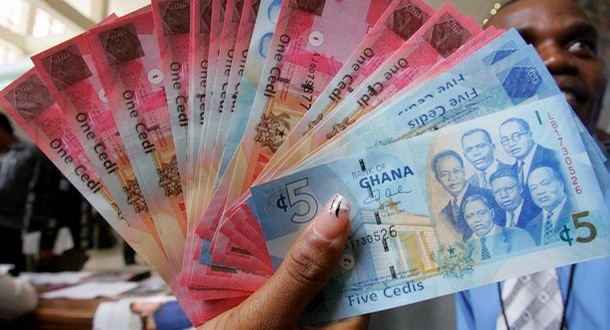
Professor of Finance Godfred Bokpin has attributed the recent appreciation of the Ghanaian cedi to the current government’s deliberate and sustained fiscal discipline.
Speaking in an interview on Morning Starr with Naa Dedei Tettey, Prof. Bokpin emphasized that the government’s efforts to cut down on public spending and borrowing have played a major role in stabilizing the local currency.
Since January 2025, the cedi has seen significant gains against the U.S. dollar, positioning it as the world’s best-performing currency since April, according to Bloomberg.
The cedi is currently trading at approximately GH₵12.09 to $1, marking a strong recovery in value.
While various experts have cited multiple internal and external factors—such as robust gold exports, improved remittance inflows, and better macroeconomic management, Prof. Bokpin maintains that fiscal prudence has been the key driver.
He explained that the government has adopted what he termed “expenditure-based fiscal consolidation,” deliberately shrinking spending across sectors.
“Government is not spending the way it used to,” he said, noting that current expenditure levels are operating at 50 to 60 percent of normal levels.
He added that this reduced liquidity injection into the economy has helped lessen pressure on the cedi, as fewer people are driven to exchange cedis for more stable foreign currencies like the dollar.
Prof. Bokpin also noted a sharp drop in government borrowing, stating that Ghana’s gross financing needs have fallen from about GH₵61.4 billion in 2024 to GH₵44 billion in 2025, a cut of more than GH₵15 billion.
Prof. Bopkin stated, “From the fiscal side, you will see that there’s a clear departure from the previous administration in terms of how we manage the fiscal side. In fact, actually during COVID, the call was consistently on the government to cut down expenditure, if you remember, cut down wasteful spending. That wasn’t heeded to largely. Now you see that in the 2025 budget, the government has decided that they will switch to what we call expenditure-based fiscal consolidation, where they will shrink expenditure significantly. So government is not spending the way it did in the past; it has its own advantages and disadvantages, because the government is the biggest spender in the economy. And the government needs to spend to stimulate economic activity in desirable areas. So the government is not spending, as we speak right now. In fact, in our estimation, the government is operating between 50 to 60 percent. So once government is not spending, in fact, there’s little injection of liquidity into the economy and because the economy has very limited options for absorbing liquidity, anytime there’s injection of liquidity in the economy, people will immediately go and look for a currency that is stable as a store of wealth, then they will turn to the dollar or other major trading currencies.”
He added, “So from the expenditure side, you can see there’s an intention, an intention to drive this gain that we are seeing right now. Apart from the fact that they’ve shrunk expenditure, you also see that the government is not borrowing like we used to see in the past. So government administered what we call a short therapy. In other words, or in a layman’s view, it’s almost like putting the economy in a medically-induced coma. So there’s a short therapy. We have reduced our gross financing needs from around $61.4 billion in 2024 to just around $44 billion, that is more than $15 billion. Even with that growing need, the government is not accepting bids in the market. They are rather sweeping balances from state-owned enterprises to meet their obligations as and when they forego, rather than accepting bids in the market.”


