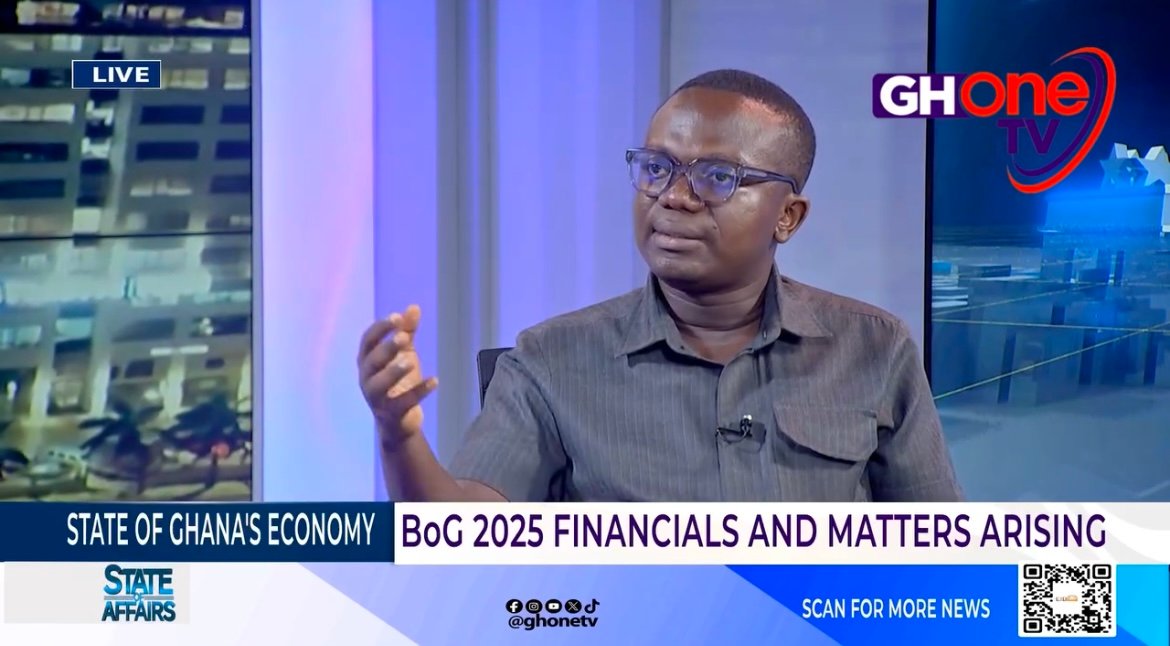
Dr. Kwasi Nyame-Baafi, Director of the Institute for Economic Research and Public Policy (IERPP), has called for increased investment in Ghana’s productive sectors as a sustainable pathway to job creation and long-term economic stability.
Speaking on State of Affairs with Joshua Kodjo Mensah on GHOne TV, Dr. Nyame-Baafi argued that expanding the country’s productive capacity, particularly in agriculture, industry, and exports, is critical to addressing youth unemployment and ensuring sustainable economic growth.
He explained that currency appreciation, if not supported by strong domestic production, could undermine local industries. Using the example of poultry production, he noted that a stronger cedi could make imported goods cheaper than locally produced alternatives, reducing demand for domestic products and forcing local producers to cut output.
“If before he was producing… he’s going to reduce it because demand for the local poultry will come down… and that would create unemployment,” he said, illustrating how reduced production could lead to job losses.
Dr. Nyame-Baafi stressed that a sustainable economy must be built on increased production rather than short-term monetary interventions. “We should be investing in the economy to make sure that our productive capacity is expanding, and that’s what will create the jobs for the youth,” he stated.
He further argued that policies focused primarily on reducing inflation by suppressing demand are not sustainable, warning that such approaches could have hidden long-term costs. According to him, efforts to stabilise the economy through measures such as selling gold reserves may provide temporary relief but are not viable in the long run.
“How many times can we keep selling our gold reserves… In about two or three years, there will be no more gold reserves to sell,” he cautioned.
READ: Ghana could exhaust gold reserves in 2–3 years if current trend continues – IERPP Director
Dr. Nyame-Baafi also noted that while some economic indicators may appear stable, the real impact is being felt by Ghanaians, particularly in employment and the rising cost of living. He urged policymakers to shift focus from short-term economic optics to long-term structural reforms.
He maintained that strengthening domestic production would not only create employment opportunities for the youth but also contribute to a gradual and sustainable reduction in inflation over time.
Source: Starrfm.com.gh