At a time when the global film landscape is evolving rapidly, where filmmaking techniques are advancing and box offices are recording massive returns, Ghana continues to circle the same conversation it has had for years: Funding.
It is the most cited problem in the industry. And rightly so. Financing remains a major hurdle, alongside distribution. But over time, funding has become more than just a challenge, it has become a comfortable explanation.
The truth is, funding is not easy anywhere in the world. Even in established industries like Hollywood, filmmakers fight for funding every single day. Projects stall. Scripts are rejected. Investors hesitate. The difference, however, is clear.
In those industries, funding is controlled.
In Ghana, it is painfully scarce. But scarcity alone cannot explain stagnation.
If the industry continues to stand still, waiting, watching, and hoping for the “perfect budget”, then the same narrative will repeat itself year after year: ‘government must support us’. The question is, for how long?
Expecting government to solve this challenge may not be the most practical path forward. Across the world, national budgets are structured around priorities such as the economy, healthcare, education, and infrastructure. The creative arts sector, while important, often sits lower on that scale. This is not necessarily neglect. It is a matter of priority. And it is precisely why the responsibility to move the industry forward cannot rest solely on government’s intervention.
So where does that leave the filmmaker?
If financial resources are limited, then human resources must take centre stage. Ghana is not short of talent. From writers to actors, directors to cinematographers, producers to editors, the industry is filled with individuals capable of producing meaningful and competitive work. Yet one issue continues to undermine that potential:
Disunity.
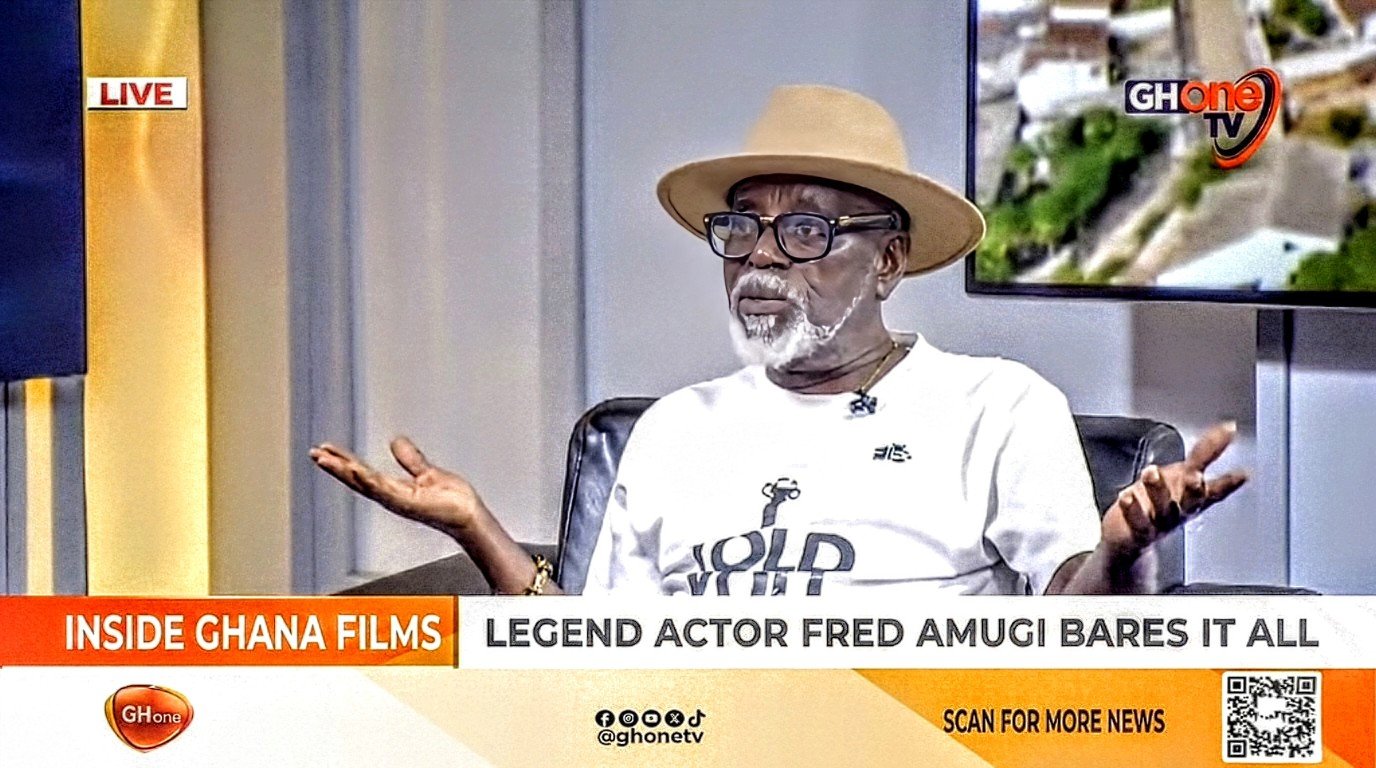
Collaboration remains one of the most underutilised tools in the industry, and without it, even the most talented individuals will struggle to create at scale. Veteran Ghanaian actor Fred Amugi captured this reality succinctly in a recent interview on GHOne TV:
“Funding is not the problem, disunity is. If we can unite as an industry, the money will come.”
This is a strong statement, that is also revealing. Because beyond the conversations about funding lies a deeper question, whether the industry is structured, aligned, and intentional enough to attract and sustain investment.
At the same time, the audience is not the problem. Across Ghana, there is clear evidence of demand. In public spaces, banks, hospitals, even in trotro, people are constantly engaged with film and video content. The challenge is not a lack of interest in Ghanaian stories, but a shortage of consistent, high-quality local productions.
And yes, expectations have changed. Today’s audience has been exposed to global standards. They have seen and tasted high-quality stuff. Which means that substandard content is no longer a viable option.
The implication is simple: the opportunity exists, but it must be matched with action. No industry grows by waiting. It grows by doing. If the current pattern continues, waiting for funding, waiting for intervention, waiting for ideal conditions, then time will pass, and the industry will remain in the same position.
What is required now is a shift? A shift towards collaboration. A shift towards unity. A shift towards creating with what is available, while building towards something greater. Because at some point, a decision must be made:
Will the industry continue to talk about its challenges,
or finally begin to build beyond them?
WRITTEN BY: NUREIN ABASS
ACTOR, PRODUCER
BROADCASTER, GHONE TV / STARR FM
Disclaimer: This opinion piece reflects the personal views of the author and does not represent the editorial stance of starrfm.com.gh.