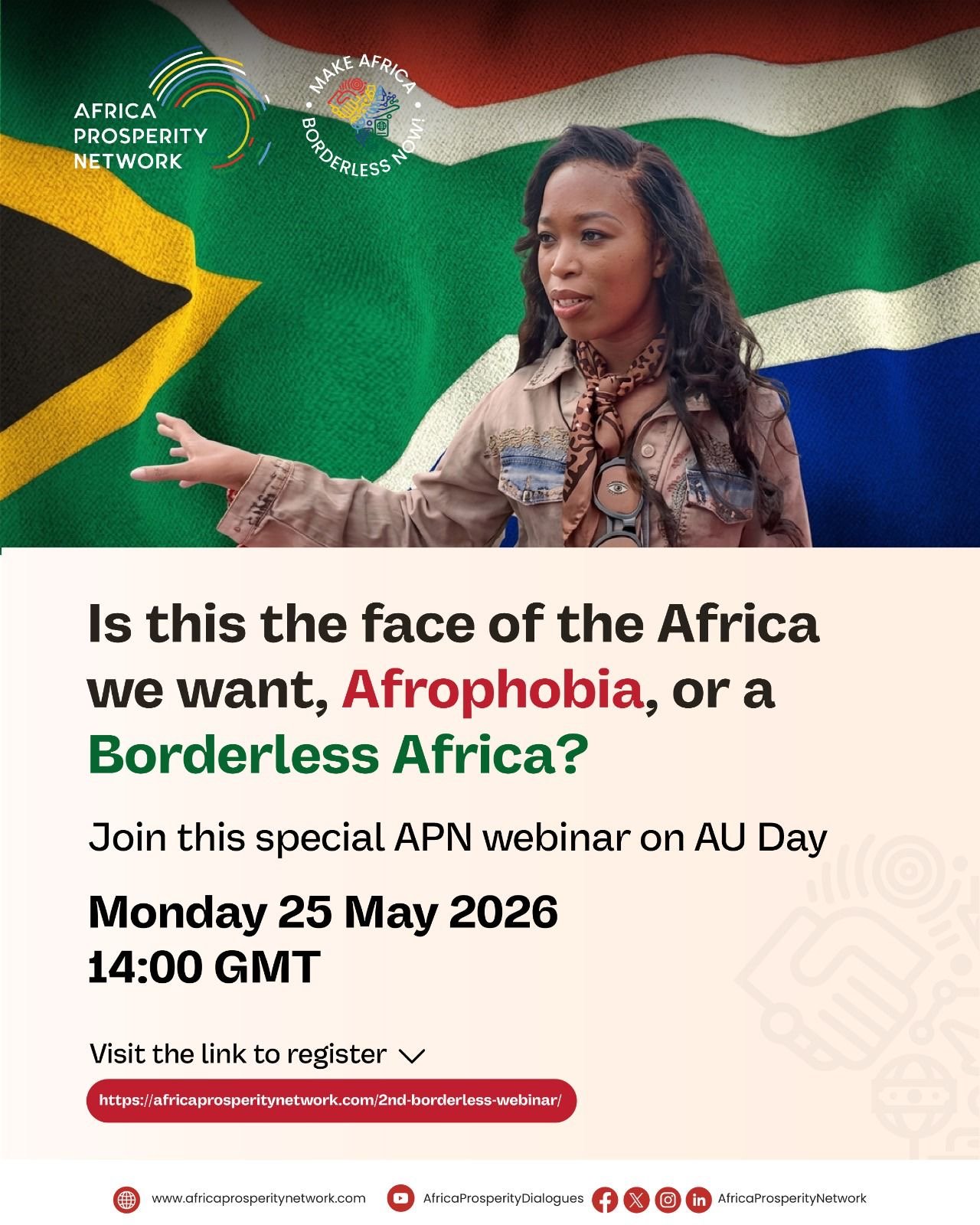
This month the news about Africa continues to centre around the disturbing images from South Africa circulating worldwide on social media. Not even the Africa Forward Summit in Nairobi could shift that. African migrants attacked, their shops looted, people chased, assaulted and blamed simply for being from another African country and seeking to make a living in South Africa. Incidentally, many of the people victimised claimed to have the right of residence in the country.
It is painful. It is shameful. And, frankly, can turn many of usinto incurable pessimists over the all-important task in front of us this century: the economic integration of Africa.
But if we are honest with ourselves, this is not merely a South African problem. Today, several African countries, including Ghana, have laws that prohibit other Africans (foreigners in general) from participating in some level of the retail market.
In the past, Ghana deported Nigerians under the Aliens Compliance Order in 1969. Nigeria retaliated years later with the infamous “Ghana Must Go” expulsions of the early 1980s. Across the continent, at different moments of economic stress, Africans have turned against fellow Africans.
This tells us something uncomfortable: xenophobia in Africa is not simply about economics or migration. It is, indeed, an existential psychological baggage. A colonial hangover. A lingering “divide and rule” mentality that we inherited but have still not found the courage to fully confront. It is what has been described as “Afrophobia.”
Afrophobia is the fear, hostility, prejudice, discrimination or hatred directed by Africans against fellow Africans from other African countries. Unlike classical xenophobia, which broadly targets foreigners, Afrophobia describes a uniquely African contradiction: Black Africans treating other Black Africans as outsiders, threats or lesser people within Africa itself.
Afrophobia is a crisis of African consciousness and identity. It is especially tragic because Africa’s liberation struggles were fought and won on Pan-African solidarity. A continent that 60 years ago preached unity and shared destiny and today, gingerly seeking to implement its own treaties and protocols for integration has to do so under a blinding cloud of Afrophobia. This is a betrayal of the Pan-African ideal and a stark reminder that we may still be victims of the old colonial construct, subconsciously, to detriment of our own destiny.
Colonial borders did not merely divide territories. They divided consciousness. They conditioned Africans to see each other not as partners in a shared civilization, but as competitors for survival within artificial nation-states.
However, history tells us that African civilization itself was built on movement. Let us use the SADC zone as an example. Long before colonial borders existed, Africans moved freely across what is now Southern Africa. Communities traded, intermarried, migrated for grazing, commerce and opportunity. Identities were shaped more by culture and kinship and not by passports or national flags.
Ironically, South Africa itself became what it is today partly because it attracted migrants and fortune seekers. The discovery of diamonds in 1867 and gold in 1886 transformed South Africa into an economic magnet. Europeans flocked there seeking prosperity. Colonial mining systems then recruited labour from across Southern Africa, mainly Mozambique, Lesotho, Malawi, Zimbabwe and beyond. Migrant labour built the mines, the railways and much of the economy itself.
Under apartheid, that labour system became more brutal and exploitative. Black South Africans suffered under pass laws and segregation, while African migrants were treated as disposable labour. Yet even during that dark period, regional migration continued because economies are ultimately built by human movement, labour and exchange.
My own father, the late Dr JF Otchere-Darko, a surgeon, moved to South Africa in the 1980s to heal people and teach medical students. At that time, the rest of Africa stood firmly with South Africa. African countries, like Ghana, hosted exiles. Liberation fighters were trained across the continent. Zambia, Tanzania and many others absorbed political and economic costs for supporting the anti-apartheid struggle. African states funded solidarity campaigns, endured destabilisation raids and sacrificed economically for South Africa’s freedom.
That history matters. Which is why xenophobia against Africans in democratic South Africa feels, to many Africans, like a historical betrayal.
To be fair, the frustrations inside South Africa are real. Unemployment is painfully high. Inequality remains among the worst in the world. Crime, weak policing and poor service delivery have left many communities frustrated and vulnerable.
But the Nigerian trader, the Ghanaian doctor, the Zimbabwean teacher, the Somali shopkeeper, the Ethiopian entrepreneur, the Congolese student or the Mozambican worker did not create those structural failures. Black migrants have too often become the easiest scapegoats for much deeper economic and governance problems.
Ironically, South Africa itself has been one of the greatest architects of African integration and economically stands today to be one of the biggest beneficiaries of an integrated, single African market because of the country’s relatively advanced industrial capacity.
The African Union itself was operationalised in Durban in 2002 when the Organisation of African Unity transitioned into the AU. Under President Thabo Mbeki, South Africa became a leading driver of the African Renaissance and institutional Pan-Africanism.
Notably, South Africa helped shape, NEPAD, the African Peer Review Mechanism (APRM), the Pan-African Parliament hosted in Midrand, Agenda 2063 (the blueprint for Africa’s future) and the implementation push for the AfCFTA.
Under Dr Nkosazana Dlamini-Zuma, the AU deepened its long-term integration agenda through Agenda 2063: a blueprint for free movement, infrastructure integration and a continental single market. Today, as the Chairperson of Africa Prosperity Network, she continues to push for the single market as a more assured form of achieving economic transformation and shared prosperity, security and integrity for Africa, Africans and people of African descent everywhere.
Even today, South Africa’s own economic future depends heavily on Africa’s integration. Indeed, one of the central arguments for deeper African integration is that South African companies have already demonstrated that African markets are commercially viable at scale. Their expansion across the continent has effectively made South Africa one of the most economically interconnected countries in Africa.
Its banks, telecoms companies, retailers, mining houses and industrial firms are among the most pan-Africanised corporations on the continent. South Africa needs open African markets as much as Africa needs South Africa. MTN Group, Shoprite Holdings, Standard Bank Group, Absa Group, MultiChoice Group, Naspers, Vodacom, Bidvest Group, Pick n Pay, Sasol, Old Mutual, etc., are household names across Africa, making billions of dollars and paying taxes in billions of rand in South Africa for the benefit of the people there.
Which is why the contradiction is becoming increasingly difficult to ignore. South Africa cannot be both the engineer and winner of African integration at the continental level while hesitating about it at the national level.
The legacy of Nelson Mandela, the institutional vision of Thabo Mbeki and the continental architecture advanced by Nkosazana Dlamini-Zuma all point in one direction: Africa must integrate in practice.
It is why we, at the Africa Prosperity Network, have made the advocacy for the implementation of Africa’s single market agenda our main goal. If Africa is to progress then we must leverage on our high numbers, 1.5 billion and rising, our rich natural resources, our diversity and shared challenges and opportunities to build an awesome single market.
This is also where Ubuntu becomes important. Ubuntu is one of Africa’s greatest philosophical gifts to humanity. In its simplest form, Ubuntu means: “I am because we are.” But at its deepest, Ubuntu is a moral framework about human interconnectedness. It teaches that our humanity is tied to the humanity of others.
Indeed, at the Africa Prosperity Network and through the Make Africa Borderless Now! campaign, Ubuntu is foundational to how we think about Africa’s future. We believe Africa’s prosperity will come not from fragmentation, but from unity. Not from fear of one another, but from scale, mobility, collaboration and integration.
Xenophobia, therefore, is not only an attack on African migrants in Africa; it is an attack on Africa’s spiritual grounding for her future of fulfilment and collective success, Ubuntu itself.
When President Cyril Ramaphosa declared in his 2026 State of the Nation Address that “South Africa belongs to all who live in it,” he echoed the spirit of Ubuntu itself. But Ubuntu, is not just about talk. The leadership of South Africa has been, frankly, evidently spineless in tackling head-on this issue that hits at the very core of Africa’s future.
Ubuntu cannot survive merely as rhetoric. It must be defended through policy, policing, political leadership and public education. Xenophobic attacks against Africans must be treated for what they are: hate crimes.
Communities must be engaged more deliberately. Political rhetoric that normalises suspicion against “foreign Africans” must stop. Migration systems must become smarter, more efficient and those who break the laws of the land must be dealt with accordingly.
And, importantly, Africans themselves must stop confusing borderless integration with lawlessness. A borderless Africa does not mean that people can do as they please. West Africa, since the ECOWAS treaty on free movement was adopted in 1979, allows free movement of people, goods and services, but the region is not experiencing any unusual flow of, say, Ghanaians to Nigeria or vice-versa as we saw in the 1960s and 70s.
A borderless Africa does not mean uncontrolled chaos. It means smarter borders using, biometric identity systems, shared intelligence, mutual recognition of skills, interoperable digital payments, fair labour standards and easier legal movement for trade, work and entrepreneurship.
The future is already clear. From the Abuja Treaty of 1991 to the AfCFTA Agreement of 2018 and the AfCFTA Digital Trade Protocol of 2024, Africa has already committed itself to deeper integration. So the issue now is implementation. The loudest way we can, therefore, establish our protest against the culture of Afrophobia is to accelerate the pace for greater economic integration.
Perhaps, nowhere is this conversation more urgent than now.As Africa marks AU Day 2026, we must ask ourselves difficult questions: Will Africa succumb to fear or commit to fraternity? Will we continue treating fellow Africans as outsiders inside Africa?
Or, will we finally build the borderless continent our founders envisioned? Kwame Nkrumah warned more than 60 years ago: “Let us now, fellow Africans, add to our resolve the specific task of creating a United States of Africa, enabling us to maintain a mastery of our own destiny.”
That unfinished conversation now returns and with renewed urgency.
The Africa Prosperity Network will be hosting a special webinar on AU Day. Join APN and the Make Africa Borderless Now! campaign and express your views on our AU Day Special Webinar:
“Afrophobia or a Borderless Africa? Advancing African Unity Through Economic Integration”
Monday, 25 May 2026
14:00 GMT
To register: https://africaprosperitynetwork.com/2nd-borderless-webinar/
As xenophobia rises across parts of the continent, this conversation has never been more necessary. A prosperous South Africa needs a prosperous Africa. And, a prosperous Africa needs Africans to remember one thing above all, which is that before colonial borders divided us, we already belonged to one another and before we can truly be free we must go together.
The author, By Gabby Asare Otchere-Darko, is the Founder and Executive Chairman of the Africa Prosperity Network. He is also the Senior Partner of Africa Legal Associates (ALPi Ghana), part of the Africa Law Practice International Group. He can be reached on gabby@africaprosperity.network
Disclaimer: This opinion piece reflects the personal views of the author and does not represent the editorial stance of starrfm.com.gh.