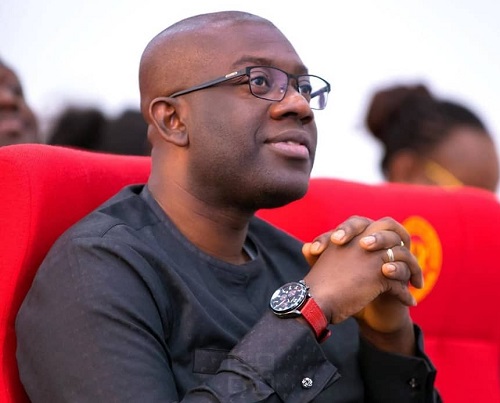
The Supreme Court has fixed tomorrow Friday, August 21, 2026, to deliver ruling on an application for interlocutory injunction filed by Member of Parliament for Ofoase-Ayirebi, Kojo Oppong Nkrumah, seeking to restrain the specialised High Court judges from conducting trials under a warrant issued by the Chief Justice for the legal vacation.
Justice Gabriel Pwamang, sitting as a single judge of the Supreme Court, set the date after hearing arguments from Counsel for the Applicant led by Frank Davies and Deputy Attorney General, Dr. Justice Srem-Sai, who appeared for both the Chief Justice and the Attorney General.
Injunction arguments
Moving the application, after having an objection to the Chief Justice being represented by the State, Frank Davies said he relied on the motion papers filed on August 14, 2026, a supplementary affidavit filed on August 20, 2026, and a statement of case in support.
He argued that the substantive suit challenges the warrant issued by the Chief Justice to High Courts to continue trials from August 1 to September 30, which allows judges to conduct cases as if it were normal term time and not vacation sitting.
According to him, the warrant contravenes the Constitution and the exercise of discretion by the Chief Justice must conform to Article 296.
Mr. Davies said the established practice during legal vacation is that, only urgent and non-contentious matters are heard, and trials only proceed when both lawyers and judges agree, with judges obtaining a warrant from the Chief Justice upon proposal by lawyers. Otherwise, cases are adjourned to term time.
He cited the case of Republic v Wontumi where a bail pending appeal application – ordinarily a vacation matter – was adjourned to October 15 because the judge was indisposed, questioning the rationale for continuing substantive trials during vacation.
He further argued that accused persons standing trial are being compelled to conduct their own cases when their lawyers are unavailable during vacation, which he said affronts their right to counsel, adding that harm to their rights and liberties cannot be compensated monetarily.
“The most important consideration is that the substantive suit will be rendered nugatory if the impugned warrant continues to operate pending determination,” Mr. Davies said.
He added that the plaintiff, as a Ghanaian citizen, has a continuing interest in defending the Constitution irrespective of whether he is an accused person in the trial courts.
AG’s opposition
Opposing the application, Dr. Srem-Sai said there are three considerations that must guide the court in resolving the matter – whether a serious question exists in the substantive matter, whether irreparable damage may occur if refused, and whether balance of convenience favours granting it.
On serious question to be tried, he argued that the substantive matter is based on two misapprehensions of law.
First, he said there is confusion between the administrative function of the Chief Justice to issue a warrant and the judicial function of a trial judge to conduct his court.
He said if counsel is aggrieved by a judge’s refusal to adjourn a case, the remedy is certiorari, not invoking the original jurisdiction of the Supreme Court.
“The contention is how the judges may conduct the affairs of the court on the basis of the warrant. That is a judicial decision vested in the judge and not the Chief Justice,” he argued.
Second, Dr. Srem-Sai submitted that, there is a misapprehension between a substantive judge and a holding judge, and that the alleged tradition that lawyers decide what judges do in vacation does not exist and is contrary to law.
On irreparable damage, the Deputy AG argued that, the applicant, who is not an accused person before the High Court, has not demonstrated what irreparable damage he or Ghanaians will suffer if trials proceed, adding that the Constitution commands speedy trial.
On balance of convenience, he argued that in public law matters it is presumed the public officer is right unless exceptional circumstances are demonstrated, which he said has not been done.
Justice Gabriel Pwamang has adjourned the case to August 21, 2026 for ruling.
Source: Starrfm.com.gh