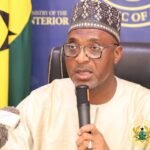
The Ministry of Energy and Green Transition has described assertions by Accra based Joy FM that Ghana is experiencing a generation deficit as misleading, arguing that the analysis fails to reflect the operational realities of the country’s electricity system.
“The analysis relies on a static snapshot of data and draws sweeping conclusions that ignore how electricity systems actually function”, Richmond Rockson, Spokesperson for the Ministry of Energy and Green Transition said.
According to the rejoinder, Power supply is inherently dynamic and is managed continuously to respond to fluctuations in demand and generation across hours, days, and seasons. Interpreting a single data point as evidence of a structural deficit, it argued, is fundamentally flawed.
Installed Capacity vs Demand
Ghana’s installed generation capacity currently stands at just under 6,000 megawatts (MW), while peak demand ranges between 4,300 and 4,400 MW.
This gap, the statement emphasized, indicates that the country does not face a structural generation shortfall.
System operators routinely manage supply using standard tools such as dispatch optimization, fuel switching, and reserve deployment—measures described as normal operational practices rather than indicators of system failure.
Temporary Disruptions Are Being Addressed
The rejoinder also addressed recent supply challenges, pointing to reduced output from the Akosombo Dam as a temporary disruption rather than a systemic issue.
An update by the Energy ministry on April 28 noted that the fourth unit at Akosombo Dam was successfully brought into operation, with a significant portion of the lost capacity restored and full recovery expected in the near term.
READ: Major fault at Ghana Gas processing plant causes power outages
Forward-Looking Measures
Authorities, the response added, have already approved nearly 1,000 MW of additional generation capacity and are in the process of procuring a 200 MW battery storage system to enhance grid stability and peak demand management.
At the same time, targeted interventions are ongoing to address distribution bottlenecks within the power network.
The rejoinder concluded that the “generation deficit” narrative oversimplifies a complex system and risks misinforming the public.
It maintained that Ghana’s current power challenges are not due to a lack of generation capacity, but are largely linked to reserve margins and distribution constraints—issues that are already being actively addressed.
Source: Starrfm.com.gh