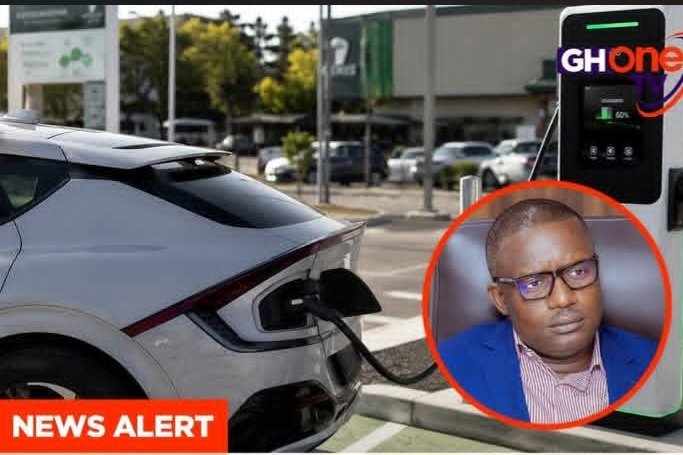
The Ministry of Energy and Green Transition has announced plans to introduce legislation regulating the installation and use of electric vehicle (EV) charging points across Ghana, citing growing pressure on electricity infrastructure.
The announcement was made by the sector Minister, Dr. John Abdulai Jinapor during the ongoing Future of Energy Conference organised by the Africa Centre for Energy Policy (ACEP) in Accra.
According to the minister, Ghana ranks among the countries with the highest number of electric vehicles on the African continent.
Many Ghanaians are switching to EVs because of their lower running costs, with users reportedly saving approximately 40 percent compared with liquid-fuelled vehicles.
However, the rapid uptake has led to the widespread and often unregulated installation of charging points.
Dr. Jinapor said these installations are being set up without corresponding upgrades to electricity infrastructure, resulting in damage to transformers in some areas.
“Ghana had the highest number of EV vehicles in the whole of Africa. Ghanaians are opting for EV vehicles. But that provides a challenge: How do you provide reliable energy to power industrialisation in light of EVs being deployed in the country to ensure that we come out with legislation?” the minister stated.
He confirmed that legislation is already before Parliament to regulate EV usage and charging.
Under the proposed rules, individuals and businesses will need prior approval from the Energy Commission before establishing any EV charging station.
“There’s a rule to set up EV charging stations, and immediately the transformer gets blown. So what we are saying is that you would need permission to set up that EV charging station from the Energy Commission,” Dr. Jinapor explained.
In his welcome address at the conference, ACEP Executive Director Benjamin Boakye emphasised the close link between industrialisation and access to affordable, reliable electricity.
He urged government to fully integrate energy policy into the country’s industrial strategy.
“Processing requires energy. Manufacturing requires energy. Modern agriculture increasingly depends on electricity, while digital infrastructure depends on reliable power. If the cost of electricity is too high, the cost of production rises, and the competitiveness of African enterprises falls,” Boakye said.
The proposed regulatory framework aims to balance the growth of Ghana’s EV sector with the need to protect the national electricity grid and support broader industrial development goals.
Source: Starrfm.com.gh