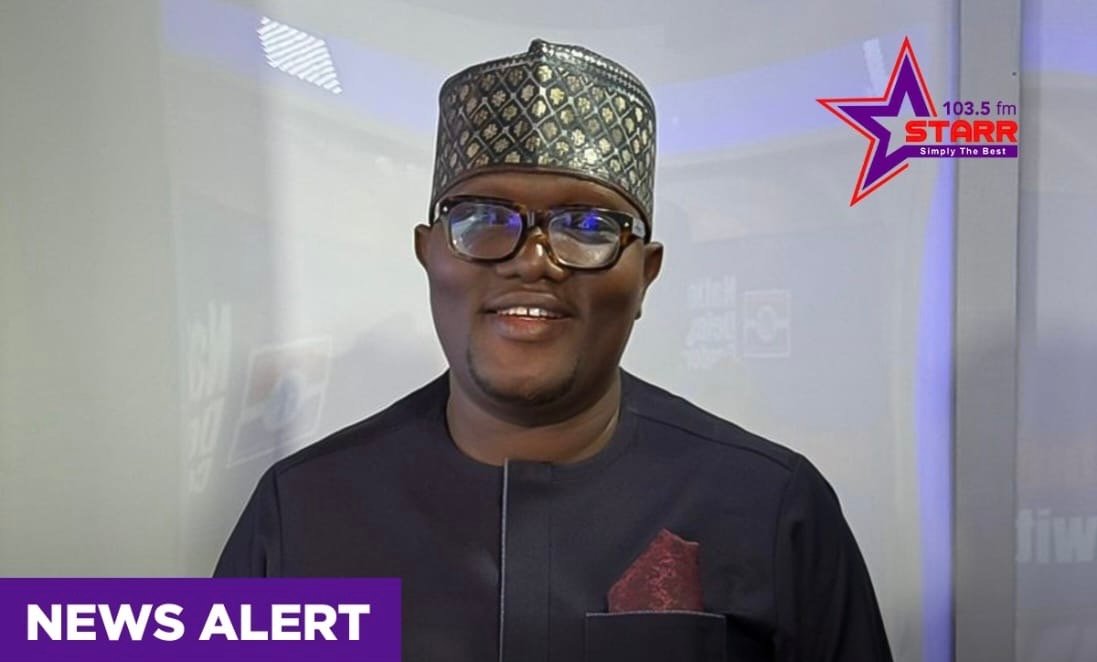
Political Analyst Mohammed Tawfik Adamu says political parties must take responsibility for ending the growing culture of political insults by bringing their communication teams under control.
Speaking to Isaac Addae on the Morning Starr on Starr FM, he said the conversation on ending political insults must begin with the political class, particularly the New Patriotic Party (NPP) and the National Democratic Congress (NDC).
Mr Tawfik described the politics of insults as an “uncultured political behavior” and called for efforts to cure and eradicate it from Ghana’s political architecture.
He said the problem can be addressed if the political class takes deliberate steps to change the nature of political communication and redirect public discourse towards issues that matter to Ghanaians.
According to him, political parties should be discussing development, social interventions and the specific solutions their candidates and parties intend to offer instead of allowing insults and personal attacks to overshadow political conversations.
“The political class must sit down. The conversation must first of all start with the political class,” he said.
Mr Tawfik said the NDC and NPP must take particular responsibility because their communication structures play an important role in shaping political discourse.
He called on the two parties to “call their communication team to order” and reorganise their approach to political communication.
“Political communication should be about content, should be about development, should be about social intervention. What are the needs of the people? And how is your party or candidate bringing something on board and resolving the many numerous problems we face as a country?” he asked.
He said the focus should be on creating a political environment where Ghanaians can assess parties and candidates based on their ideas, policies and proposed solutions to the country’s challenges.
Mr Adams also welcomed the President’s public call against political insults and character assassination, although he said the intervention had come late.
“I was very happy that it is a call that a lot of people have been making. Even though it is very late for the President to publicly declare his attention or his worry to that politics of insult and character assassination, there’s a saying that it’s better late than never,” he said.
He argued that the growing scale of political insults makes it necessary for the political class to take the issue seriously and lead efforts to address it.
According to him, civil society organisations and other concerned Ghanaians must also contribute to efforts to ensure that the behaviour does not become entrenched in Ghana’s political culture.
Mr Tawfik said political leaders had previously failed to sufficiently condemn some instances of political insults, questioning who ultimately benefits when such behaviour becomes part of political discourse.
He recalled instances where individuals had been subjected to what he described as vulgar and “unprintable” language without strong condemnation from political leadership.
He questioned why political leaders who benefit from such political exchanges did not previously speak out against them.
Mr Tawfik said the political class must therefore recognise that allowing insults to flourish within political communication could eventually work against the same parties and politicians who benefit from such tactics.
“Ghanaians are discerning and if they are not careful, the very people who use insults to bring them to power are the very people who also use the same insults to send them into opposition,” he said.
He urged political parties to shift the conversation towards the needs of the people and the concrete measures they intend to implement, rather than relying on personal attacks to win political support.
“Addressing the politics of insults requires the political class to first take responsibility for changing the nature of political communication, with civil society and the wider public supporting the effort”. He said.
Source: Starrfm.com.gh/Pamela Quayson