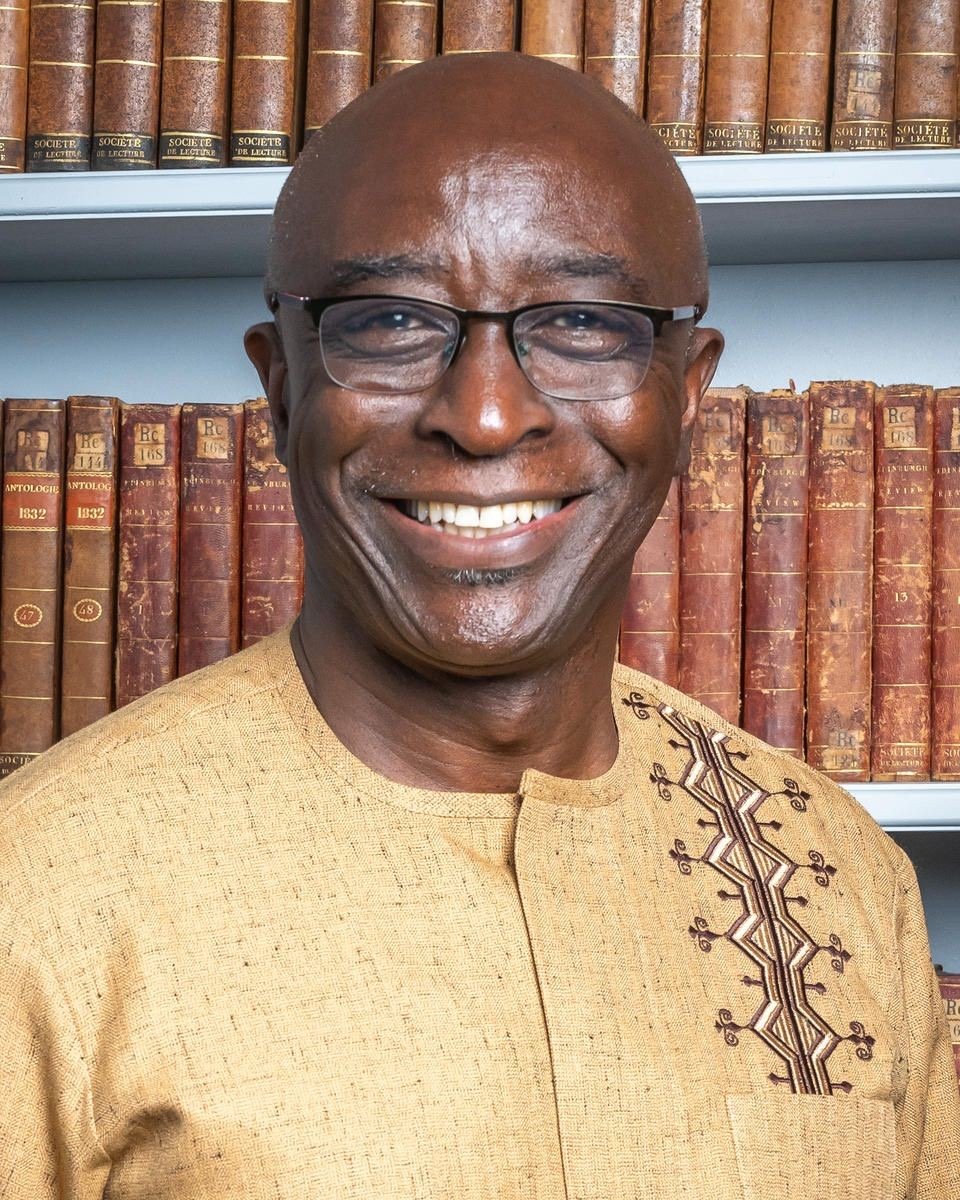
The phrase ‘learning crisis’ in Africa has been repeated so often that it risks losing its meaning. Yet, as my recent book, Reconceptualising the Learning Crisis in Africa:Multi-dimensional Pedagogies of Accelerated Learning Programmes (co-authored with Dr. Sean Higgins) argues, the real crisis is not that African children cannot learn, but that our schooling systems too often overlook their cultural identities and the ways they learn best.
Across the continent, internationally imposed agendas have contributed to education reforms narrowly focusing on test scores in literacy and numeracy. While these learning outcomes are important, they only tell part of the story. Effective learning is also about belonging, identity and agency – qualities that flourish when education systems value children’s own languages, cultures and experiences.
Ghana’s own success story
“CBE demonstrates what is possible when education begins with what children know and value.”
For more than a decade, the Complementary Basic Education (CBE) programme has quietly transformed the learning journeys of over 200,000 out-of-school children in rural Ghana. Developed to give “second chance” learners aged 8–14 a route back into formal education, CBE uses accelerated learning methods rooted in the children’s home languages and community knowledge.
These classes, often held in simple community spaces, do not succeed because they have more textbooks or technology, but because they connect what children already know to what they are yet to learn. Teachers, many from the same communities, use stories, songs and practical activities to build confidence and competence. The result: children learn faster, retain more and rediscover the joy of learning.
As Ghana undertakes a review of its basic education curriculum, with renewed focus on national values and identity as stressed by Ghana’s Minister for Education, there are powerful lessons to draw from the CBE programme. CBE shows what happens when education starts with what children know and value.
It builds on the strengths of Ghanaian families and communities, drawing on teachers’ deep local knowledge to engage learners, use home language strategically, and encourage peer learning.
In many areas, community-led language mapping ensures teaching begins in the language children actually understand, while extending the use of local languages, often two to three years beyond national policy, deepens comprehension and confidence.
Pedagogies rooted in storytelling, collaboration, and local experience also help children see themselves in their learning and grow in confidence, identity, and belonging.
As think tanks such as African Education Watch have also noted, the curriculum review must similarly engage traditional and community leaders and confront harmful gender stereotypes so that Ghana’s basic education truly reflects the social, cultural, and linguistic realities of its children, rather than impose a single, standardised model.
Restoring dignity and agency
Across Africa, many reforms still treat teachers as passive deliverers of scripted lessons and pupils as blank slates. Accelerated Learning Programmes (ALPs) in Ghana, Ethiopia and Liberia offer a different vision: one where dignity and agency are central.
In these classrooms, teachers are trusted to innovate. They draw on community wisdom, local stories and play-based methods to make learning meaningful. Children who once dropped out begin to see themselves not as failures but as capable learners. The lesson for Ghana is simple: when teaching honours children’s realities, both teachers and pupils thrive.
Language: The bridge to belonging
“Sadly, African languages are still too often dismissed as “preparation” for English, French or another ex-colonial language.”
One of the strongest findings from decades of evidence is the power of learning in one’s home language. Children who do so achieve better literacy and numeracy skills, higher motivation and greater self-esteem.
Yet millions of African children still start school in a language they do not understand. When they cannot follow lessons, they are excluded from learning itself. Conversely, when teachers use children’s home languages, the classroom becomes a space of recognition and participation.
As one Ghanaian linguist we interviewed reminds us:
“A child needs to learn from known to unknown… from the mother tongue to understand the principles, concepts and values – to use that as a basis to know.”
Sadly, African languages are still too often dismissed as “preparation” for English, French or another ex-colonial language. This view impoverishes education. The myths– that there are too many languages, that African tongues cannot express complex ideas, or that English immersion guarantees fluency – have been repeatedly disproven.
The deeper obstacle, as Pai Obanya warned, is fear: fear that valuing our languages might weaken national unity or global competitiveness. The opposite is true. When children hear and use their own languages in school, comprehension rises, participation increases, and self-worth grows. Language becomes a bridge to belonging – and belonging is the soil in which learning takes root.
It is therefore encouraging that Vice-President Naana Jane Opoku-Agyemang, a longtime advocate for mother tongue instruction, has recently called for a more robust, consistent and well-implemented approach to using local languages in the early grades. Her message is timely: understanding must come before fluency, and identity must anchor instruction.
Empowering teachers, engaging communities
If children are to learn with understanding, teachers must teach with creativity. But global ‘quick fixes’ that hand them rigid lesson scripts risk deskilling Ghana’s educators and undermining the relational heart of African teaching and the pedagogical culture of our classrooms.
CBE shows us another way, where teachers act as co-creators of pedagogy, adapting materials to local contexts. Parents and elders contribute folk tales, proverbs and examples from farming or fishing that make the curriculum come alive. Learning thus becomes a shared community enterprise, not a top-down delivery system.
Towards a re-envisioned curriculum
Ghana’s basic education curriculum review offers a unique chance to rethink not only what children learn but how they learn. A genuinely African curriculum must celebrate our ways of knowing – storytelling, singing, questioning, collaboration – rather than treating them as peripheral.
Our book’s findings and related research show that when content reflects African social values of community and solidarity i.e. Ubuntu, learners engage more deeply. Afrocentric play-based activities, oral narratives and moral lessons are not relics of the past; they are the living technologies of learning.
To embed these insights, policymakers must invest in:
• Making mother-tongue instruction a cornerstone of education reform for the early grades, without compromise and ensuring a gradual, bilingual transition backed with comprehensive linguistic mapping;
• Teacher development that builds reflective practice and bilingual pedagogies;
• Curricular materials grounded in local realities; and
• Structures for community participation that make schooling a collective endeavour and responsibility.
From crisis to possibility
The ‘learning crisis’ is not located in Ghanaian children, teachers or languages. It lies in our failure to recognise and value the wealth of knowledge already present in our communities. Accelerated Learning Programmes like CBE prove that when pedagogy is grounded in dignity, agency and belonging, every child can learn and learn well.
As Ghana reimagines its curriculum and strengthens its language of instruction policy, it stands at a crossroads. We can continue importing models that overlook our realities, or we can build a system that begins with who we are, our stories, our languages, our creativity.
Education’s purpose is not only to prepare workers for the global economy, but to nurture citizens who can transform their communities. If we start from that premise, the narrative of ‘crisis’ will give way to one of confidence, capability and collective renewal, an education truly worthy of Ghana’s children.
Written By Professor Kwame Akyeampong (Co-author of Reconceptualising the learning crisis in Africa: Multi-dimensional pedagogies of accelerated learning programmes)