Long before there was Ghana, Achimota Forest was a sanctuary in which certain economic activities and despoilment were banned, and runaway slaves mingled anonymously among the sacred groves secure from recapture. It was the ultimate “retreat” from the sometimes-terrifying normality of war and politics.
The forest’s ancient religious connections are preserved today in its status as the largest outdoor Christian worship site, attracting as many as 250,000 worshippers in 2009, the latest year for which Forestry Service statistics are available.
Today, the site remains the only serious urban forest in Ghana, and the only major vegetation cover in the ecologically sensitive Odaw Basin.
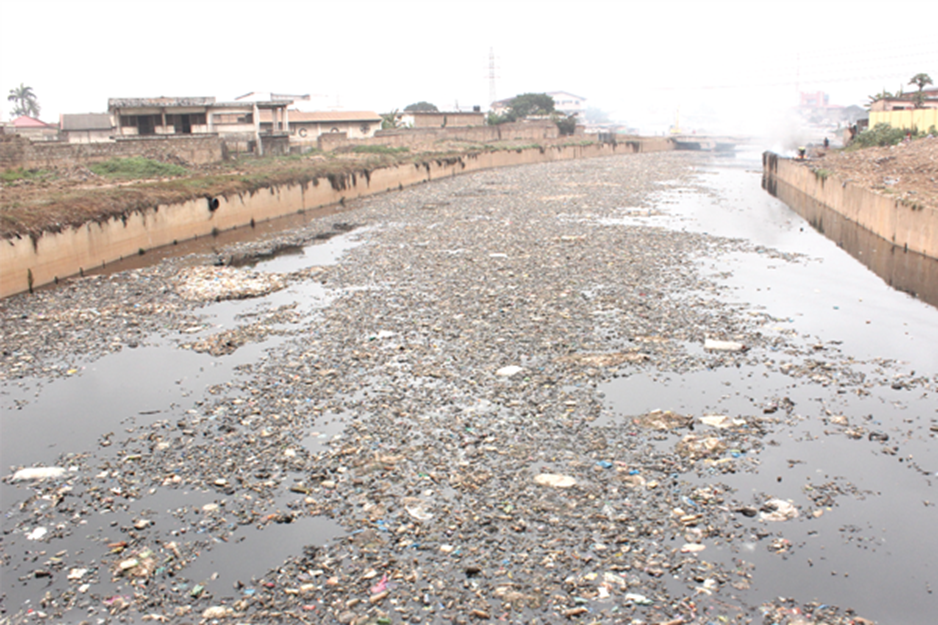
The intertwining of Achimota woodland and the drainage blocks precipitating flooding in that part of Accra has long fascinated Ghanaian environmental scholars.
The interesting thing therefore about how it came to be that the only forested areas near Accra – Achimota and Guakoo in Pokuase – have such intimate links with worship and sacredness is not that religious beliefs can restrain people from destroying nature out of material greed. It is rather that the Ancients may have detected important environmental aspects of these locations and chose therefore to protect them through collective rituals.
It is not for nothing that the escalating flooding patterns on the Achimota – Pokuase stretch, two nodes sacralised by the Ancients and mutilated by modern-day Ghanaians – appear to have overwhelmed city planners.
For anyone who knows anything at all about the area, the context discussed above coloured the news this week that the President of Ghana has decided to reclassify a large part of Achimota Forest Reserve from remaining in that status because, under a law passed in 1927, he can.
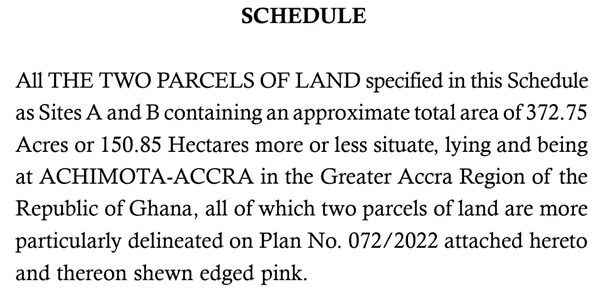
The portion of the forest reserve, created by the colonial British government in 1930 from a portion of land purchased from two Accra families, affected by the Presidential Order is described in the schedule to the Executive Instrument containing the decision as:

The President was not done, however. He then took a blunt scalpel to the original 1930 colonial order preserving the Achimota forest and with a few delicate strokes shrank it by two-thirds:

Stunned observers in Ghana’s small but significant environmental community could only assume that the action by the country’s Head of State was likely one of those political moves taken without sufficient research, analysis and consultation.
Someone with an obvious commercial interest had smuggled the decision into the hallowed chambers of the President who had proceeded to sign it without the barest amount of professional, impartial, advice.
To buttress the view that the President acted without sound research-backed advice, it is necessary to start at the beginning, and clear many confusions.
In the last couple of days, the Lands Ministry and certain motivated individuals have tried to muddy the waters by deliberately confusing the facts.
When in 1921 the British colonial government compulsorily acquired Achimota lands (and paid the necessary compensation) to the Owoo and Oku We families, the area extended far beyond the space caught in the current controversy. The lands in question totalled nearly 2000 acres.
Half of this land was reserved to build and nurture what would then become just the third secondary school in Ghana – Achimota School.
Nearly a decade later, the colonial government decided to restrict a part – approximately 825 acres -of the remaining half of that original mass of land as a forest reserve. The express purpose was to enhance biological diversity, offer recreational grounds to city dwellers and ensure the sustainable management of wood and water resources.

The continued confusion of this part of the original acquisition with other parts has been a great disservice to the public debate. The Nii Owoo and Oku We families have for the last two decades, along with persons claiming to be aristocrats of Osu, waged war not over the 43% of the original lands preserved as a protected forest area, but rather on the 57% endowed in Achimota school, large tracts of which have been converted to other public uses such as the building of golf courses and residential dwellings.
In fact, a series of cases associated with this protracted litigation began in 2010 and ended up in the Supreme Court in 2020 regarding the award of roughly 172 acres of Achimota School lands (adjoining GIMPA) to real estate developers and Osu stool claimants (aristocrats from the Osu area of Accra) by an Accra High Court in 2011 as a result of a litigation in which Achimota School was not even a party.
After exhaustively recounting the contorted twists and turns of the legal process that enabled the Osu stool to insert itself into the Achimota School lands saga, when it was not involved in the original 1921 transaction between the colonial government and the two families – Owoo and Oku We –, the Supreme Court reversed the award in May 2020 and sent the case back to a lower court.
Whilst this case was ongoing, the Owoo and Oku We families were also in parallel court processes trying to legitimise encroachment on Achimota School lands by real estate investors to whom they had sold parcels of the land from the School’s 1922 and 1927 colonial government grants. In 2017, judgment was delivered in favour of Achimota school.
Whilst these matters were in court, the government was busy negotiating with the two families. In fact, it appears that the Lands Commission was deliberately mishandling their brief in court in the parallel Osu stool suit because it was aware of how political heavyweights were interested in cutting a deal on the side with various aristocrats and real estate investors.
We now understand that in 2013 the government decided to enter into an agreement with the Owoo family in particular to parcel off some of the disputed lands. Whatever the original merit of that strategy, it was thwarted in the intervening period when courts of competent jurisdiction ruled that all these old families claiming title to Achimota School lands had no basis in fact or law.
The critical thing to bear in mind however is that none of these litigations, out-of-court settlements and government dispensing of largesse affected the forest reserve. These various matters, dissected critically, involved Achimota School lands.
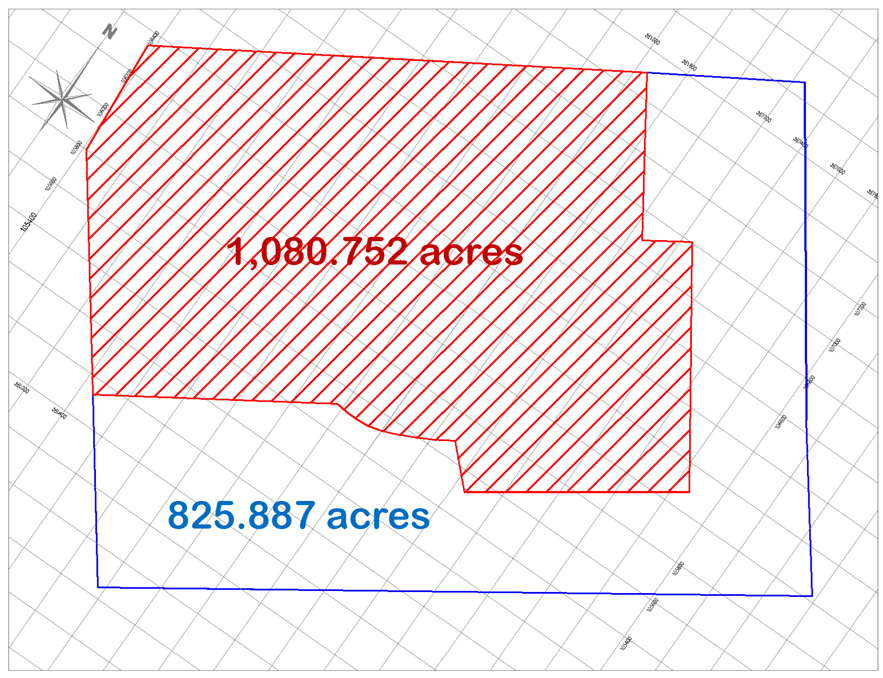
The sheer incomprehension of the President’s action to shrink the forest reserve and its adjoining area from 1,185 acres to 372 acres (a mind-boggling 70% scale-down) by means of Executive Instrument (EI 154) arises out of the excuse that the reclassification is related to a negotiation in 2013. As explained above, that negotiated outcome has since been frustrated in the courts, and at any rate was related to Achimota School lands and not the Forest Reserve. The reclassification is, on this simple basis, COMPLETELY UNTENABLE.
It appears to seasoned observers that the Oku We and Owoo families having failed to seize Achimota School lands in the courts have now turned their focus on the forest reserve and have colluded with the government to bring about this result.
It is not clear if such an action also has the additional effect of shielding Achimota School stakeholders from further legal harassment by the encroachers who have in recent decades stolen a whopping 33% of the School’s land. Now that a new zone of rich forest has been opened up for concreting, perhaps the 250 acres of Achimota School’s remaining untouched prime land will be spared any further horse-trading by politicians. But whatever the full range of motives, the new declassification and reclassification actions have no grounding in fact, policy, or law.
The fact may not be clear to some otherwise well-informed people, but Achimota Forest reserve is an International Union of Conservation of Nature (IUCN) category VI area. This means that it is not a totally restricted category I or II area; certain infrastructural developments in the area capable of boosting its overall sustainability are compatible with its category VI status. In fact, the eco-tourism park idea, conceived in 2013, was totally brilliant for this very reason. Executing that idea does not require declassifying any part of the land as forest reserve. On the contrary, it leverages the reserve status. Any investor interested in participating in the program would have been required to only propose developments compatible with the category VI status.
Across the world, urban forests like Ghana’s Achimota Forest, Kigali’s Nyandungu, and Nairobi’s Karura have all built eco-tourism park plans on the back of forest reserve protections. Investors are subject to constraints as to what they can build on such lands, but the corresponding tourism uplift usually compensates.
For example, Nairobi’s Karura’s forest reserve status dates back to 1932, just two years after Achimota Forest was likewise declared as a forest reserve. Karura has by and large preserved a protected area twice the size of Achimota Forest right in the middle of bustling Nairobi without any politician succeeding in their perennial quests to whittle down the area. Through an innovative partnership with environmental NGOs, it launched an eco-park concept in 2011, two years ahead of Ghana’s decision to follow suit. In the four years that followed, fees from visitors seeking various forms of recreation averaged around $200,000 a year. In the decade since Ghana declared Achimota Forest an eco-park, the authorities have struggled to collect even a fraction of Karura’s revenue in a good year.
Ghana’s 2013 Achimota eco-park policy has failed not because the area is still protected but because of a lack of political commitment (as evidenced by the horse-trading described above), underinvestment and sheer lack of innovative thinking.
All the above nonetheless, Achimota eco-park still held the promise of preserving the forest reserve status of the area. Until those two fateful days in March and April 2022 when the President of Ghana took his pen and decided to shave 70% off what even a colonial government had considered sacred.
Besides, notwithstanding the slow progress of the eco-park project, other strategic ecological projects have been ongoing well before 2013.
After it was decided that the Accra zoo in Kanda (originally built as a private menagerie for Ghana’s first President) was too close to the India-built presidential palace for comfort, the zoo’s animals were first relocated to Kumasi before a decision was then taken to reserve 120 acres of the Achimota Forest to serve as a new zoo.
An endangered primate breeding center was then set up in the vicinity to protect two critically endangered monkey species – the Diana Roloway and the white-nape Mangabey – from going extinct. There are bush babies in the forest that are not found elsewhere in the country and with proper warden services would have been carefully managed.
Even more intriguingly, a captive fruit bat species (Eidolon Helvum) in the vicinity is feared to pose a zoonotic threat (potential to transmit diseases to humans) if not handled with care.
Jennifer Barr and her collaborators concluded in a recent paper:
“The results from this study indicate Achimota viruses (AchPVs) are able to cross the species barrier. Consequently, vigilance for infection with and disease caused by these viruses in people and domesticated animals is warranted in sub-Saharan Africa…”
The “Achimota viruses” mentioned in the said study include Achimota Virus 1, Achimota Virus 2 and Achimota Pararubulavirus 3.
In short, no serious advisor with the right level of exposure to these critical matters would have advised the President of Ghana to tamper so rashly with the Forest Reserve. The 372 acres the government has left for the reserve are woefully inadequate to cover even half of the strategic requirements of conservation, watershed management, recreational zoo, biothreats research facilities, etc.
It bears mentioning that, according to researchers, it took 85 years from the time of the designation of the forest as a reserve for depletion of the forest cover to accumulate to 250 acres.

With a simple stroke of a pen, the government has sent nearly 800 acres more to that same ignominious end overnight.
Assurances that notwithstanding the massive scaledown of the reserve, all future activities shall be reviewed by the Lands Minister for ecological soundness simply do not add up. Even with the current legal restraints, multiple Judges have accused government actors such as the Lands Commission as deliberately working to aid fraudulent real estate operators to encroach on Achimota lands. How does lifting the reserve status, when the government has over the last several decades proved so incompetent in protecting the area advance the goals of conservation and public interest?
Mr. President, we want our Forest back.