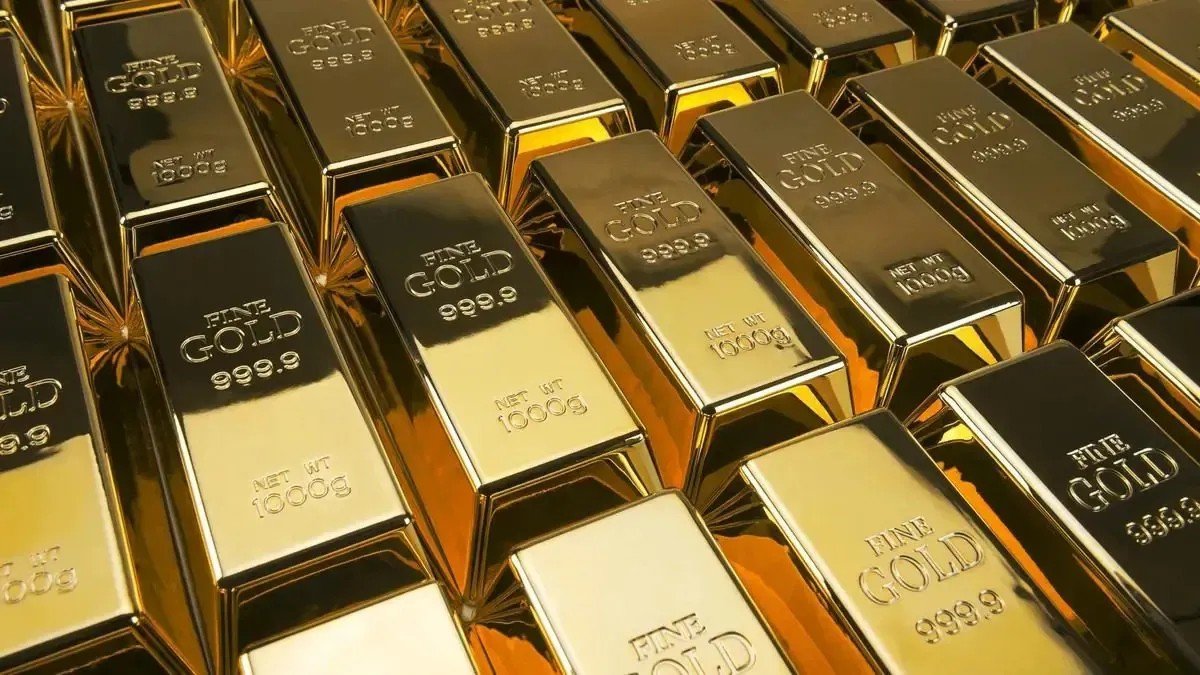
Dr. Kwasi Nyame-Baafi, Director of the Institute for Economic Research and Public Policy (IERPP), has warned that Ghana’s continued reliance on gold reserves to stabilise the economy could become unsustainable in the long term.
Speaking on State of Affairs with Joshua Kodjo Mensah on GHOne TV, Dr. Nyame-Baafi raised concerns about what he described as the use of short-term measures to manage inflation and stabilise the currency, cautioning that such approaches may come at a significant future cost.
He questioned how long the country could continue relying on its reserves to support economic stability, particularly in efforts aimed at controlling inflation.
“How many times can we keep selling our gold reserves just to ensure that we have artificially low inflation rates?” he asked.
According to him, Ghana has already used a significant portion of its reserves in the process of stabilising the economy, warning that continued dependence on such interventions could leave the country exposed in the coming years.
“In any case, how many gold reserves do we have? We’ve already sold about 50% of our gold reserves already,” he stated, adding that if the trend continues, “in about two or three years, there will be no more gold reserves to sell.”
Dr. Nyame-Baafi argued that while current economic indicators may appear stable, the underlying cost of such stability is not always reflected in official figures. He cautioned that the effects may not be immediately visible but could become evident over time.
He further noted that economic management strategies focused primarily on reducing inflation through demand suppression and reserve usage are not sustainable without corresponding efforts to strengthen production.
According to him, a stronger and more resilient economy must be built on investment in productive sectors such as agriculture, industry, and exports, rather than reliance on short-term stabilisation tools.
READ: Expand productive capacity to tackle youth unemployment – IERPP’s Dr. Nyame-Baafi
Dr. Nyame-Baafi maintained that while inflation control is important, it should not come at the expense of long-term economic capacity, warning that such trade-offs could have lasting consequences for growth and job creation.
Source: Starrfm.com.gh