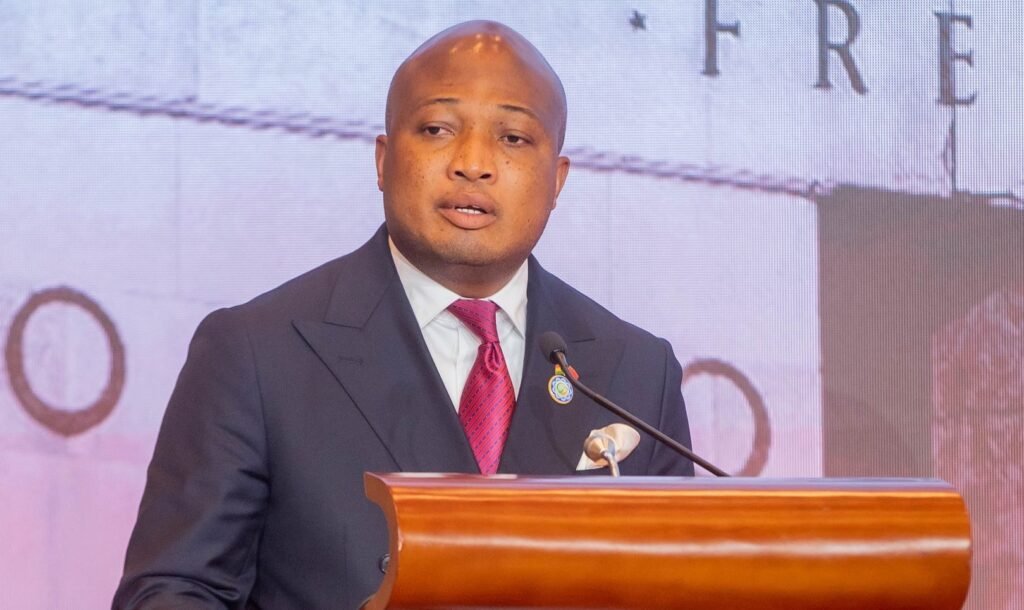
The Minister for Foreign Affairs, Samuel Okudzeto Ablakwa says Ghana will not be forced to choose between competing global powers and will instead pursue partnerships based on its national interests, values and the terms offered to African countries.
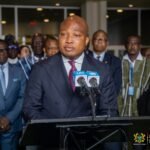
Speaking at a diplomatic side event in New York, Mr. Ablakwa invoked Ghana’s role in the founding of the Non-Aligned Movement and the philosophy of its first president, Kwame Nkrumah, who said Ghana faced “neither east nor west” but “forward”.
“We don’t have to choose,” the Minister said. “We will not be boxed into a corner. We will play smart.”
The comments come as competition intensifies among major powers for access to Africa’s critical minerals, which are increasingly important to technologies underpinning artificial intelligence, renewable energy and advanced manufacturing.
“For us in Africa, because of all of this new AI dispensation and the critical minerals required to drive that, you can’t have this discussion without Africa,” he added.
Ghana would assess potential partnerships based on its interests, values, trust, the nature of agreements and the negotiating process, adding that countries offering better terms would have an advantage.
“We will look at who offers the best deal for the people we serve,” he emphasised.
He further stated that Africa should use competition among external powers to secure better terms rather than commit itself exclusively to one side.
“We come to the table as equal partners.”
He continued “If you don’t like our terms, there’s competition. There is another partner who will at least be more respectful and will be willing to negotiate and bargain properly with us.”
He also criticised the structure of the United Nations and called for reforms to the Security Council, arguing that Africa’s absence from the council’s permanent membership no longer reflects the composition of the world.
“When the UN was created in 1945, a lot of us were colonies. We were not countries, independent states. We were not there. And you have kept this same structure for more than 80 years” he said
He however noted that the lack of reform was also undermining interest in the ongoing process to select the next UN Secretary-General.
The Minister for Foreign Affairs also called for Africa to have a permanent place on the Security Council and cited India’s decision to include the African Union at the G20 summit during India’s presidency as an example the UN could follow.
“India did it. So the UN can do it,” he said.
The Minister for Foreign Affairs further called for the abolition of the Security Council veto, arguing that it had constrained the UN’s ability to respond to conflicts.
“Because of the veto, it has crippled this organisation.”
He said expanding permanent membership without addressing the veto would not amount to meaningful reform.
“Democratising the UN and abolishing the veto. It’s as simple as that,” he added.