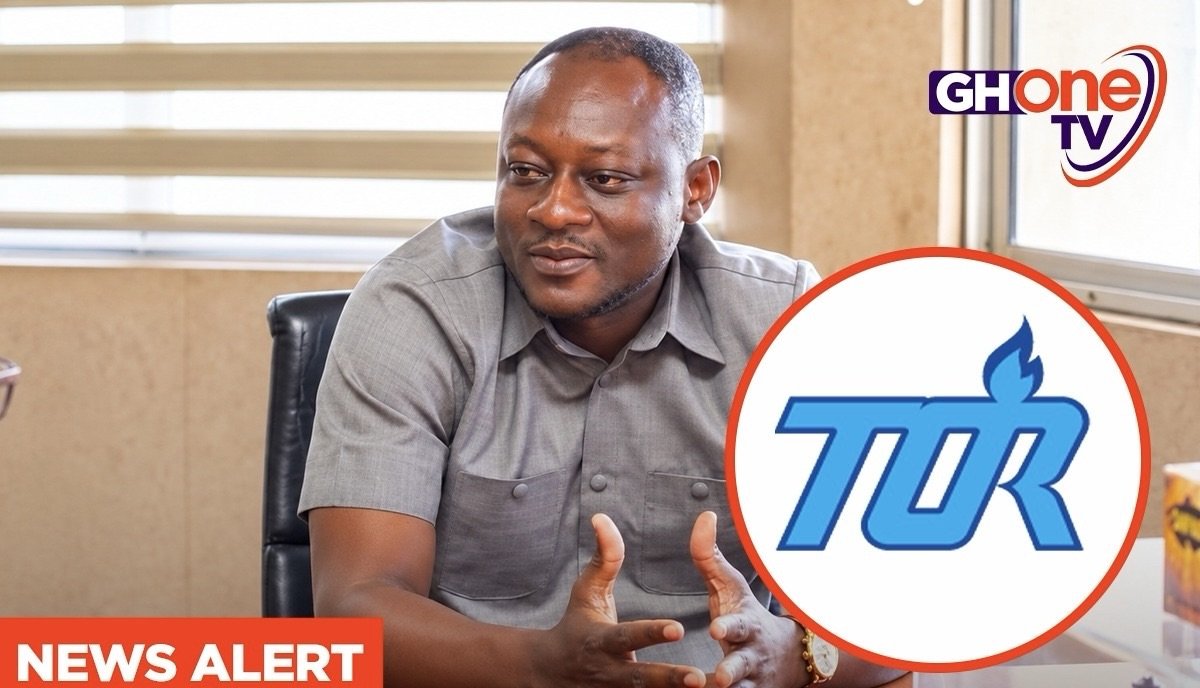
The Tema Oil Refinery (TOR) is pursuing an expansion of its crude-processing capacity to 100,000 barrels per day, as the government targets meeting about 70 per cent of Ghana’s national fuel demand through local refining by 2028.
TOR Managing Director Edmond Kombat said the expansion forms part of a broader strategy to strengthen domestic refining, reduce dependence on imported finished petroleum products and improve Ghana’s energy security.
Speaking at the Government Accountability Series at Jubilee House on Monday, October 26, 2026, Mr Kombat said President John Dramani Mahama had directed the Minister for Energy and Green Transition to work with TOR’s board and management to develop a strategic roadmap for expanding the refinery.
He said the directive was issued when the President commissioned the refurbished Crude Distillation Unit (CDU) on August 1, 2026.
According to Mr Kombat, the roadmap provides for an initial increase in processing capacity from 45,000 to 100,000 barrels per day, with a longer-term ambition of reaching 200,000 barrels per day.
“TOR is part of a national plan. With the refinery’s expansion from 45,000 to 100,000 barrels a day, Government is targeting about 70 percent of national fuel demand from local refining by 2028,” he said.
TOR undertakes immediate capacity improvements
As part of efforts to increase output in the short term, engineers from Verga Engineering are working with TOR’s technical team to complete the tie-in and commission the F-61 crude heater.
Mr Kombat said the work was expected to increase the CDU’s throughput from its current level of about 28,000 barrels per stream day to between 45,000 and 55,000 barrels per stream day.
Management also plans to install a new air cooler to raise processing capacity to 60,000 barrels per stream day.
Additionally, the refinery intends to replace its existing 6,500-barrel-per-day catalytic reformers with a 10,000-barrel-per-day continuous catalytic reformer.
Mr Kombat disclosed that a new 120-tonne boiler had been installed, while work was ongoing on the Residue Fluid Catalytic Cracking (RFCC) turnaround and the Supervisory Control and Data Acquisition (SCADA) system.
The improvements are expected to support increased refinery operations as TOR works towards its broader expansion targets.
TOR plans 200,000-barrel-per-day refining capacity
Beyond the immediate upgrades, TOR is advancing plans to develop a new greenfield refinery, petrochemical facilities and additional storage infrastructure.
Under its Restoration and Legacy Projects programme for 2026 to 2029, the refinery proposes expanding the existing plant to 85,000 barrels per stream day and constructing a new refinery with a capacity of 115,000 barrels per stream day.
Together, the two facilities would have a combined processing capacity of 200,000 barrels per stream day.
Mr Kombat said the projects would be pursued with strategic partners and in line with the government’s climate-compliance principles.
The proposed developments represent TOR’s longer-term ambition to expand domestic refining beyond the immediate target of 100,000 barrels per day.
Focus on energy security and industrial growth
The expansion plans come as Ghana seeks to strengthen its domestic petroleum-processing capacity and reduce its exposure to disruptions in international petroleum supply chains.
According to Mr Kombat, increasing local refining capacity would improve the country’s ability to meet domestic fuel demand while supporting industrial growth.
Greater domestic processing capacity could also reduce reliance on imported finished petroleum products, although the extent of any reduction would depend on the implementation and output of the proposed projects.
Mr Kombat said TOR’s management remained focused on improving the refinery’s performance.
“The team is focused to deliver even better results for 2026,” he said.