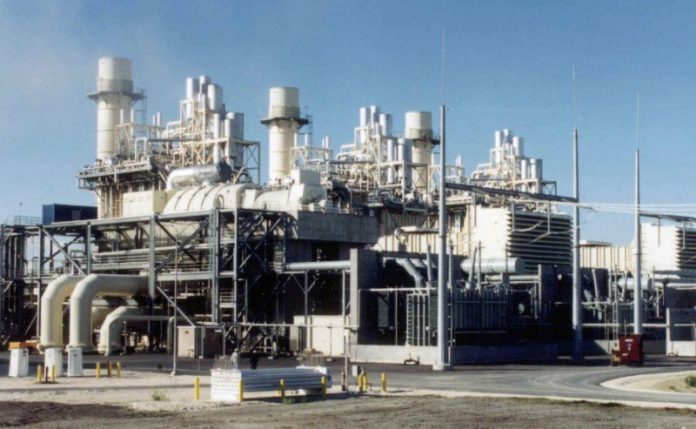
Power Purchase Agreements (PPAs) are essential instruments in the deregulated electricity market, influencing energy supply decisions based on established demand for power, power generation technology desired, pricing dynamics and the Buyer’s economic ability to purchase power, the location of the power plant, shaping the dynamics of energy transactions and influencing overall energy security.
Traditionally, Take-or-Pay (ToP) and Take-and-Pay (TnP) transaction pricing options are the two dominant pricing structures used in PPAs, each with unique characteristics that can impact energy security considerations. These two pricing structures are not new. We apply and use it daily in our endeavors.
Given the nature of the power market and power projects, there are often credit and liquidity concerns on both sides of the PPA, resulting in various requirements for credit support for the buyers’ (off-taker) obligations and credit support for the Sellers’ (project company) obligations.
This paper provides analysis of the ToP and TnP pricing or structures in PPAs about energy security within the context of a deregulated electricity market. The analogy provided below to demonstrate the simplicity of the two terminologies should help the clear any one’s doubt.
‘Take-or-Pay (ToP) Power Purchase Agreement’.
Take or Pay is when you demand a ‘kenkey’ woman to supply 100 balls of ‘kenkey’ for 100 people for your ‘kenkey’ party costing GHS500.00. Based on your demand, the ‘kenkey’ woman organized all the needed ingredients to deliver your order on the agreed delivery date and point. If, on the day of the party, only 40 people turned up for the party due to a heavy downpour, you are still duty-bound to pay the GHS500.00 to the ‘kenkey’ woman for the 100 balls of ‘kenkey’ she made available to enable her to recover her costs and not only the 40 ‘kenkey’ consumed.
Under the Take-or-Pay PPA, the Seller builds, operates, and maintains the power plant by the requirement of the PPA and applicable law, and deliver the agreed amount of power by the PPA. Failure to deliver the agreed amount of power to the Buyer gives the Buyer the right to demand compensation for your failure to deliver the contracted energy. Likewise, the Buyer is obligated to pay for the electricity, whether it is consumed or not. It requires the Buyer to either take the contracted volume of energy or pay for it, irrespective of whether the energy is consumed.
In this case, the risk of demand volatility is borne by the Buyer, as they must pay even if they do not need or consume (Idle or Unutilized Capacity Charge – compensation for failure to receive the contracted energy.
Characteristics of ‘ToP Power Purchase Agreement’.
Revenue Certainty:
ToP PPA offers high level revenue certainty to power producers for the contracted capacity, ensuring that they receive payment even if the buyer does not utilize or consume the entire agreed-upon volume of energy. Revenue certainty offers several benefits to the power producers, such as, cash flow predictability, market stability, long-term viability, investment confidence for new capacity, and promoting a reliable energy supply that enhances energy security.
Risk Mitigation:
ToP PPA reduces the risk of revenue shortfalls due to foreseen changes in energy consumption patterns or market volatility. This stability enhances the financial resilience of the power producer. Buyers are obligated to either take the contracted energy or pay for it, reducing the risk of excess capacity in the market. This can lead to a better resource planning and system stability;
Price Stability:
Fixed pricing in ToP PPA provides the Buyer with predictable costs, aiding budgeting and financial planning. This can contribute to energy security by avoiding sudden cost spikes. It shields and assures a fixed or predetermined price for the energy consumed by the buyer, regardless of electricity market price volatility. To the buyer, it benefits in budget predictability, price risk mitigation, and financial planning etc. To the Seller, it shields and provides revenue assurance to the power producer to honor obligations when due.
Lack of Flexibility:
ToP PPA may not provide the Buyer with the flexibility to adjust energy consumption based on demand fluctuations. Similarly, the Seller is limited not to sell to anyone in case the Buyer did not consume or utilize all the contracted energy, hence one of the justifications to demand payment for the unused power. This could potentially lead to inefficiencies in energy utilization; and
Stranded Costs:
These are the costs incurred by the by the seller if the buyer fails to receive the the contracted energy as per the contract. These costs typically include investments made by the seller to build and maintain the power plant or infrastructure required to meet the contracted energy. If energy consumption is lower than contracted, seller will be left with an idle capacity or unused assets that cannot be readily absorbed, leading to financial loses or stranded costs.
‘Take-and-Pay (TnP) Power Purchase Agreements (PPAs)’.
Take and Pay(TnP) is when you walk to the ‘kenkey’ woman and offer to buy 100 balls of ‘kenkey’ out of the 1000 balls made available for sale to the public at a determined price, served and you walk away. You have no obligation to contribute to or compensate the ‘kenkey’ woman, if other potential buyers do not turn up on that day to make a purchase. She take personal responsibility of what to do with it.
The above implies the Take-and-Pay PPA allows the Buyer to choose the volume of energy they wish to take or consume based on their demand. The obligation to pay is linked to the consumption of electricity, in the case of unsolicited generation capacity. Likewise, the Seller has the right to explore the Wholesale (WEM) or Regional Electricity Market (REM) for on-the-spot or day-ahead transactions in which pricing and assurance of settlement on time may be a preferred and better option to the detriment of the traditional off-taker or Buyer in supply guarantee. However, it holds that if it is a contracted or solicited generation capacity, the buyer is obligated to pay for the entire contracted or solicited capacity, regardless of how much energy they actually consumed. That is, a fixed MW charge (Capacity/Capital Recovery Charge) plus the actual energy consumed charge.
Characteristics of ‘Take-and-Pay (TnP) Power Purchase Agreements(PPAs)’.
Flexibility:
TnP PPA offers buyers the flexibility to choose the volume of energy they wish to take, allowing them to align consumption with actual demand. This aspect of TnP can provide several benefits, such as, cost efficiency, grid stability, demand fluctuations, load management and resource optimization etc;
Market Responsiveness:
The Buyer can take advantage of spot market prices under TnP PPAs, potentially benefiting from lower prices during periods of lower demand. In contrast, buyers can choose to reduce consumption to manage costs. This occurs due to various factors, including changes in supply and demand, fuel prices, weather conditions, regulatory changes, and geopolitical events;
Supply Uncertainty:
Given the creation of the Wholesale (WEM) and Regional Electricity Markets (REM), the Seller will consider the option of spot market transactions that provide more trading opportunities and are thus more liquid and efficient. TnP PPA might expose the Buyer to supply shortages during peak demand periods, potentially impacting energy security. Insufficient available capacity could lead to service interruptions; and
Price Volatility:
TnP Pricing Structure does not lock in a fixed price for the energy, buyers are subject to the prevailing market prices at the time of consumption. It means, if electricity prices in the spot market are high, the buyer will pay a higher rate for the energy consumed. Conversely, if prices are low, the buyer also benefits from paying a lower tariff. This introduces the risk of pricing volatility due to exposures and offerings in the spot prices in the Wholesale (WEM) or Regional Electricity Markets (REM). Fluctuating prices can make budgeting and financial planning challenging for Buyers.
Balancing Trade-offs:
The choice between Take-or-Pay (ToP) and Take-and-Pay (TnP) Power Purchase Agreements involves a delicate balancing act between Electricity Market Price Dynamics, Generation Asset Characteristics, Demand Uncertainty, Policy and Regulatory Environment, Operational Flexibility, Financial Strength and Risk Appetite and Energy Security considerations. Ultimately, selecting the right PPA structure requires a comprehensive evaluation of the trade-offs and alignment with overall energy security objectives.
ToP PPA provides stability and revenue predictability for power producers, fostering investment in a reliable capacity. However, TnP PPA offers the Buyer flexibility and potential cost savings by aligning consumption with demand.
Dr. Elikplim Kwabla Apetorgbor
Power Systems Economist & CEO of Independent Power Generators, Ghana.
Source: Ghana/Starrfm.com.gh/103.5FM