According to the United Nations Development Program (UNDP), Africa has made great strides in recent years towards building democracy, enhancing the rule of law, consolidating good governance, improving human security and promoting and protecting human rights.
Majority of African countries, since the early 1990s, have undergone momentous transitions from one-party, military or autocratic rule to multiparty democratic systems based on majority rule and popular participation. At the very heart of these democratic transitions has been the holding of periodic, multiparty elections.
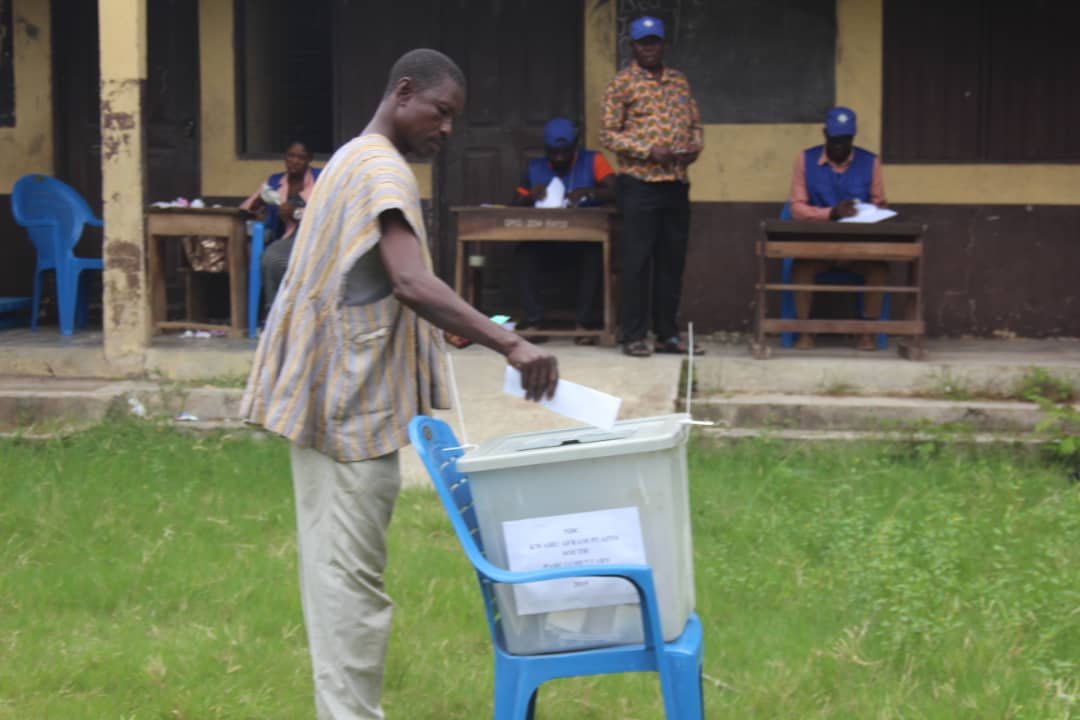
This article is an attempt to examine the utility of elections in our contemporary times, and more especially within the context of African democracies with a special focus on Ghana.
First, my aim is to explore the role and importance of elections in the democratic process by pointing out the nexus between democracy and elections, as well as their usefulness in deepening and consolidating good democratic practice in the sub-Saharan African region.
Secondly, we shall deep-dive into the electoral journey so far in post-independent Africa taking into account the fact that elections have jointly resulted in the pathway to economic growth and development as well as explore how elections are also seen as a tool for political accountability.
Finally, we shall explore the electoral process itself as a means to curbing electoral violence, thus, a means through which broad-based consultations have been held and have helped in arriving at political and electoral reforms based on consensus.
The nexus between Democracy and Elections in Africa
Africa has witnessed two droves of democratization; the first occurring at the onset of the decolonization process when many African states had attained independence from their erstwhile colonial masters in the 1960s and 1970s.
This first drove of democratization which was nationalistic in character ended up establishing one-party states in most of these newly acclaimed independent African nations easily identified with political instability, economic stagnation and authoritarian regimes. The second drove of democratization in Africa took the form of a political liberalization of a sort of Africa, otherwise known as the “second liberation” and occurred in the 1990s and thereafter.
The democratic process, according to various writers, had two broad axes: liberalization and democratization. The transition to democracy, therefore, was from authoritarianism to liberalization and then to democratization. While liberalization involves economic, political and minimal restrictions which advocates an expansion in individual’s and group’s rights; democratization is more than just the expansion of political rights. More often, liberalization heralds democratization but at certain instances, there could be some overlaps. The democratization process often consists of three phases, namely: liberalization –where the authoritarian government collapses; transition –where the first multi-party election takes place; and consolidation –where the democratic process is strengthened.
Maame Adwoa Gyekye-Jandoh of the University of Ghana Political Science Department writes that “Elections, particularly, free and fair elections, are a key criterion of the democratic system, alongside the freedom and independence of the media and the protection of civil rights and liberties. Elections emphasize two key elements of democracy – participation and competition.” While elections are not the only precondition of a democracy, they provide a major roadmap for democracy to thrive. This is particularly true in cases where elections are regularly held in those countries yet citizens’ rights are constantly being abused and the rule of law is only conspicuous by its absence. Elections also help ensure the promotion and sustenance of democratic peace and reduce the likelihood of a democratic reversal. Third, elections allow for competition among elites and provide for the participation of the public in the selection of leaders.
Perhaps, the most crucial importance of elections for democracy is also highlighted in the standard minimal definition of democracy itself. Here, democracy involves a political system with “meaningful and extensive competition among individuals and organized groups (especially political parties), either directly or indirectly, for the major positions of government power; a ‘highly inclusive’ level of political participation in the selection of leaders and policies, and at least through regular and fair elections, such that no major (adult) social group is excluded; and a level of civil and political liberties – freedom of expression, freedom of the press, freedom to form and join organizations – sufficient to ensure the integrity of political competition and participation”. Elections thus provide a link between the government and the governed.
Elections in the African context comes with diverse meanings and functions. There is a commonly held view that elections are about power, where winners gain access to power and voters exercise power in making choices; that elections facilitate, in practical terms, the idea of the consent of the governed, which legitimizes the elected; that elections are sometimes used by candidates and parties to express positions and demonstrate support, without necessarily expecting to win; and finally, that elections facilitate resource redistribution as they are marked by substantial candidate expenditures and allocation of government funds to particular areas.
In a democracy, however, elections have three major functions. First they serve as a means for people to choose their representatives. This could be exercised in choosing their representatives to a legislative or an executive office. Secondly, they are a means of choosing governments; and finally, they give legitimacy to the political systems.
Given that it is an unquestionable fact that elections play a crucial role for democracy, they nonetheless, cannot be seen as being synonymous with democracy. This is backed by the UNDP’s declaration that; “… it would be a mistake to equate democracy with regular elections: democracy also requires functioning institutions.”
While it is possible to have elections without democracy, as we have witnessed in some countries in Africa, it is equally impossible to have democracy without elections. This is because elections are necessary, but not sufficient enough to constitute democracies. Therefore, what is sufficient is not the quantity, but the quality coupled with favorable socioeconomic conditions.
The Electoral Journey so far in Post-Independent Africa
Elections are central to democratic governance and the political management of diversity in plural societies. The United Nations Economic Commission for Africa (UNECA) explains that while elections are held with greater regularity in Africa, their content and quality remains suspect in many countries, especially with Africa’s rich diversity deployed as a combustive tool in electoral conflicts. The UNECA further states that elections have often triggered conflict, with violence, tensions and acrimonies, and sharp elite divisions surrounding electoral processes and outcomes—a worrying trend for Africa’s democratic future.
According to the International Peace Institute, the post-Cold War period also witnessed several positive changes with respect to democratization in Africa. Participatory politics grew in the 1990s and 2000s, as the percentage of African countries holding democratic elections increased from 7 to 40 per cent; and in 2010, Freedom House classified eighteen countries on the continent as electoral democracies. Elections have facilitated the emergence of democratic governments in Benin, Cape Verde, Ghana, Mali, Senegal, and South Africa. Following autocratic regimes and protracted civil wars, more stable societies have emerged in Guinea, Liberia, Niger, and Sierra Leone. In some cases, however, elections have been manipulated to legitimate autocratic regimes or to ensure dynastic successions on the continent.
During the past two decades, the general trend has been toward greater accountability of political leaders, whose domestic legitimacy is largely linked to the means through which they attain and maintain power. Yet progress has been uneven. In 2015, elections brought about the first peaceful transfer of power to Africa’s most populous country, Nigeria, but also resulted in mass civil unrest and instability in Burundi. Other countries which held elections in 2015 include Burkina Faso, Cote d’Ivoire, Ethiopia, Guinea, Lesotho, Mauritius, Sudan, Tanzania, Togo and Zambia. The year 2016 witnessed crucial elections in Benin, Cape Verde, the Central African Republic (CAR), Comoros, Chad and Niger, Gabon, Ghana as well as the constitutional referendum in Senegal.
Meanwhile, violence still plagues approximately 20 to 25 percent of elections in Africa. In recent times, high-profile electoral crises in Kenya (2007-2008), Zimbabwe (2000 and 2008), and Côte d’Ivoire (2010-2011) have collectively led to at least four thousand deaths and hundreds of thousands displaced. Electoral violence can erode people’s faith in democratic processes. Additionally, countries with a history of electoral violence often experience a recurrence of such violence, as has been witnessed in Kenya, Nigeria, and Zimbabwe.
The Role of the Electoral Process and the Elections Management Body in Consolidating Democracy and Curbing Electoral Violence
Debates about elections in Africa are as common as elections themselves. For years, many meetings, seminars and conferences have been held with the aim of identifying the crucial ingredients for credible polls, including some organized by United Nations programmes and agencies. These have identified a number of best practices, drawing on both exemplary elections and more challenging cases.
The holding of multiparty elections in Africa, like elsewhere in the world, have become a powerful tool for democratic stability, accountability and ultimately, human development. A significant number of elections have succeeded in placing numerous countries on a firm path of recovery and peaceful transition following years of civil conflict. These include elections in Namibia which led to independence in 1989 and elections in South Africa which ended apartheid and ushered in majority rule in 1994.
Others include elections in Mozambique in 1994, Sierra Leone in 2002, and Liberia in 2005 and the Democratic Republic of Congo (DRC) in 2006, all of which marked an end to decades of civil conflict. Over the past two decades and more, countries such as Botswana, Cape Verde, Ghana, Mauritius, Senegal, and Zambia have had successive elections leading to peaceful transfers of power. On the other hand, Africa has also seen elections in a host of other countries that have stalled democracy and precipitated political instability as have already been indicated elsewhere above.
Kenya’s elections of December 27, 2007 and the ensuing violence, for instance, provides some food for thought. Mwai Kibaki’s re-election prospects were not on solid ground as he faced strong competition from his former allies; the most important opposition candidate being Raila Odinga of the Orange Democratic Movement (ODM). Kibaki’s 46.4% of the vote and Odinga’s 44.1% were the focus of the disputed elections. It was charged by Odinga that about 300,000 votes were falsely attributed to Kibaki in most remote constituencies and that the Western, Coast, Upper Eastern and North Eastern provinces saw vote-rigging that was responsible for Kibaki’s victory.
In what later became an intertribal clash that erupted in 2007 during the standoff between the incumbent, Moi Kibaki, and the challenger, Raila Odinga, approximately 1,300 people lost their lives and hundreds of thousands were displaced. Widespread sexual violence against women also marred the post-election landscape.
Again, after Kenya’s election in 2013, a challenge by former Prime Minister Raila Odinga made its way through the courts. Mr. Odinga challenged the outcome, claiming the election had been marred by massive failures in the electronic voter identification system, the tallying system and the results transmissions system. In an affidavit, the electoral commissioners termed him a “perennial loser.” He lost the petition and the matter was quickly settled.
In 2015’s hotly contested Nigerian presidential election between the People’s Democratic Party of incumbent President Goodluck Jonathan and the All Progressives Congress of Muhammadu Buhari, a former military ruler, many feared the worst. In Africa’s most populous nation, elections have always been marred by violence, often fuelled by allegations of vote-rigging. Nigeria’s Independent National Electoral Commission (INEC) managed to oversee what was generally acknowledged as free and fair elections. The INEC chairman, Prof. Attahiru Jega, after being forced to postpone the elections for six weeks, was under heavy pressure from politicians to resign but resisted.
A disputed election would have sparked violence in the country, with consequences for the whole West African region, where Nigeria remains an economic heavyweight. Alone, the country accounts for more than three-quarters of the region’s economy. Analysts breathed a sigh of relief when Mr. Jonathan quickly accepted defeat, conceded and congratulated his opponent, President Buhari. Many hailed the development as “historic” for the country and for Africa.
The 2012 general elections in Ghana, held in December 2012, raised issues about the otherwise relatively clear record of independence and competence of Ghana’s Electoral Commission. Ghana’s general elections were held on Friday, 7 December 2012 to elect a president and members of parliament in 275 electoral constituencies. As a result of the malfunctioning of some biometric verification devices, some voters could not vote, and voting had to be extended the next day, 8 December 2012.
The main candidates for the presidency were then incumbent president John Dramani Mahama of the National Democratic Congress (NDC), his main challenger Nana Addo Dankwa Akufo-Addo of the New Patriotic Party (NPP), and six other candidates.
An important point of note is that John Dramani Mahama was elected after less than five months in office as president after succeeding President Prof. John Evans Atta Mills who died suddenly in office on 24th July, 2012. The opposition New Patriotic Party (NPP) alleged that the Electoral Commission had manipulated with results and that they had also noticed a number of irregularities and malpractices, hence filed a petition at the Supreme Court to review the election results.
The election petition, led by the NPP presidential candidate and his party taking the Electoral Commission and the NDC presidential candidate to the highest court of the land, was decided on 29th August 2013. The verdict went in favour of the incumbent president, John Dramani Mahama of the NDC.
The outcome of the December 2012 elections petition was significant in that it was the first time in Ghana’s history that the Supreme Court had delivered a verdict on the fairness and legitimacy of contested general elections. The rule of law was taken very seriously by Ghanaians who patiently followed the law and allowed the procedure to play out in court per the 1992 constitution, rather than resort to violence and mayhem in the streets and towns and villages in Ghana.
Again in Ghana’s 2016 presidential elections, Ghanaians set out to choose between incumbent President John Dramani Mahama and six other candidates, including Nana Addo Dankwa Akuffo-Addo, who was considered the strongest challenger to the president. In a surprising result, Nana Akufo-Addo Mahama by more than one million votes. Nana Akufo-Addo received 53.85 per cent and John Mahama 44.40 per cent.
The next closed challenger was Papa Kwesi Nduom of the Progressive People’s party, who only received 1 per cent of the votes. President John Dramani Mahama called Akufo-Addo to concede defeat, albeit stating claims of electoral irregularities in several polling stations. This was the first time that a sitting president of Ghana had failed to win a second term.
In order to prevent violent eruptions, African countries must pay more attention to ensuring conditions that are conducive to credible and peaceful elections. They must be keen on building credible election management bodies to act as cornerstones of the democratization process.
In Ghana, for example, elections must begin to serve more purposes than simply determining which leaders are elected. For most African leaders, the challenge has always been to guarantee an electoral process that truly reflects the people’s choice, even if it is at the leaders’ own expense.
As public political spaces gradually open across Africa, more and more citizens are using the new avenues to speak out for political, economic and social rights, and to demand greater accountability from their governments, including regular free and fair elections. Such elections require an impartial electoral management body that respects ethnic diversity to build public confidence in electoral processes and ensures transparency, integrity and fairness to all parties involved.
According to the Open Society Initiative for West Africa (OSIWA), electoral management bodies (EMBs) have become a keystone of the process of democratization in the countries of West Africa. Their composition, mandate and activities have attracted increasing public attention. In some countries, the EMBs and the rules of the electoral game are the focus of passionate interest and debate each time elections come around, like we are currently experiencing in Ghana. As institutions that apply the rules governing elections, EMBs are at the heart of discussion and practice on the critical question of effective citizen participation in the public affairs of their countries.
Article 1(b) of the Protocol on Democracy and Good Governance adopted by the Economic Community of West African States (ECOWAS) in 2001 states that among the principles to ‘be declared as constitutional principles shared by all Member States’ is that ‘Every accession to power must be made through free, fair and transparent elections’. It also provides, in Article 3, that ‘The bodies responsible for organizing the elections shall be independent or neutral and shall have the confidence of all the political actors’.
Conclusion
Holding transparent and credible elections on a regular basis as established by the relevant constitutional and legal framework is a critical component of the democratization process. In fact, periodic and genuine elections are generally seen as a key component for enhancing the legitimacy of a government and strengthening the social contract between the government and the governed.
However, while critical to building democracies, elections are only one component of the democratic and legitimization process. Again, in the absence of other structural, institutional, and normative democratic conditions to absorb and resolve tensions that might arise during and after the electoral process, elections can present windows of vulnerability that introduce real risk of violence.
A robust civil society, independent media, a sound public administration, and an independent judiciary can help to manage the underlying tensions and grievances that elections bring to the surface.
While multiparty and competitive elections may have become a regular feature of political systems in majority of countries in Sub-Saharan Africa, it is also true that these elections have differed greatly in form, content and quality, and the greater regularity has not necessarily enhanced their value or improved the quality of democracy on the continent. Africa’s experience with electoral democracy has been mixed: progress has been made, but challenges remain. Some of the challenges often highlighted include political intolerance, lack of inclusiveness, inadequacies of electoral management bodies and post-electoral violence. And as Ghana prepares to go to the polls on December 7, 2020, to what extent can we say we are ready to make the 2020 presidential and parliamentary elections useful in the context of what has been discussed above.
Andrew Muniru Nantogmah –A Development Communications Consultant and Conflict Peace and Security Analyst
0208405567